By The Popular Wines Tasting Team. Last updated June 2026.
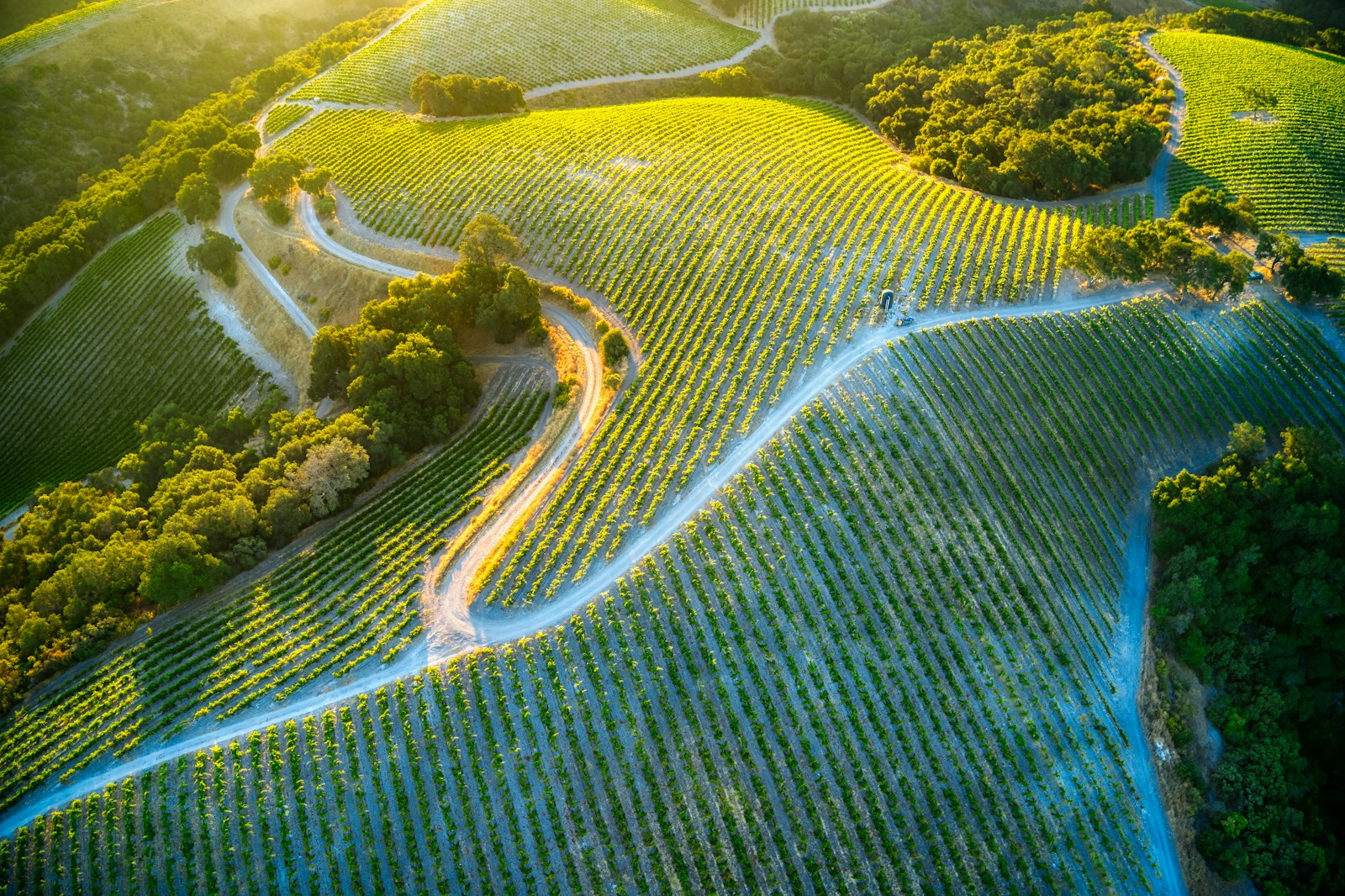
Pour a glass of California and you are tasting the work of the Pacific Ocean. The cold current offshore, the fog that spills through every gap in the coastal hills at dusk, the long dry summers that ripen fruit to the edge of opulence. No other wine country on earth folds this much range into so little distance.
Drive an hour inland and the grape in your glass changes, because here the ocean writes the rules and the mountains decide who gets to hear them. If California were a country, it would be the fourth largest wine producer in the world, behind only Italy, France, and Spain. It grows more than 80 percent of all the wine made in the United States, across more than a hundred appellations strung along nearly eight hundred miles of coast and valley, from the cool fog of Mendocino to the warm benchlands north of San Diego. Cabernet that rivals Bordeaux. Pinot Noir that argues with Burgundy. Zinfandel that grows nowhere else on earth quite like this. By almost any measure, it is the most versatile wine region humans have ever planted.
California wine accounts for more than 80 percent of all wine produced in the United States, grown across 150 distinct American Viticultural Areas from the Oregon border to the Baja Peninsula. The state produces Cabernet Sauvignon, Chardonnay, Pinot Noir, and Zinfandel at global scale, with more than 100 grape varieties grown commercially. California wine earned worldwide recognition in 1976 when Napa Valley Cabernets defeated top Bordeaux in the Paris blind tasting, and the industry has since grown into the fourth largest wine-producing region on earth.
Three Centuries in the Making: A Brief History of California Wine
The story begins with Spanish Franciscan friars, who carried cuttings of a hardy black grape up El Camino Real and planted the first European vines at Mission San Diego in 1769. That grape, still called the Mission today, made rough sacramental wine for a chain of missions for the better part of a century. The real spark came in 1857, when a Hungarian emigre named Agoston Haraszthy founded Buena Vista in Sonoma, shipped in tens of thousands of European vine cuttings, and earned the title he still carries: the father of California wine.
Then came the long century of near death. The root louse phylloxera chewed through the vineyards in the late 1800s, and Prohibition arrived in 1920 to finish the job, shuttering nearly every commercial winery in the state for thirteen years. A few survived by making sacramental wine and selling grapes to home winemakers, but the vineyards, the knowledge, and the reputation were gutted. Recovery took two full generations.
The moment everything turned has a date: May 24, 1976. At a blind tasting in Paris, a panel of France’s most respected palates ranked a Napa Cabernet from Stag’s Leap Wine Cellars and a Napa Chardonnay from Chateau Montelena above the finest Bordeaux and white Burgundy on the table. The judges did not know what they were pouring until the bags came off. The Judgment of Paris ended the myth that great wine could only come from Europe, and it put California on the world stage for good.
What followed was a revolution of cool. Growers pushed out toward the fog that older hands had written off as too cold, and found that Pinot Noir thrived in it.
The Russian River Valley, Carneros, and a wild stretch of Santa Barbara County became some of the most thrilling Pinot ground in the New World. Then, in 2004, a small film called Sideways, shot among the wineries of the Santa Ynez Valley, sent a generation chasing Pinot Noir and turning its back on Merlot almost overnight. Two decades later the trade still calls it the Sideways effect.
Answer a few quick questions and get your wine personality, your best food pairings, and a wine-country day to match.
Start the quizHow California Climate Shapes the Wine
The secret to California is temperature, and the thermostat is the ocean. A cold current runs down the coast and chills the air above it into a dense marine fog that the land draws inland every afternoon, as the hot interior rises and pulls the sea breeze behind it. Where that fog reaches, the nights turn cold, the grapes ripen slowly, and the wines hold onto their acid, their perfume, and their nerve. Where the coastal hills block it, the sun takes over, and the reds grow dark, ripe, and powerful.
Santa Barbara County does something almost no other coastline can. Unlike most of California’s ranges, which run north to south along the coast, its mountains belong to the rare east-west Transverse Ranges, and they open the valleys like a funnel aimed straight at the sea, so the cold ocean air pours deep inland. That is why you can stand in some of the coolest Pinot Noir vineyards in California and reach sun-baked Rhone country in the same short drive. Here geography is destiny, and it changes block by block.
| Category | Details |
|---|---|
| US production share | More than 80 percent of all American wine |
| AVAs | 150+ American Viticultural Areas |
| Grapes grown | 100+ commercial varieties |
| Top red varieties | Cabernet Sauvignon, Pinot Noir, Zinfandel, Merlot, Syrah |
| Top white varieties | Chardonnay, Sauvignon Blanc, Pinot Gris, Viognier |
| Key regions | Napa Valley, Sonoma County, Paso Robles, Santa Barbara, Lodi |
| Global rank | 4th largest wine-producing region in the world |
California Wine Regions: Napa, Sonoma, and the Central Coast
Eight regions worth knowing, each its own world. Napa Valley, Sonoma County, Santa Barbara County, and Paso Robles are fully mapped now. The rest are pouring soon.
Napa Valley
Sonoma County
Santa Barbara County
Napa Valley
Sonoma County
Paso Robles
Central Coast
Temecula Valley
Lodi
Sierra Foothills
| Region | Signature Wine | Why It Stands Out |
|---|---|---|
| Napa Valley | Cabernet Sauvignon | World-class estates, benchmark Cabs, concentrated tasting corridor |
| Sonoma County | Pinot Noir, Chardonnay | Diverse sub-AVAs, Russian River Valley fog, approachable pricing |
| Paso Robles | Zinfandel, Rhone varieties | Bold reds, west-side limestone estates, relaxed wine country feel |
| Santa Barbara | Pinot Noir, Syrah | Cool coastal climate, Sta. Rita Hills AVA, urban wine trail |
| Lodi | Zinfandel | Old-vine heritage, family-owned estates, excellent value |
California Wine Varieties: The Grapes That Define the State
California can grow almost anything, but a handful of grapes define it.
California Red Wine: What to Know and What to Buy
California red wine is a spectrum, not a single style. At the powerful end stand Napa Cabernet Sauvignon and the Rhone blends of Paso Robles, all cassis, graphite, and firm tannin, built to age for decades and to face down a charred steak. In the middle live the Zinfandels, California’s heritage grape, planted as gnarled old vines in Lodi and the Sierra foothills, brambly and high-spirited. Zinfandel is genetically the same grape as Croatia’s Tribidrag and Italy’s Primitivo, yet nowhere does it sing quite like it does in California dirt. And at the bright, food-loving end is coastal Pinot Noir from Sonoma and Santa Barbara, perfumed and silky and the easiest of all to fall for. If you are just beginning, start with a cool-climate Pinot. It will teach your palate more in one glass than a shelf of textbooks.
California Wine Food Pairings That Actually Work
California grew up at the table, and its greatest pairing was born on the Central Coast. Santa Maria style barbecue traces back to the rancho era of the 1800s, when Spanish and Mexican vaqueros gathered around open oak-fired pits after a cattle roundup. The ritual survives almost unchanged: a thick tri-tip rubbed with salt, pepper, and garlic, grilled over the smoke of native red oak, and served with small pink pinquito beans that grow almost nowhere but the Santa Maria Valley. Pour it a glass of Santa Barbara or Paso Robles Syrah and the match is almost startling in its rightness, the wine’s black pepper and dark fruit meeting the oak smoke and char head on.
The rest of the state pairs just as easily. Napa Cabernet wants a fatty ribeye, where the wine’s tannin binds to the fat and both come out softer and rounder for it. Coastal Pinot Noir was made for grilled salmon or a simple roast chicken. And a cold glass of California Sauvignon Blanc beside a goat cheese salad from the Saturday farmers market reads as one bright, grassy note, because the wine and the cheese carry the very same green aromatic compounds. The rule is simple: California puts sunshine and generosity in the glass, so reach for the grill, the garden, and anything kissed by wood smoke.
Find your California wine
Tell us how you eat and what you love, and we will point you to the California wines and tasting rooms that fit your palate.
Find Your Ideal Wine →How to Choose a California Wine: A Practical Buying Guide
The fastest way to choose well is to match the region to the style you want, then pick a tier that fits the occasion. A cool-climate label from Sonoma, Santa Barbara, or the Sonoma Coast leans bright and food-friendly. A warm-region label from Napa, Paso Robles, or Lodi leans richer and bolder. From there it comes down to how much you want to spend and how adventurous you feel.
Napa Cabernet or Sonoma Chardonnay
The safe, crowd-pleasing choice. Houses like Robert Mondavi and Beringer built California’s reputation on exactly this, and a Napa Cabernet or a barrel-aged Sonoma Chardonnay rarely disappoints at the table.
Santa Barbara Pinot or Paso Rhone
For more soul, reach for a cool-coast Pinot Noir from a house like Au Bon Climat or Sanford, or a Rhone-style blend from Tablas Creek in Paso Robles. Old-vine Zinfandel from Ridge or Turley rewards the curious too.
Lodi Zinfandel or Central Coast blends
Lodi old-vine Zinfandel delivers serious flavor for the money, and broad Central Coast bottlings offer ripe, easygoing fruit well under twenty dollars. Mendocino is another quiet source of value, especially for whites.
One more rule of thumb: the more specific the place on the label, the more the wine tells you. A bottle that names a single vineyard or a tight appellation like the Sta. Rita Hills or Howell Mountain is making a promise about where it came from. A bottle that simply says California is built for easy drinking and a friendly price. Go deeper on the state’s signature grapes in our guides to California Cabernet Sauvignon, California Pinot Noir, California Chardonnay, and California Zinfandel. Explore the regions in depth in our guides to Napa Valley, Santa Barbara, and Paso Robles.
California Wine: Frequently Asked Questions
Take our quick quiz to find your style, your best food pairings, and a wine-country day to match.
Take the quizWhat is California known for in wine?
What is the best California wine region to visit?
What food pairs with California wine?
What is California red wine?
Why does California make such varied wine?
What is the most popular California wine?
How many wine regions or AVAs does California have?
What is the difference between Napa and Sonoma wine?
Featured guide: California Red Wine: the grapes, regions, and bottles worth opening, from Napa Cabernet to old-vine Zinfandel.
All California Wine Regions: Complete Directory
California has more than 130 officially designated American Viticultural Areas (AVAs). This directory covers the major wine regions from the Napa Valley to the SLO Coast, with guides to the tasting rooms, producers, and varieties that define each area.
Northern California
- Napa Valley — The heart of American Cabernet Sauvignon. Rutherford, Oakville, Stags Leap, Howell Mountain, and Spring Mountain sub-regions.
- Sonoma County — Russian River Valley Pinot Noir, Dry Creek Zinfandel, Alexander Valley Cabernet, Carneros Chardonnay.
- Monterey County — Cool Salinas Valley, benchmark Pinot Noir and Chardonnay sites.
Central Coast
- Paso Robles — Limestone soils, Rhone varieties, 50-degree diurnal swings. Willow Creek District, Adelaida, east and west side diversity.
- Santa Barbara Wine Country — Cool ocean influence, world-class Pinot Noir, Chardonnay, and Syrah.
- SLO Coast — San Luis Obispo Coast AVA, Edna Valley, Arroyo Grande Valley, cool-climate Pinot.
Santa Barbara Sub-Regions
- Santa Barbara Funk Zone — Walkable downtown tasting district with 12+ wine producers.
- Santa Ynez Valley — Sideways country. Diverse microclimates from the cool western end to warm inland Ballard and Los Olivos.
- Sta. Rita Hills — Wind-sculpted benchland west of Buellton. Burgundy clone Pinot Noir and Chardonnay.
- Santa Maria Valley — Pacific airflow all day. Home to Bien Nacido and Solomon Hills, two of California’s great benchmarks.
- Los Olivos District — Inland warmth, Rhone and Bordeaux varieties, Foxen Canyon Road.
- Happy Canyon of Santa Barbara — Warm, sheltered inland AVA for Bordeaux reds: Cabernet Sauvignon, Merlot, Sauvignon Blanc.