Most of Santa Barbara wine country is a story about cold. Fog and ocean wind pour up the east-west valleys and keep the grapes cool, which is why the region became famous for Pinot Noir and Chardonnay. Happy Canyon of Santa Barbara is the exception that proves the rule. Drive east through the Santa Ynez Valley, past the wineries of Los Olivos, past the long blue sweep of Lake Cachuma, and the air changes. The marine influence runs out of reach, the canyon walls trap the heat, and summer afternoons can push toward ninety degrees. In a county where almost everything is grown to stay cool, this last warm pocket does the opposite, and it is the only corner of Santa Barbara that ripens true Bordeaux reds with conviction.
The place
Happy Canyon sits at the far eastern end of the Santa Ynez Valley, in the foothills of the San Rafael Mountains, beyond Lake Cachuma. It is the smallest appellation in Santa Barbara County, covering about 37 square miles, with only a few hundred acres actually planted to vines. The terrain is dramatic. Elevations climb from roughly 500 feet on the canyon floor in the southwest to more than 3,400 feet in the rugged northeast, so vineyards are tucked into hillsides, benches, and pockets rather than spread across a flat plain.
The climate is the headline. This is the warmest mesoclimate in the Santa Ynez Valley, far enough inland that the morning fog burns off early and the sun does the rest. Yet it is not a simple hot site. Cool air still slides in overnight and in the early hours before the canyon heats up, so the daily temperature swing is large. Warm days build ripeness and structure in thick-skinned Bordeaux grapes, and cool nights lock in acidity and aromatic lift. That combination is exactly what Cabernet and its cousins need, and it is rare to find it this close to a coast otherwise devoted to cold-climate whites and Pinot.
Then there is the ground, which is genuinely unusual. Happy Canyon’s soils range from sandy and clay loams to cherts and, most distinctively, serpentine. Serpentine is a green, magnesium-rich rock, and the soils derived from it carry elevated levels of magnesium, lower sodium, and a poor, mineral-heavy profile that most crops would hate. Wine grapes do not. Vines struggling in nutrient-poor serpentine ground make small berries and concentrated fruit, and growers here credit those soils for the savory, mineral spine that runs through the best Happy Canyon reds.
What they grow
Happy Canyon is Bordeaux country, plain and simple. The roster reads like a classic Left Bank and Right Bank vineyard: Cabernet Sauvignon, Merlot, Cabernet Franc, Petit Verdot, and Malbec on the red side, with Sauvignon Blanc and a little Semillon for whites. The warm days finally give these late-ripening grapes the heat they need to come in fully ripe, while the cool nights and serpentine soils keep the wines structured rather than heavy. The result is Cabernet and Bordeaux-style blends with real depth, firm tannin, dark fruit, and a savory, herbal edge, plus Sauvignon Blanc that is bright, citrusy, and full of nervy energy.
One quirk that growers love to point out: in many warm climates Bordeaux grapes pile up sugar before their flavors catch up, which forces a choice between underripe taste and high alcohol. In Happy Canyon the pattern tends to flip, with flavor developing alongside or even ahead of sugar, so picking decisions are kinder and the wines keep their complexity. If you want to see how these bottles fit the bigger picture, read our California Cabernet Sauvignon guide and our Sauvignon Blanc guide. Happy Canyon is the part of Santa Barbara County that most resembles Napa in ambition, while tasting unmistakably of its own cooler, more mineral home.
Wineries and vineyards to know
Happy Canyon is small and tightly held, with a handful of estates rather than a long main street of tasting rooms. The names below are the heart of the appellation, and the producers with downtown or village tasting rooms are the easiest way to actually drink the wines.
Grassini Family Vineyards
Larry and Sharon Grassini converted their Happy Canyon land to vines in 2002, farming about 35 acres of mostly Cabernet Sauvignon and Sauvignon Blanc. Their elegant, polished Bordeaux-style wines are among the appellation’s signatures, and their downtown Santa Barbara tasting room has won repeated local honors. Read our Grassini guide.
Happy Canyon Vineyard
One of the founding estates and the source of the appellation’s name on a bottle, Happy Canyon Vineyard farms Bordeaux varieties on a property that also includes a polo field. Its wines helped put the AVA on the map. Read our Happy Canyon Vineyard guide.
Star Lane Vineyard
A sprawling property of roughly 780 acres with around 145 planted, Star Lane is one of the largest and most striking estates in the canyon, set among rugged hillsides and known for serious, age-worthy Cabernet Sauvignon and Bordeaux blends.
Crown Point
Founded in 2012, Crown Point is a focused, highly allocated estate making pure Cabernet Sauvignon and proprietary Bordeaux blends from its hillside vineyard. The wines are made in tiny quantities and aimed squarely at collectors of serious Santa Barbara red.
Vogelzang Vineyard
One of the original growing sites at the AVA’s designation, Vogelzang is a respected source of Bordeaux fruit whose grapes appear in bottlings from a number of producers working with Happy Canyon’s warm, serpentine ground.
McGinley Vineyard
The Jack McGinley vineyard sits among the canyon’s founding sites, supplying Cabernet, Merlot, Sauvignon Blanc, and other Bordeaux varieties to growers and winemakers who want the fingerprint of this hot eastern corner of the valley.
How Happy Canyon fits in the Santa Ynez Valley
Happy Canyon is a sub-appellation of the larger Santa Ynez Valley, and it is the valley’s warm bookend. Picture the whole valley as a temperature gradient that follows the reach of the ocean air. At the cold western end sits the Sta. Rita Hills, fog-soaked and built for Pinot Noir and Chardonnay. Moving east the fog thins and the heat builds, through Ballard Canyon and the Los Olivos District with their Rhone grapes like Syrah and Grenache, until you reach Happy Canyon at the far eastern edge, where the marine influence finally gives out and Bordeaux reds take over. One valley, three or four climates, all set by how far the Pacific can push its cool air. Happy Canyon is the warm extreme, and it is the reason Santa Barbara County can pour serious Cabernet and serious Pinot from vineyards barely an hour apart.
Visiting Happy Canyon
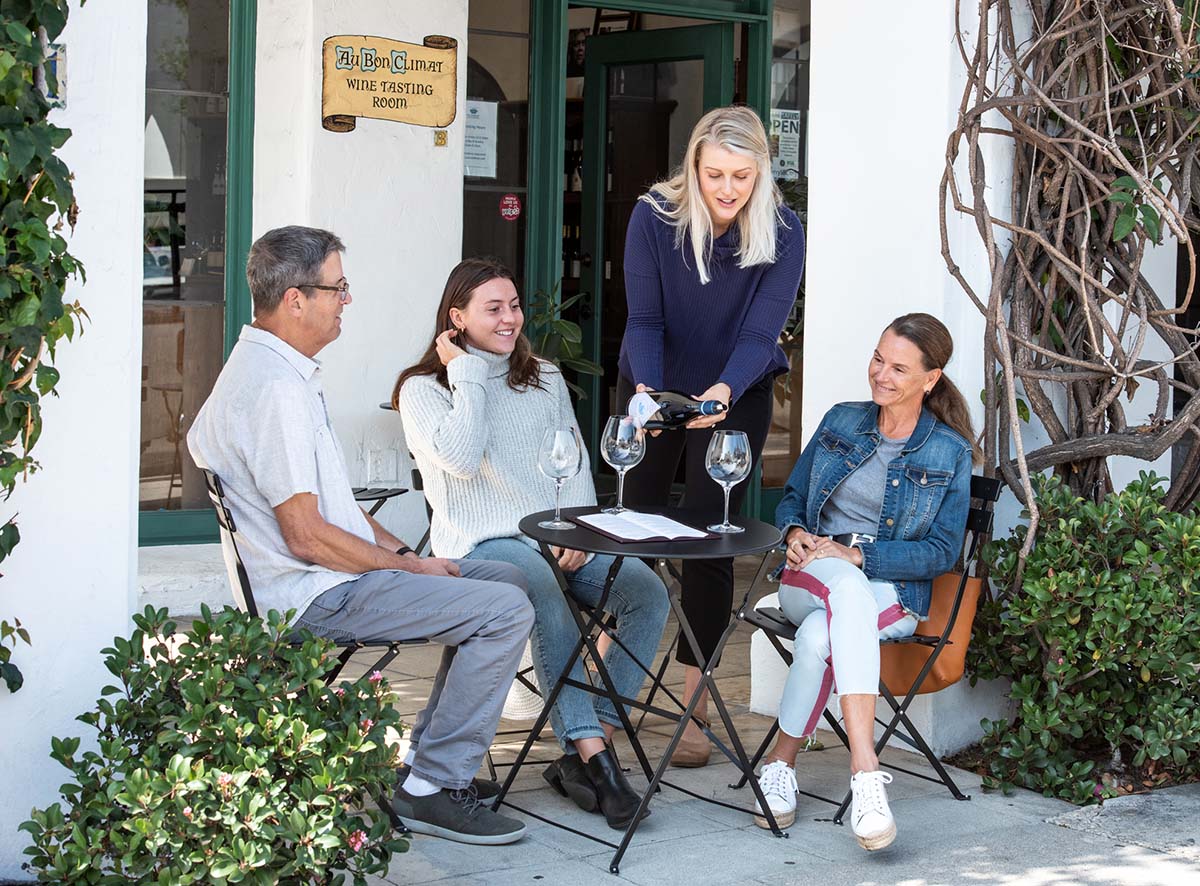
Visiting Happy Canyon takes a little planning, because it is not a roll-up tasting trail. Local rules have kept commercial tasting rooms out of the canyon itself, which is part of why the place stays so quiet and green, but it means you cannot simply drive in and hop from bar to bar. Most estate visits in the canyon are by appointment, and access to many of the vineyards is private. The good news is that you do not have to go into the canyon to drink its wines. The easiest route is to taste in town: Grassini Family Vineyards pours in downtown Santa Barbara, in the historic El Paseo just off State Street, and several Happy Canyon producers maintain tasting rooms or appointments in nearby villages such as Los Olivos and Santa Ynez.
The canyon lies at the eastern end of the Santa Ynez Valley, reached by heading east past Lake Cachuma, roughly thirty to forty minutes inland from the city of Santa Barbara over the San Marcos Pass. Spring and fall are the easiest times to visit, with warm but comfortable days, while summer can be genuinely hot here in a way the rest of Santa Barbara wine country is not. If you book an estate appointment, treat it as a destination rather than a stop, give yourself time, and pair it with tasting rooms in Los Olivos or downtown Santa Barbara to round out the day.
Food and the wines
Happy Canyon makes the kind of red wine built for the grill and the roasting pan. The Cabernet Sauvignon and Bordeaux blends carry firm tannin and dark, savory fruit, which is why they shine with red meat. Pour a Happy Canyon Cabernet with a grilled ribeye or a peppercorn-crusted steak, and the tannins latch onto the fat and protein, softening on the palate while the wine’s dark fruit and herbal edge stand up to the char. Lamb is just as good, especially with rosemary and garlic, where the wine’s savory streak meets the herbs head on. Cabernet Franc and Merlot bottlings, a touch softer and more aromatic, love braised short ribs, mushroom dishes, and anything with a long, slow, umami-rich sauce.
Do not overlook the whites. Happy Canyon Sauvignon Blanc is crisp and citrus-driven with real cut, a natural with goat cheese, fresh oysters, herb-flecked salads, or grilled white fish with lemon. The wine’s acidity slices through richness and resets the palate. For a precise match to the bottle in front of you, let our wine pairing generator do the work.
Happy Canyon rewards anyone curious enough to drive past the fog and into the heat. To set it in context, explore the broader Santa Barbara wine scene and the wider Santa Ynez Valley, compare it with sibling appellations like the cool Sta. Rita Hills, Ballard Canyon, and the Los Olivos District, read up on the grapes in our California Cabernet Sauvignon and Sauvignon Blanc guides, or visit producers like Grassini Family Vineyards and Happy Canyon Vineyard.
Happy Canyon of Santa Barbara questions, answered
Where is Happy Canyon of Santa Barbara?
It sits at the far eastern end of the Santa Ynez Valley in Santa Barbara County, in the foothills of the San Rafael Mountains beyond Lake Cachuma. It is the warmest and most inland corner of the valley, roughly thirty to forty minutes from the city of Santa Barbara over the San Marcos Pass.
When was the Happy Canyon AVA established?
Happy Canyon of Santa Barbara was approved as an American Viticultural Area on November 9, 2009. It was the county’s fourth AVA and remains the smallest appellation in Santa Barbara County, covering about 37 square miles with only a few hundred acres planted to vines.
What wine is Happy Canyon known for?
Bordeaux varieties. Happy Canyon is the warmest part of the Santa Ynez Valley, and it is the one corner of Santa Barbara County that ripens Cabernet Sauvignon, Merlot, Cabernet Franc, and Petit Verdot fully, along with bright Sauvignon Blanc. In a region famous for cool-climate Pinot Noir and Chardonnay, Happy Canyon is the dedicated red-wine and Cabernet country.
Why is Happy Canyon warmer than the rest of Santa Barbara wine country?
The Santa Ynez Valley runs east to west and opens to the Pacific at its western end, so fog and cool ocean air pour inland and keep the western vineyards cold. Happy Canyon sits at the far eastern end, past Lake Cachuma, where the marine influence runs out. The fog burns off early and the canyon traps heat, so summer afternoons can reach around ninety degrees.
What are the soils like in Happy Canyon?
The soils range from sandy and clay loams to cherts and, most distinctively, serpentine. Serpentine is a green, magnesium-rich rock, so these soils carry elevated magnesium, lower sodium, and a poor, mineral-heavy profile. That nutrient-poor ground stresses the vines into making small, concentrated berries, which growers credit for the savory, mineral character of the best Happy Canyon reds.
How did Happy Canyon get its name?
The name is said to date to Prohibition, when the remote canyon became a place to slip away and find illicit local moonshine. Bootleggers reportedly worked the area producing bottled spirits that were in high demand, and the cheerful nickname stuck long before the canyon became known for legal wine.
Can you visit wineries in Happy Canyon?
Yes, but it takes planning. Local rules have kept commercial tasting rooms out of the canyon itself, and most estate visits are by appointment with limited public access. The easiest way to taste Happy Canyon wine is in town. Grassini Family Vineyards pours in downtown Santa Barbara at El Paseo, and several producers keep tasting rooms or appointments in nearby villages such as Los Olivos and Santa Ynez.
What food pairs with Happy Canyon Cabernet Sauvignon?
Red meat is the natural match. A grilled ribeye or peppercorn-crusted steak meets the wine’s firm tannin and dark fruit beautifully, with the fat softening the tannins as you eat. Lamb with rosemary and garlic plays to the wine’s savory, herbal edge, and the softer Merlot and Cabernet Franc bottlings shine with braised short ribs and mushroom dishes.