Stand in Ballard Canyon on an August afternoon and the first thing you notice is the heat, real Southern California sun on your neck, the smell of warm grass and dust. Then notice what is missing. The relentless ocean wind that defines the far western Santa Ynez Valley has been left behind. This little canyon runs north to south, crosswise to the cool air pouring in off the Pacific, and those low hills do just enough to slow the fog and tame the wind. By night the cold still creeps up from the coast, and the temperature can fall close to forty degrees from its midday high. Hot days, cold nights, poor stony ground, and a canyon angled to hold the warmth: this is the exact recipe for great Syrah, and a handful of stubborn growers figured that out before anyone gave the place a name.
The place
Ballard Canyon sits in the geographic center of the larger Santa Ynez Valley, west of the little town of Ballard and just north and west of Solvang. It is small, roughly 7,700 acres, which makes it only about a tenth of the valley that surrounds it, and that tightness is the point. Where the broader valley swings from cold coast to hot inland across thirty miles, Ballard Canyon is one consistent middle ground, warm but not scorching, with a uniformity of climate and soil that lets a grape express the ground rather than the weather.
The canyon’s north-south orientation is the whole story. Almost everything around it bends to the east-west transverse ranges that funnel ocean fog inland, but this canyon cuts across that flow. Morning fog still slides in from the coast and pools in the lower, southern reaches, then burns back by afternoon, while the higher vineyards in the north sit above it in clearer, warmer air. The result is a long, even growing season with big diurnal swings, daytime highs that can push past ninety degrees and nights that drop toward fifty. Grapes ripen fully in the sun yet hold onto their acid through the cold dark, which is why the reds here are concentrated and ripe without ever turning soft or jammy.
Then there is the dirt, and it is unusual for California. Ballard Canyon sits on a rare seam of limestone and chalk, mixed through well-draining sand and clay loam. The northern vineyards in particular run over limestone and chalky sandstone, the kind of pale, alkaline, free-draining ground that growers chase all over the world for the tension and minerality it lends to wine. Michael Larner, one of the canyon’s founding growers, likes to describe the divide simply: the north and east sites sit on limestone, while the south side runs more to chalk. Either way, the vines have to dig and struggle, and struggling vines make the most interesting wine.
What they grow
Ballard Canyon is Syrah country, and it does not hedge. Syrah accounts for more than half of all the vines in the AVA, an extraordinary concentration on a single grape, and another thirty percent of plantings go to its Rhone relatives, chiefly Grenache among the reds and Viognier and Roussanne among the whites. This is California doing the northern and southern Rhone at once, on warm hillsides under a brighter sun, and the canyon’s growers believe so firmly in their flagship that when the AVA was approved they openly debated setting a thirty-dollar minimum retail price for any Syrah carrying the Ballard Canyon name, a statement of quality almost unheard of in American wine.
The Syrah here is the savory kind, not the sweet kind. Expect black and blue fruit wrapped around cracked pepper, cured meat, dried herbs, and a smoky, gamey, almost bloody edge that European drinkers recognize and Californian drinkers fall hard for. The warm days build the dark fruit and the ripe tannin, the cold nights and limestone keep the whole thing lifted and fresh. The white Rhones are the quiet surprise, Viognier and Roussanne giving lively, precise wines full of peach, orange blossom, and a saline mineral cut, far from the heavy, oily style the grapes can show in warmer ground. You will also find Grenache, both as a varietal red and as the soft core of Rhone blends, plus pockets of Sangiovese and Mourvedre. For the bigger picture on the grapes the rest of the state leans on, our California Pinot Noir, California Chardonnay, and California Cabernet Sauvignon guides set the contrast, but Ballard Canyon is its own world: Rhone, first and almost only.
Wineries and tasting rooms to know
For a region this small, the roster is serious. The families who planted here in the 1990s did so because they believed in the ground, and many of their vineyards now feed cult bottlings far beyond the canyon’s borders. These are the estates that built the place.
Stolpman Vineyards
Tom and Marilyn Stolpman planted in the limestone hills in 1990 and spent years selling fruit to cult names like Sine Qua Non and Ojai before launching their own label in the late 1990s. Now a benchmark for Ballard Canyon Syrah and a leader in dry-farmed, organic, regenerative growing.
Beckmen Vineyards
Tom Beckmen bought an unplanted 365-acre hillside above the valley in 1996 and turned it into Purisima Mountain Vineyard, a biodynamically farmed high site whose Syrah and Grenache are among the most acclaimed in Santa Barbara County.
Rusack Vineyards
Set on the historic ground where Gene Hallock founded the original Ballard Canyon Winery in 1974, Rusack is the estate that started it all. Syrah and Sangiovese, the grapes that first drew attention to this canyon, anchor a beautiful oak-shaded deck. Read our Rusack guide.
Larner Vineyard
The Larner family farms a hillside planted mostly to Syrah, with Grenache, Viognier, Malvasia Bianca, and Mourvedre filling out the Rhone picture. A respected source vineyard and a thoughtful producer that helped lead the push to create the AVA.
Jonata
The name is the Chumash word for live oak, and this large estate farms sandy ground to Syrah, Sangiovese, and Sauvignon Blanc, producing some of the most coveted and expensive wines in Santa Barbara County. A serious, low-volume, by-appointment address.
Saarloos and Sons
A multi-generation farming family that planted in Ballard Canyon during the 1990s and built a warm, welcoming tasting experience known for its hospitality. A friendly counterpoint to the canyon’s more austere cult houses.
How Ballard Canyon fits in the Santa Ynez Valley
Ballard Canyon is the warm, Rhone-loving middle of the Santa Ynez Valley, and it became a federal sub-appellation in 2013, a decade after its cooler neighbor to the west. To understand Santa Barbara wine, picture the valley as a temperature gradient that follows the reach of the ocean air. At the far cold western end sits the Sta. Rita Hills, fog-raked and built for Pinot Noir and Chardonnay. Move inland and the fog thins and the days warm, and you arrive here in Ballard Canyon, where the climate flips entirely to Syrah and the Rhone grapes. Keep going east and it gets hotter still, into Bordeaux country. Three sub-appellations, one valley, sorted from coolest to warmest by how far the Pacific can push, and Ballard Canyon is the Rhone heart in the middle.
Visiting
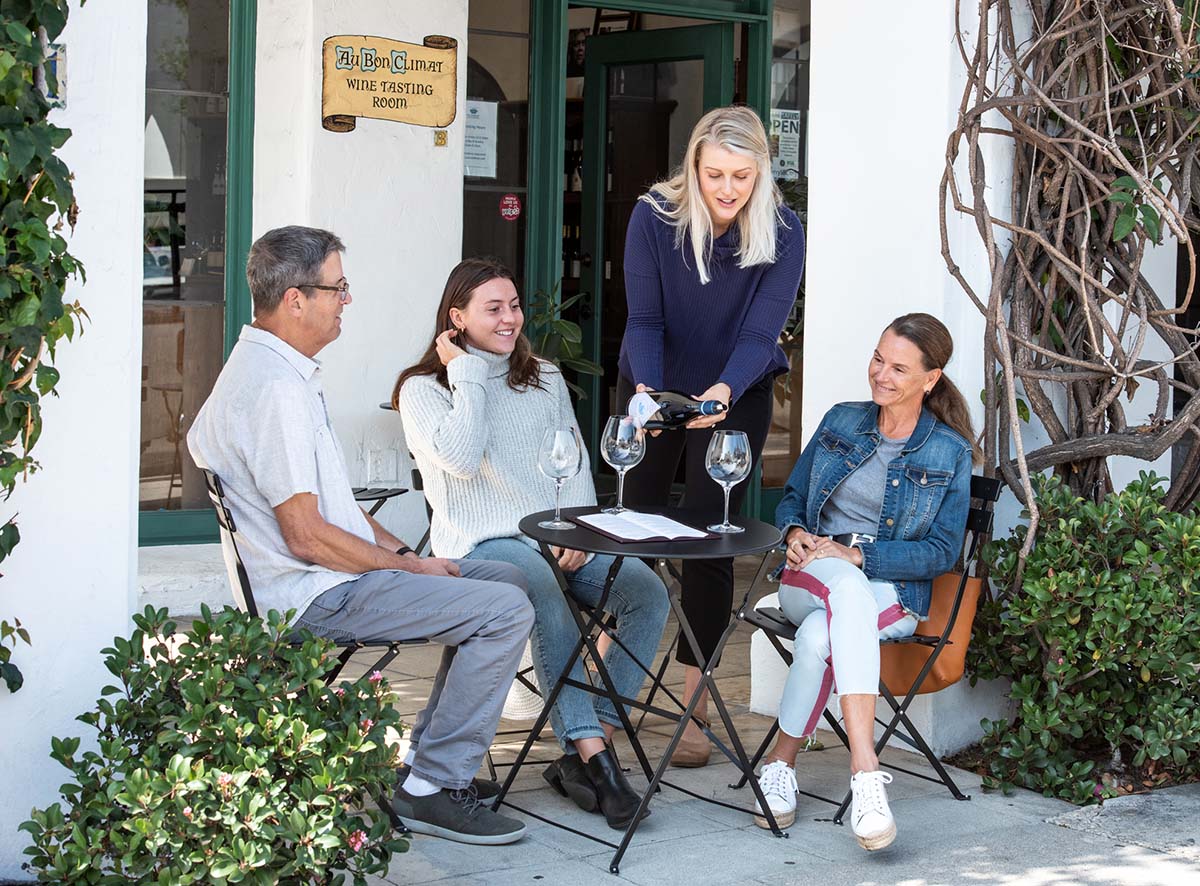
Ballard Canyon is a drive, not a stroll, and that is part of the appeal. The estates are spread along Ballard Canyon Road and the lanes off it, set among working vineyards rather than a walkable tasting-room strip, so you visit by car and by appointment, slowing down between stops to take in oak-studded hills that look the way California did a century ago. Many of the canyon’s most serious producers are small and tasting is by reservation, so plan ahead and call before you go.
Use the surrounding towns as your base. The tiny village of Ballard, the storybook Danish town of Solvang just to the south, and Los Olivos a short drive north all sit minutes away with restaurants, inns, and dozens more tasting rooms. The best season is late spring through fall for warm, clear weather, with harvest in September and October putting the whole canyon in motion. Spring, just after the winter rains, is the quiet secret, when the hills go green and the crowds thin. Whenever you come, bring a light layer for the evening, because the same cold night air that keeps the Syrah fresh will find you on the deck at dusk.
Food and the wines
Ballard Canyon Syrah was practically built for the local table, and that table runs to fire and smoke. Santa Barbara County is the home of Santa Maria-style barbecue, oak-grilled tri-tip and ranch beef cooked over red oak, and a peppery canyon Syrah is the perfect partner. The logic is pure structure: the wine’s firm tannin binds to the protein and fat of the grilled beef, so the meat tastes less heavy and the wine tastes rounder and smoother, while the smoke and char on the crust echo the wine’s own savory, peppery edge. That is congruent pairing and contrast working at once, the kind of match that feels inevitable because it was earned over years of people eating and drinking the same ground.
Push the same wine toward lamb chops with rosemary, braised short ribs, or anything off a wood fire and it sings. Grenache, softer and more red-fruited, loves grilled sausages, roast pork, and a tomato-rich stew. The white Rhones change the whole conversation: a bright Viognier or Roussanne, with its peach and orange-blossom lift and saline acidity, is lovely with roast chicken, grilled halibut, or a creamy soft cheese, the acid slicing the richness and resetting your palate for the next bite. For a specific match to the exact bottle in your hand, our wine pairing generator will take it from here.
Ballard Canyon rewards anyone who wants to understand California Syrah at its source. To place it in context, explore the wider Santa Ynez Valley and the broader Santa Barbara wine scene, compare it with its cool sibling the Sta. Rita Hills, or visit the canyon’s founding estate at Rusack Vineyards.
Pour a peppery Ballard Canyon Syrah with oak-grilled tri-tip and let the tannin and the smoke do the work, or let us match your plate to the perfect bottle.
Ballard Canyon questions, answered
Where is Ballard Canyon?
Ballard Canyon sits in the geographic center of the Santa Ynez Valley in Santa Barbara County, California, west of the small town of Ballard and just north and west of Solvang. It is a north-south canyon running through the warm middle of the larger valley, roughly a forty-five minute drive north of the city of Santa Barbara.
When did Ballard Canyon become an AVA?
Ballard Canyon was approved as a federal American Viticultural Area in 2013 by the U.S. Alcohol and Tobacco Tax and Trade Bureau. It is a sub-appellation nested inside the larger Santa Ynez Valley AVA, which was established back in 1983.
What wine is Ballard Canyon known for?
Syrah, above all. More than half of every vine planted in Ballard Canyon is Syrah, an unusually single-minded focus for an American wine region, which is why it is often called the Syrah heart of the Santa Ynez Valley. Another thirty percent of plantings go to Rhone relatives like Grenache, Viognier, and Roussanne.
Why is Ballard Canyon so good for Syrah?
The canyon runs north to south, crosswise to the ocean fog that pours into the rest of the valley, which shelters it just enough to stay warm. Hot days that can top ninety degrees ripen the Syrah fully, while nights that fall close to fifty preserve its acidity. The limestone and chalk soils add tension and minerality, giving wines that are concentrated and ripe yet fresh and savory rather than jammy.
What are the soils like in Ballard Canyon?
Ballard Canyon sits on a rare seam of limestone and chalk mixed through well-draining sand and clay loam. The northern vineyards in particular run over limestone and chalky sandstone. These pale, alkaline, free-draining soils force the vines to struggle, which yields small crops of intense, mineral-driven fruit.
Which wineries are in Ballard Canyon?
Founding and leading estates include Stolpman Vineyards, Beckmen Vineyards and its Purisima Mountain Vineyard, Larner Vineyard, Jonata, Saarloos and Sons, and Rusack Vineyards, which sits on the ground where the original Ballard Canyon Winery was founded in 1974. Most are small and tasting is by appointment, so call ahead before you visit.
How does Ballard Canyon compare to the Sta. Rita Hills?
They are opposite ends of the same valley. The Sta. Rita Hills is the cold, foggy, windy western corner built for Pinot Noir and Chardonnay, while Ballard Canyon is the warm, sheltered middle built for Syrah and Rhone grapes. The two sit within a half-hour drive of each other, which is why Santa Barbara County can claim both serious Pinot and serious Syrah.
What food pairs with Ballard Canyon Syrah?
Reach for oak-grilled tri-tip or ranch beef, the local Santa Maria-style barbecue, where the wine’s firm tannin binds to the fat and protein so the meat tastes lighter and the wine tastes rounder, while the smoke echoes the Syrah’s own peppery, savory edge. Lamb with rosemary, braised short ribs, and anything off a wood fire all work the same way.