
Drive north out of Los Olivos, over the San Rafael ridges and down into the open mouth of the Santa Maria Valley, and the first thing you notice is the air. By eight in the morning the whole valley floor is under a soft grey ceiling of marine fog, and it does not lift the way coastal fog usually does. It lingers, sometimes past noon, then gives way to a cool ocean wind that keeps blowing until the sun drops. This is goose-bump country in July, with summer afternoons that average around 75 degrees, and that cold is the entire point. It is why grapes here hang on the vine into late October, why they keep their nerve and their acid, and why a handful of growers figured out half a century ago that this unglamorous farm valley could make some of the most age-worthy Pinot Noir and Chardonnay in the New World.
The place
Santa Barbara County has a geographic accident that almost no other wine region on earth shares. Its mountains run east to west instead of north to south, part of the Transverse Ranges, and the Santa Maria Valley sits right in the path of that opening. The valley funnels Pacific air and dense morning fog straight inland off the cold California current, with nothing to block it. The result is a true maritime climate, classified as a Region I site on the Winkler scale, which puts it among the coolest viticultural areas in the state. Dense banks of fog roll in overnight and can take many hours to burn off, and when they finally clear, a chilly afternoon breeze takes over. The fruit ripens slowly across a long season, sometimes 120 days or more on the vine, building flavor and sugar without ever losing the bright acidity that gives these wines their lift and their longevity.
The valley floor and benchland soils run from sandy loam to clay loam, free of the adverse salts that plague some coastal sites, while the mountain slopes mix in shaly, silty, and sandier loams. The best vineyards climb the gentle benches above the Sisquoc and Cuyama river drainages, lifted just enough above the coldest valley floor to escape frost while still catching the wind. The Santa Maria Valley AVA was officially recognized on August 5, 1981, one of California’s earliest appellations, the first in both Santa Barbara and San Luis Obispo counties, and it stretches across the line between the two. Today it holds roughly 7,500 acres of vineyard, still mostly farmland, with cattle and strawberry fields running right up to the vine rows.
What they grow
This is Pinot Noir and Chardonnay country first and foremost, and it has been since the beginning. Santa Maria Valley Pinot Noir has a signature you can pick out blind: fragrant red fruit, cranberry and pomegranate and rose petal, a savory, slightly spicy earthiness, and a firm structure that lets the best bottles age for a decade or more. It is a cooler, more high-toned style than you find further south, and it sits proudly alongside the great cool-climate Pinots of the world. If you want to understand where this grape goes in the state, our guide to California Pinot Noir puts the valley in context.
Chardonnay is the valley’s quiet workhorse and arguably its most consistent triumph. Grown on the same fog-cooled benches, it keeps a stony, citrus-and-orchard-fruit precision with real cut, the kind of Chardonnay that can be lean and mineral or rich and textured depending on the hand that makes it, but almost always built on acidity rather than oak. Many of the most respected bottlings in our California Chardonnay guide trace back to Santa Maria fruit. And in the last two decades, growers have leaned into cool-climate Syrah and other Rhone grapes, which here turn savory and peppery and cool-spiced, closer to the Northern Rhone than to the sun-baked southern style. The valley quietly built a Rhone reputation thanks to winemakers who saw what this cold ground could do with the grape.
| Grape | Style here | Why it works |
|---|---|---|
| Pinot Noir | Cranberry, rose petal, savory spice, firm structure | Long cool season holds acid and builds perfume |
| Chardonnay | Citrus, orchard fruit, stony cut, age-worthy | Fog and wind keep natural acidity high |
| Syrah | Dark fruit, black pepper, cool-climate spice | Region I cold yields Northern Rhone character |
Vineyards and wineries to know
The valley’s reputation was built on a small number of pioneering vineyards and the winemakers who chased them. Here is where to start.
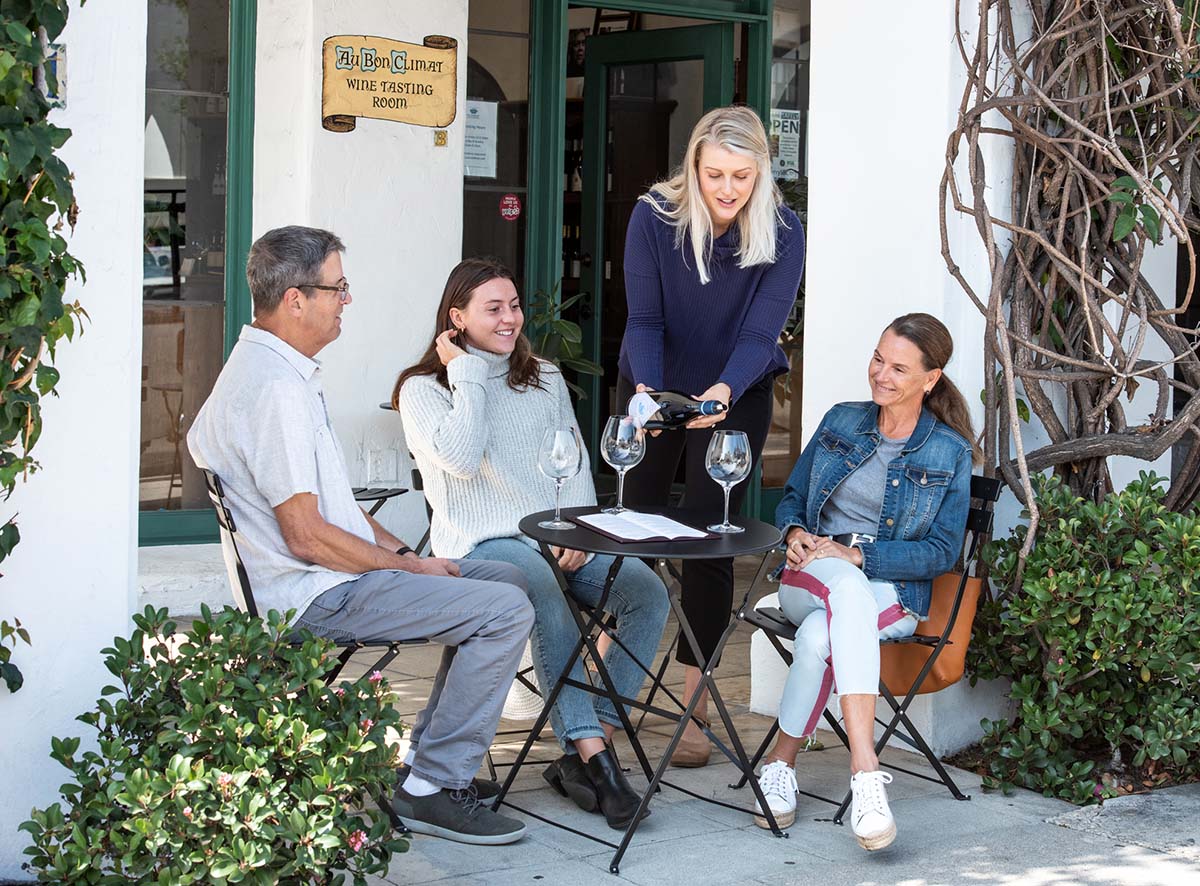
Au Bon Climat
Jim Clendenen’s legendary house, founded in 1982 and rooted in Santa Maria fruit, made Burgundian Pinot Noir and Chardonnay that put the valley on the world map. Still one of the names to know in Santa Barbara wine.
Foxen
The Foxen boys craft Pinot, Chardonnay, and Rhone-style wines, with the original tin Shack tasting room turning out Cal-Ital and Bordeaux-style bottlings. A beloved stop on the Foxen Canyon Wine Trail.
Bien Nacido Vineyard
Planted in 1973 by brothers Bob and Steve Miller on the historic Rancho Tepusquet land grant, this roughly 900-acre estate is the valley’s defining site. Its name means well born, and its fruit appears on labels across California.
Cambria
On Chardonnay Lane in Santa Maria, Cambria farms land first planted as part of the historic Tepusquet Vineyard in the early 1970s, specializing in estate Chardonnay and Pinot Noir from its benchland blocks.
Riverbench
A roughly 270-acre estate first planted in the early 1970s and largely replanted since, devoted almost entirely to Chardonnay and Pinot Noir, including a respected program of estate sparkling wine.
Presqu’ile
Striking modern architecture and a hilltop tasting room overlooking the vineyards, with bold, cool-climate Pinot Noir, Chardonnay, and Syrah from its estate plantings. One of the valley’s most polished visits.
Santa Maria Valley vs Santa Ynez Valley
People mix these two up constantly, and they should not. Both are east-west valleys in Santa Barbara County, but they make very different wine. The Santa Maria Valley sits further north and opens almost entirely to cold Pacific air, which makes it a uniformly cool, Region I appellation built around Pinot Noir, Chardonnay, and cool-climate Syrah. The Santa Ynez Valley is a longer corridor with a strong temperature gradient: cool and foggy at its western end, progressively warmer as you move inland toward Los Olivos and the foothills. That warmth lets Santa Ynez ripen a much wider range of grapes, from Pinot Noir in the west to Bordeaux varieties like Cabernet Sauvignon and Merlot in the east, plus a deep bench of Rhone and Italian varieties. The short version: Santa Maria is cold and focused, Santa Ynez is varied and warmer.
Visiting
The Santa Maria Valley wears its farm-town roots honestly, and that is part of the charm. This is not Solvang. The tasting rooms sit among working ranches and produce fields, the pace is unhurried, and you will rarely fight a crowd. The classic route is the Foxen Canyon Wine Trail, a quiet two-lane road winding north from Los Olivos past oak-studded hills and historic vineyards, with Foxen and several Santa Maria producers strung along it. Come in the morning to see the fog still sitting on the valley floor, and bring a layer, because even in August the wind off the ocean has a bite. The valley is also the home of Santa Maria style barbecue, oak-grilled tri-tip cooked over native red oak and served with pinquito beans, salsa, and grilled bread. It is a genuine local tradition you can find at roadside grills and weekend pit cooks across town, and it happens to be one of the great food and wine matches in California.
Food and the wines
The local table and the local wine grew up together here, and they belong on the same plate. Santa Maria style tri-tip, smoky and charred over red oak, is practically engineered for valley Pinot Noir: the wine’s bright acidity cuts the richness of the beef while its savory, earthy fruit echoes the char, a complementary match that resets your palate for the next bite. Cool-climate Syrah is even better with the heavily seasoned, peppery bark on the meat, dark fruit meeting smoke and spice head on. For the valley’s Chardonnay, reach for something the fog would approve of: grilled local rockfish, Dungeness crab, or a roast chicken with herbs, where the wine’s stony acidity slices through butter and fat. The pinquito beans and salsa that come with every barbecue plate add salt and a touch of heat, both of which round out and sweeten a glass of red. If you want a match for a specific bottle or a specific dinner, our wine pairing generator will build one for you in seconds.
The Santa Maria Valley is one piece of a remarkable county. From here you can follow the chain south to the warmer, more varied Santa Ynez Valley, taste your way through the pioneers at Au Bon Climat and Foxen, or step back for the full picture in our guide to Santa Barbara wine. However you start, start cold, with the fog still on the ground and a glass that tastes like the wind off the Pacific.
Santa Maria Valley questions, answered
When was the Santa Maria Valley AVA established?
The Santa Maria Valley was officially recognized as an American Viticultural Area on August 5, 1981, making it one of California’s earliest appellations. It was the first AVA in both Santa Barbara and San Luis Obispo counties, and the appellation actually straddles the line between the two.
What wine is the Santa Maria Valley known for?
The valley is best known for cool-climate Pinot Noir and Chardonnay, and increasingly for savory, cool-climate Syrah. The cold, fog-fed maritime climate gives the reds bright acidity and red-fruited perfume and the whites a stony, age-worthy precision.
Why is the Santa Maria Valley so cool?
Santa Barbara County’s mountains run east to west, part of the Transverse Ranges, so the Santa Maria Valley opens directly to the Pacific. That orientation funnels cold ocean air and morning fog straight inland with nothing to block it, making the valley a Region I site and one of the coolest growing areas in California.
What is Bien Nacido Vineyard?
Bien Nacido is the valley’s benchmark vineyard, planted in 1973 by brothers Bob and Steve Miller on the historic Rancho Tepusquet land grant. Its name means well born in Spanish. The roughly 900-acre site supplies Pinot Noir and Chardonnay to many of California’s most respected producers, and its name appears on labels across the state.
How is the Santa Maria Valley different from the Santa Ynez Valley?
Both are east-west valleys in Santa Barbara County, but Santa Maria sits further north, is uniformly cool, and focuses on Pinot Noir, Chardonnay, and cool-climate Syrah. Santa Ynez is a longer corridor with a temperature gradient, cool in the west and warmer inland, which lets it ripen a far wider range of grapes including Bordeaux and Rhone varieties.
What food pairs with Santa Maria Valley wine?
Local Santa Maria style barbecue is the natural match. Oak-grilled tri-tip pairs beautifully with the valley’s Pinot Noir, whose acidity cuts the rich beef while its savory fruit echoes the char. Peppery, smoky meat is even better with cool-climate Syrah, and the valley’s crisp Chardonnay shines with grilled fish, crab, or roast chicken.
Which wineries should I visit in the Santa Maria Valley?
Start with the pioneers and the modern estates: Au Bon Climat and Foxen for the history, Presqu’ile for striking architecture and views, and estate houses like Cambria and Riverbench for benchland Chardonnay and Pinot Noir. Many sit along the scenic Foxen Canyon Wine Trail.
What grapes were first planted in the Santa Maria Valley?
The valley’s modern wine era began in the early 1970s, when Bien Nacido was planted in 1973 with about 300 acres of Pinot Noir and Chardonnay, and nearby Tepusquet Vineyard, now part of Cambria, went in around the same time. Those original cool-climate plantings set the template the valley still follows today.