
Au Bon Climat
Founded in 1982 by Jim Clendenen, Au Bon Climat has built one of Santa Barbara County’s most celebrated Burgundian-style programs, sourcing from historic sites like Sanford & Benedict and Bien Nacido and pouring at its Presidio neighborhood tasting room.
A good place, since 1982
Jim Clendenen founded Au Bon Climat in 1982, naming it for the French idiom for “good place,” after exploratory trips to Burgundy convinced him that Santa Barbara County‘s cool Pacific air and marine soils could produce Chardonnay and Pinot Noir in the Burgundian style. The winery’s roots run through Los Alamos Vineyard, where Au Bon Climat’s first winery began that year.
Barrel fermentation, whole cluster pressing, lees aging and extended time in French oak remain standard practice, producing wines built for balance and longevity rather than flash. Today Au Bon Climat pours alongside its sister label, Clendenen Family Vineyards, at a single Santa Barbara tasting room.
Historic vineyards, Burgundian style
The Historic Vineyards Collection is Au Bon Climat’s signature: Bien Nacido, sourced since the early 1990s, Sanford & Benedict, planted in 1971 and one of California’s most storied Pinot Noir and Chardonnay sites, and Talley Vineyard in San Luis Obispo, first bottled by ABC in 1991. The 2017 “32nd Vintage Celebration” Chardonnay from Sanford & Benedict scored 95 points from Wine Enthusiast, 93 from Jeb Dunnuck and 92 from Wine & Spirits Magazine.
The wines
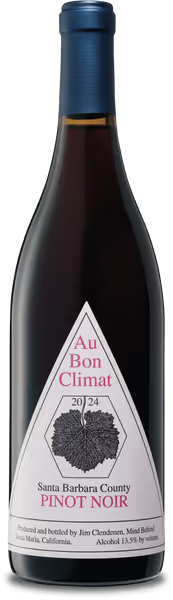 2024 Pinot Noir, Santa Barbara CountyEveryday estate Pinot NoirView at the winery ›
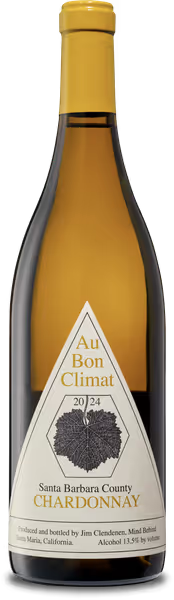 2024 Chardonnay, Santa Barbara CountyEveryday estate ChardonnayView at the winery ›
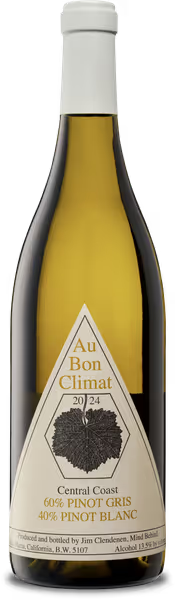 2024 Pinot Gris / Pinot BlancSanta Barbara County blendView at the winery ›
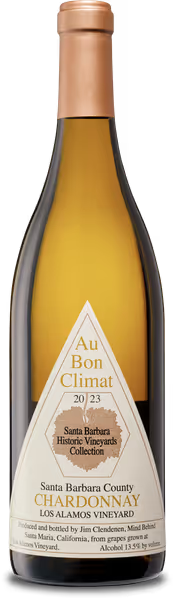 2023 Chardonnay, Los Alamos VineyardABC’s original 1982 vineyard siteView at the winery ›
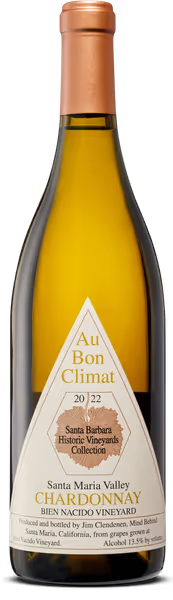 2023 Chardonnay, Bien Nacido VineyardSanta Barbara Historic Vineyards CollectionView at the winery ›
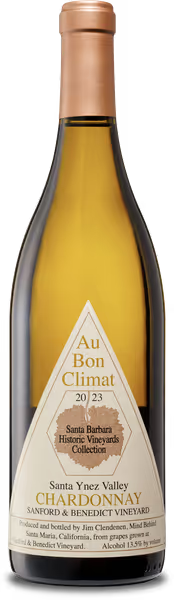 2023 Chardonnay, Sanford & Benedict VineyardPlanted 1971, Sta. Rita HillsView at the winery ›
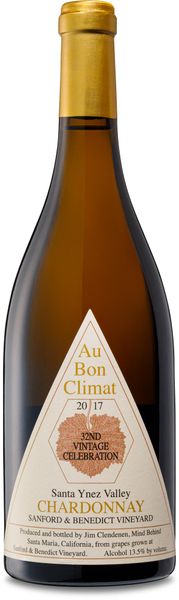 2017 Chardonnay “32nd Vintage Celebration”Sanford & Benedict, 95pts Wine EnthusiastView at the winery ›
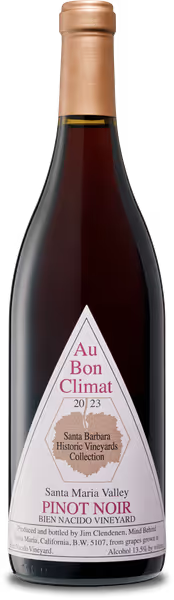 2023 Pinot Noir, Bien Nacido VineyardSanta Barbara Historic Vineyards CollectionView at the winery ›
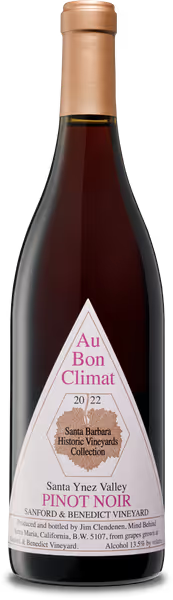 2023 Pinot Noir, Sanford & Benedict VineyardSourced since the early 1980sView at the winery ›
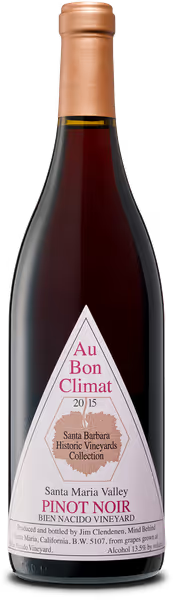 2015 Pinot Noir, Bien Nacido Vineyard92 points, Jeb DunnuckView at the winery ›
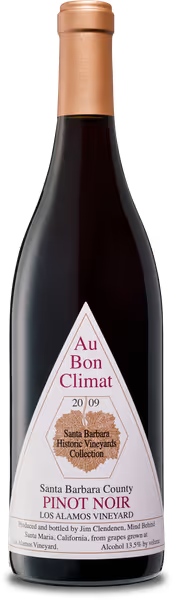 2009 Pinot Noir, Los Alamos Vineyard91 points, Antonio Galloni’s VinousView at the winery ›
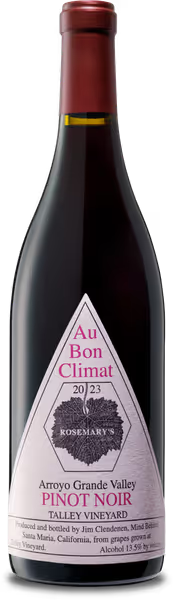 2023 Pinot Noir, Talley Vyd “Rosemary”San Luis Obispo, first bottled 1991View at the winery ›
Visiting Au Bon Climat
The tasting room sits in downtown Santa Barbara’s historic Presidio neighborhood, pouring both current releases and rare library selections from one of the most extensive wine libraries in Santa Barbara. The production winery itself is in Santa Maria and is not open to the public.
Frequently asked questions
Where is Au Bon Climat’s tasting room?
813 Anacapa Street, Suite 5B, in the historic Presidio neighborhood of downtown Santa Barbara.
Who founded Au Bon Climat?
Jim Clendenen founded the winery in 1982 after exploratory trips to Burgundy, with the goal of making traditional, site-specific Chardonnay and Pinot Noir in Santa Barbara County.
Do I need a reservation for tasting?
Reservations are recommended, though walk-ins are welcome based on availability. The tasting room is open Wednesday through Monday, 12pm to 6pm, and closed Tuesdays.
What vineyards does Au Bon Climat source from?
Its Historic Vineyards Collection draws from Los Alamos, Bien Nacido, Sanford & Benedict, and Talley vineyards, several of Santa Barbara and San Luis Obispo County’s most celebrated sites.
What is Sanford & Benedict Vineyard known for?
Planted in 1971, it is one of California’s most historic sites for Burgundian varietals, and Au Bon Climat has sourced fruit from it since the early 1980s.
Does Au Bon Climat make other wines besides Chardonnay and Pinot Noir?
Yes. The tasting room carries more than 100 wines including over 16 additional grape varieties, plus rare library selections and large-format bottles.
What is Clendenen Family Vineyards?
A sister label poured alongside Au Bon Climat at the same Santa Barbara tasting room, part of Jim Clendenen’s broader portfolio of wine projects.
Is the winery itself open to the public?
No. The production winery is in Santa Maria and is not open to visitors. All tastings happen at the Anacapa Street tasting room in Santa Barbara.
Nearby and related
- Santa Barbara County the wider region and its sub appellations.
- California Chardonnay the grape ABC built its reputation on.
- California Pinot Noir the estate’s other signature variety.
- California winery directory every producer we cover.
Information sourced from the Au Bon Climat official website, checked September 2026. Always confirm hours and availability before visiting.