
How Much Wine Do You Need for a Wedding?
Wedding wine is one of the biggest single purchases of the day, and the stakes feel high. Get the numbers right and the bar runs smoothly all night. Here is the formula the pros use, scaled to your guest count.
Six weeks before the wedding, the question that keeps couples up at night is rarely the seating chart. It is the bar. You have a guest count, a venue that wants a final number, and a wine shop asking how many cases to set aside. Buy too little and the bar runs dry during the dancing. Buy too much and you are hauling unopened cases to your car at midnight. The good news is that wedding wine math is not guesswork. It is arithmetic, and once you know the three numbers that drive it, you can plan the whole bar on the back of a napkin.
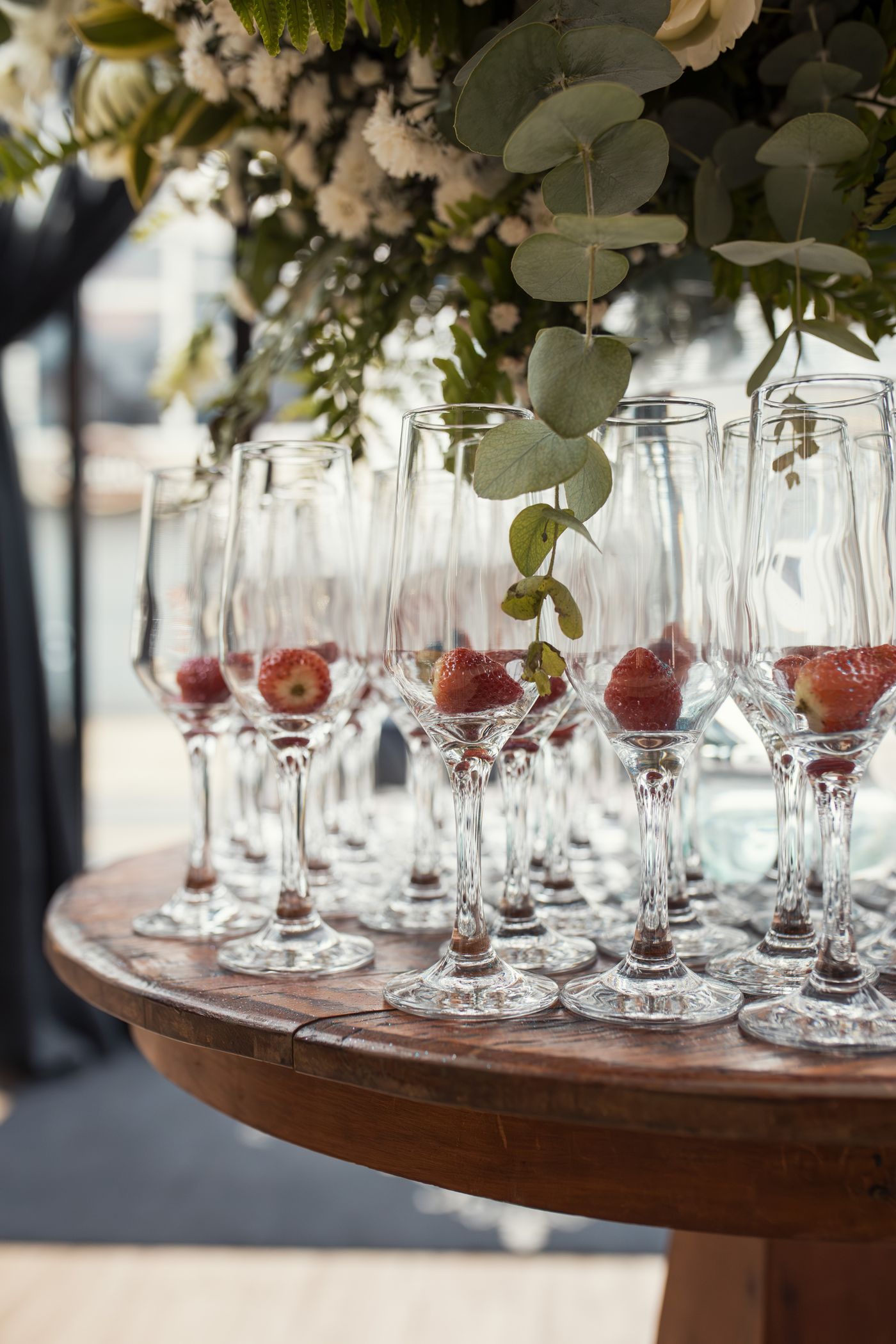
The formula every couple should memorize
Start with consumption. Across catering and event-planning sources, the working rule is one alcoholic drink per guest per hour for a reception. A few planners push it to two for a heavy-drinking crowd, but one per hour, averaged over the night, is the reliable baseline because not everyone drinks at the same pace and some guests do not drink at all. For a five-hour reception, that is five drinks per guest over the course of the evening.
Now convert drinks into wine. A standard 750ml bottle holds 25.4 ounces, and a proper wine pour at an event is about 5 ounces, which gives you five glasses per bottle. Of all the drinks consumed at a typical wedding, wine accounts for somewhere between 50 and 60 percent, with beer and spirits splitting the rest. So the master equation is simple: take your guests, multiply by hours, multiply by the wine share, then divide by five glasses per bottle. One hundred guests times five hours times a 55 percent wine share gives 275 glasses, divided by five, equals 55 bottles before your buffer.
That last word, buffer, matters more at a wedding than at any other event. You cannot run out at your own reception, and unopened bottles are usually returnable. So once you have the calculated number, add 10 to 15 percent and round up to whole cases. A case is twelve bottles, so think in dozens. The table below does this math for you across the guest counts couples actually plan for.
Wedding wine by guest count, five-hour reception
These figures assume a five-hour reception, wine running at roughly 55 percent of all drinks on a wine-and-beer bar, five glasses per bottle, about 10 percent of guests not drinking, and a safety buffer baked in. If you are running a full bar with spirits, shave the wine numbers by about 20 percent and move that volume to liquor. If wine is the only alcohol you serve, add about 20 percent.
| Guests | Total drinks (5 hrs) | Wine glasses needed | Bottles (with buffer) | Cases | Toast bottles (sparkling) |
|---|---|---|---|---|---|
| 50 | about 225 | about 125 | 30 bottles | about 2.5 cases | 9 to 10 |
| 75 | about 340 | about 185 | 44 bottles | about 3.5 cases | 13 to 15 |
| 100 | about 450 | about 250 | 60 bottles | 5 cases | 17 to 20 |
| 150 | about 675 | about 375 | 90 bottles | about 7.5 cases | 25 to 30 |
| 200 | about 900 | about 500 | 120 bottles | 10 cases | 34 to 40 |
The toast column is separate from the reception wine because a toast is a small pour. A 750ml bottle gives six full champagne flutes, or closer to eight smaller toast-sized pours, so you need roughly one bottle per five to six guests if everyone raises a glass. Many couples scale this back, since toast champagne is famously the most-abandoned drink of the night. More on that math below.
How to split the wine, the toast, and the rest of the bar
Knowing your bottle count is half the job. The other half is deciding what those bottles are. The cards below break the wedding bar into its real parts, from the cocktail-hour spike to the red, white, and sparkling ratio, so you order the right wine and not just the right amount. For a deeper rule-of-thumb breakdown across any event, our pillar guide on how much wine for a party walks the same math for non-wedding gatherings.
The cocktail-hour spike
First 60 minutes
Guests drink fastest in the first hour, when they arrive thirsty, mingling, and not yet seated. Plan for closer to 1.5 drinks per guest in cocktail hour rather than one. This is where you want plenty of crisp white and sparkling ready and chilled, since warm-weather arrivals reach for something cold first.
Red, white, and sparkling ratio
The pour split
A reliable default is 40 percent white, 40 percent red, and 20 percent sparkling or rose. Sit-down dinners with red meat tilt toward red. Summer and afternoon weddings tilt toward white and rose. Always over-buy whites slightly because they double as the easy cocktail-hour pour.
The wine, beer, spirits split
Whole-bar math
On a full bar, the classic split is roughly 50 percent wine, 30 percent beer, 20 percent spirits, though crowds vary. Wine-and-beer-only weddings push wine toward 60 to 65 percent. Whatever the mix, calculate each category off the same one-drink-per-guest-per-hour baseline.
The toast pour
One moment, small glass
The toast is a single 4-ounce flute per guest, not a drinking pour. Six flutes come out of a bottle, so divide guests by five or six and round up. Skip a separate toast entirely and let guests toast with whatever is already in their glass to save a case or more.
Accounting for non-drinkers
Trim the count
Roughly 10 to 20 percent of any guest list does not drink alcohol, between designated drivers, pregnant guests, kids counted in the head count, and people who simply prefer water. Trimming the drinking population by 10 percent before you calculate keeps you from over-ordering by a case or more at larger weddings.
Signature cocktails
The wine offset
A signature cocktail or two pulls drinkers away from the wine table. If you offer a featured cocktail, expect it to absorb 15 to 25 percent of the spirit-and-wine demand, so you can safely reduce your wine order by about 10 to 15 percent and put that budget into the cocktail ingredients instead.
Seasonal adjustment
Summer vs winter
A July garden wedding skews hard toward chilled whites, rose, and sparkling, so flip your ratio to roughly 50 percent white and rose, 30 percent red, 20 percent sparkling. A December evening reception with a braised-meat dinner can run red-heavy at 50 percent or more. Match the wine to the weather, not just the menu.
The buffer and returns
Insurance
Always order 10 to 15 percent over your calculated number. The reason it is painless: most wine shops sell wedding wine on consignment and take back unopened, room-temperature bottles for a full refund. Over-buy on purpose, then return what you do not pour.
Three real wedding scenarios, fully planned
Numbers land better as complete plans. Here are three weddings sized from intimate to large, each with the wine ordered, split, and budgeted. Prices assume mid-range bottles in the 12 to 18 dollar range, which is the sweet spot for wedding wine that tastes good by the case without breaking the budget.
How to actually buy it, store it, and serve it
Once you know your number, the buying is the easy part if you do it right. Ask your wine shop about consignment, sometimes called sale-or-return: you take more than you need, and they refund every unopened, undamaged bottle after the wedding. Most reputable shops offer this for case orders, and many give a 10 to 15 percent case discount on top, so over-buying costs you nothing and protects you from running dry.
Storage and temperature are the quiet make-or-break. Whites, rose, and sparkling should be fully chilled before service, which means starting the cooling the morning of or the night before, since a warm case will not chill in an ice tub during cocktail hour. Reds are best served slightly cool, around 60 to 65 degrees, not warm-room temperature. Budget two to three glasses, or a third to half a bottle, per guest for a sit-down dinner versus a full five glasses for a long dancing reception, and tell your caterer the pour size, because a heavy-handed pour at 7 ounces instead of 5 quietly eats an extra case at a 100-guest wedding.
If your venue lets you bring your own wine, ask about the corkage fee first. Corkage typically runs 3 to 35 dollars per bottle, and some venues charge per guest instead, which can erase the savings of buying your own. At 60 bottles, a 15-dollar corkage fee is 900 dollars on top of the wine itself, so do that math before assuming bring-your-own is cheaper. A dry-hire venue, where you rent only the space, avoids corkage entirely. When you want a fast, exact number tuned to your guest count, hours, and bar type, run it through our wine party calculator instead of estimating by hand.
Choosing wines that please a crowd
Wedding wine has one job: please a room full of people with wildly different tastes, by the case, without anyone feeling shortchanged. That points you toward crowd-friendly, food-flexible styles rather than challenging bottles. For whites, a dry but fruit-forward Pinot Grigio, an unoaked or lightly oaked Chardonnay, or a Sauvignon Blanc all drink easily and pair with nearly any plated dinner. For reds, a medium-bodied Pinot Noir or a smooth Merlot offends no one, while a Cabernet Sauvignon suits a steak or short-rib entree. For the toast and for summer cocktail hour, a Cava or Prosecco delivers real sparkle at a fraction of Champagne pricing, and a dry rose from Provence or California bridges every season.
If you want to understand why these styles work across a crowd, our pillar on the types of wine breaks down each grape and style, and the guide to how many glasses are in a bottle of wine nails down the pour math behind every number on this page. Picking wine as a gift for the couple instead of the bar? The wedding wine gifts guide covers bottles worth giving.
Mistakes that wreck the wedding bar
The first and most common mistake is buying for your full head count instead of your drinking count. If 15 of your 100 guests are children or non-drinkers, you have just over-ordered by more than a case. Trim before you calculate.
The second is ignoring the cocktail-hour spike and chilling too little white. Couples buy a balanced red-white split, then watch the whites vanish in the first 45 minutes while warm reds sit untouched on the bar. Over-buy whites and chill them early.
The third is over-investing in the toast. A per-guest champagne toast is the single most-abandoned drink of any wedding, often half-drunk and left on the table. Scale the toast back, or skip the dedicated toast and let guests raise whatever they are already drinking. The fourth is forgetting to confirm the return policy before buying, which turns a sensible safety buffer into cases of wine you are stuck with. The fifth is assuming bring-your-own always saves money without doing the corkage math.
Why we toast with wine at all
The wedding toast is one of the oldest surviving wedding rituals. The custom of raising a glass to the couple traces back through centuries of European banquet tradition, where sharing wine from a common source signaled trust and goodwill, and the clink of glasses was a gesture of unity. Sparkling wine became the toast of choice in the nineteenth century as Champagne grew into the drink of celebration and special occasion across Europe and America. The reason wine, rather than beer or spirits, dominates the modern wedding bar is partly practical and partly cultural: wine suits a seated dinner, scales cleanly by the bottle, and carries that long association with ceremony and good fortune. When you pour five glasses from a bottle for 100 guests, you are running the same arithmetic hosts have run for celebrations for generations.
For the full picture, start with the how much wine for a party pillar, then drill into the specifics with how many bottles of wine for 50 guests and how many glasses in a bottle of wine. To understand the styles you are pouring, the types of wine guide is the place to start, and for bottles to give rather than serve, see wedding wine gifts.
Stop estimating. Enter your guest count, reception length, and bar type and get the precise bottle and case count, split by red, white, and sparkling, in seconds.
Wedding wine questions, answered
How many bottles of wine do I need for 100 wedding guests?
For a five-hour reception with 100 guests on a wine-and-beer bar, plan on about 60 to 65 bottles, which is five to six cases, plus 18 to 20 sparkling bottles if you want a toast for everyone. On a full bar with spirits, you can drop to about 4 cases and shift that volume to liquor.
How much wine per person at a wedding?
Plan on roughly half a bottle of wine per guest for a four to five hour reception, which is about two to three glasses each. That assumes wine is one of several options on the bar. If wine is the only alcohol served, plan closer to a full bottle per drinking guest.
How many glasses of wine are in a bottle?
A standard 750ml bottle holds about five 5-ounce glasses of wine. For a champagne or sparkling toast, the same bottle gives six 4-ounce flutes, or up to eight smaller toast-sized pours, since a toast is meant to be a taste rather than a full drink.
What is the right ratio of red, white, and sparkling for a wedding?
A reliable default is 40 percent white, 40 percent red, and 20 percent sparkling or rose. Shift toward white and rose for summer and afternoon weddings, and toward red for winter weddings or red-meat dinners. Over-buy whites slightly since they double as the cocktail-hour pour.
How many bottles of champagne do I need for the toast?
One 750ml bottle pours six flutes for a toast, so divide your guest count by five or six and round up. For 100 guests that is roughly 17 to 20 bottles. Many couples scale this down because toast champagne is the most commonly abandoned drink of the night.
Can I return unopened wedding wine?
Usually yes. Most wine shops sell wedding wine on consignment, also called sale-or-return, and will refund every unopened, room-temperature bottle after the event. Always confirm the return policy before you buy, which is exactly why over-ordering by 10 to 15 percent is safe.
How much does wine for a wedding cost?
At a mid-range 12 to 18 dollars per bottle, expect roughly 600 dollars in reception wine for 50 guests, around 900 dollars for 100 guests, and about 1,800 dollars for 200 guests, before the toast. Buying by the case often earns a 10 to 15 percent discount on top.
Is it cheaper to bring my own wine to the venue?
Not always. Venues that allow outside wine usually charge a corkage fee of 3 to 35 dollars per bottle, and some charge per guest instead. At 60 bottles, a 15-dollar corkage fee adds 900 dollars, so always run the corkage math before assuming bring-your-own saves money. A dry-hire venue avoids corkage entirely.