
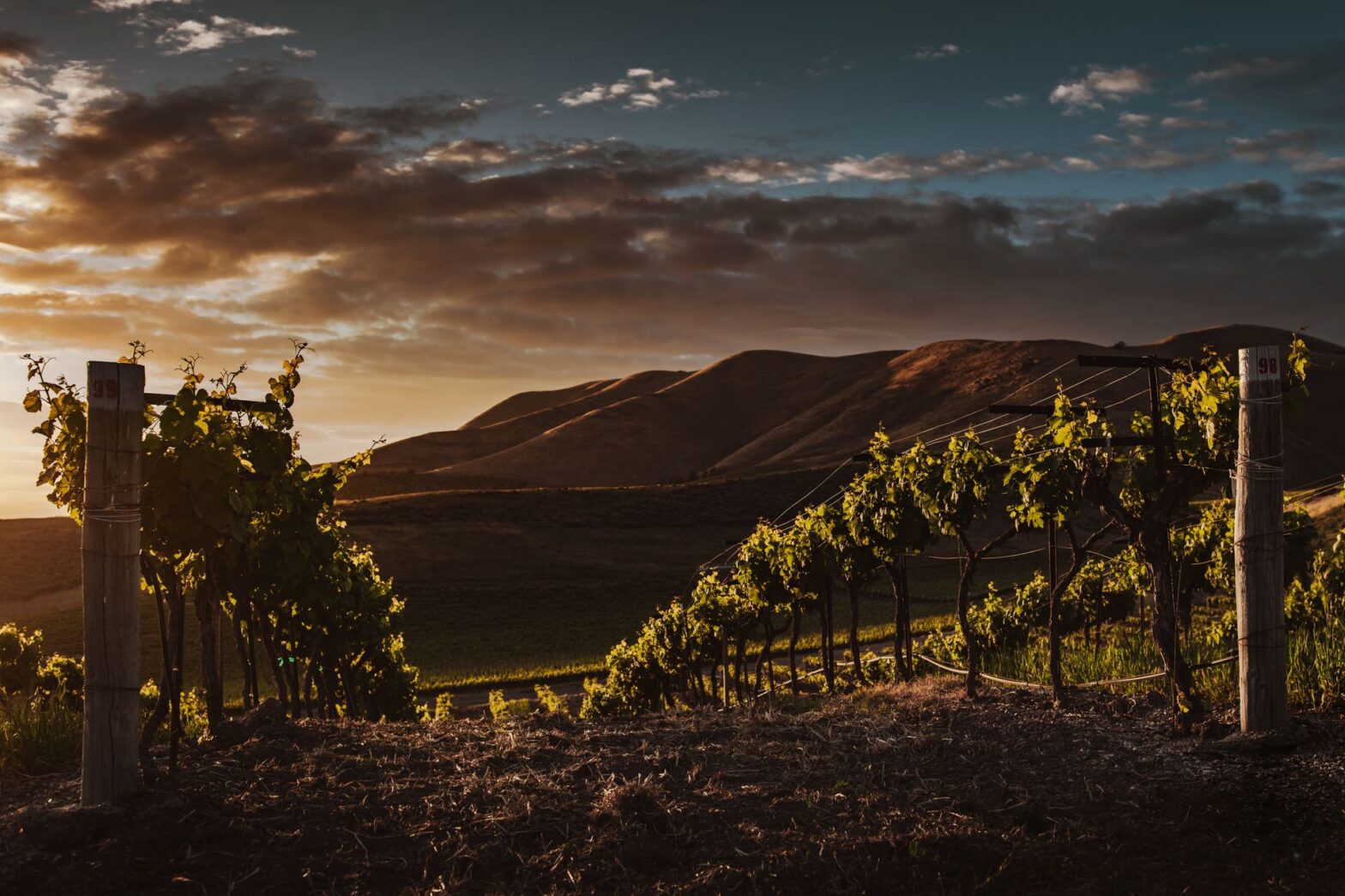

Monterey is one of California’s great cool-climate secrets. Most of its fruit once disappeared into bulk blends, but the county now stands on its own for vivid, mineral Chardonnay and serious Pinot Noir, grown in a valley that the wind keeps cold long after the rest of the state has ripened.
A short history of Monterey wine
Charles Tamm planted the county’s first commercial vineyard in 1919, high in the Gabilan Mountains in what is now the Chalone AVA, and kept it alive through Prohibition by selling grapes for sacramental wine. The modern era arrived in the 1960s and 1970s, when University of California researchers identified the cool Salinas Valley as ideal vineyard land and large producers such as Mirassou, Wente and Paul Masson planted thousands of acres almost overnight.
Monterey earned its own AVA in 1984, and the prized Santa Lucia Highlands followed in 1990. What began as a sea of contract grapes has matured into a county of estate growers and single-vineyard wines.
The land: a wind-cooled wine factory
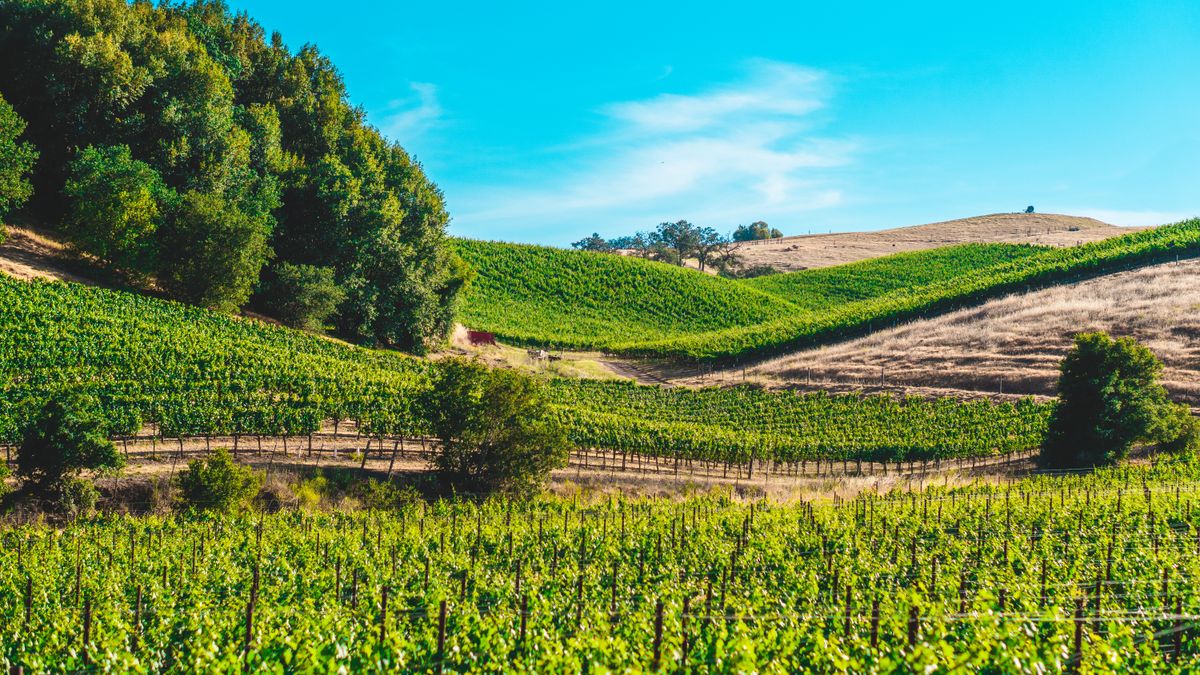
Monterey Bay sits over a submarine canyon so deep that locals call it the Blue Grand Canyon, and the water there is brutally cold. Every afternoon that cold air is pulled inland down the Salinas Valley like a chimney, dropping temperatures and slowing ripening. The growing season can run a month longer than in warmer regions, which lets grapes hang and build flavor while holding onto their acidity.
The bay-facing northern end of the valley is cold and windy; the further south you travel, the warmer it gets. That gradient is why a single county can grow both crisp Riesling and ripe Cabernet Sauvignon.
What Monterey grows best
Chardonnay is both the workhorse and the star here, and Monterey ranks among California’s largest Chardonnay producers; the best bottlings are bright and stony. Pinot Noir from the Santa Lucia Highlands is the county’s calling card, dark-fruited and structured. The cool Arroyo Seco floor turns out aromatic Riesling, Gewurztraminer and Pinot Gris, while Carmel Valley and the warm south ripen Syrah, Rhone blends and Cabernet.
By The Popular Wines Tasting Team. Last updated June 2026.
The 10 AVAs of Monterey County
Monterey AVA
The county-wide appellation along the Salinas Valley, established 1984. Cool, windy and blessed with one of the longest growing seasons anywhere, it is the engine behind Monterey Chardonnay and Pinot Noir.
Santa Lucia Highlands
East-facing benches on the valley’s western wall, recognized in 1990. The premier address for Pinot Noir and Chardonnay; vineyards such as Garys’ and Pisoni made it famous.
Arroyo Seco
A river-stone bench and gorge, 1983. Well-drained soils and cool air produce aromatic whites, especially Riesling, Gewurztraminer and Pinot Gris, plus fine Chardonnay.
Carmel Valley
A warm inland pocket south of Monterey Bay, 1982. Sheltered from the fog, it ripens some of the county’s best Cabernet Sauvignon and Bordeaux reds.
Chalone
High in the Gabilan Mountains near 1,800 feet, 1982. One of California’s rare limestone terroirs, first planted in 1919; Burgundian Chardonnay and Pinot Noir and old-vine Chenin Blanc.
San Bernabe
One of the world’s largest contiguous vineyards, with so many microclimates that blocks ripen weeks apart. A wide range from aromatic whites to bold reds.
San Lucas
A warmer stretch of the southern Salinas Valley. A dependable source of Cabernet, Merlot and Chardonnay grown at scale.
Hames Valley
The county’s warm southern corner with shale soils and the biggest day-to-night temperature swing. Bold Rhone varieties thrive here.
San Antonio Valley
A warm inland valley near Lake San Antonio, tempered by morning fog and evening ocean breezes. Rhone and Bordeaux reds.
Gabilan Mountains
A high-elevation appellation straddling Monterey and San Benito counties, on granite and limestone soils. It contains the Chalone area.
Monterey grapes, glass by glass
Chardonnay
The county signature. Bright citrus-and-orchard styles from the cool valley floor; richer, leesy versions off the warmer benches.
Pinot Noir
Santa Lucia Highlands is the star: dark cherry, baking spice and firm structure built for the cellar.
Riesling
Arroyo Seco’s cool floor yields off-dry, intensely aromatic Riesling with racy acidity.
Pinot Gris
Crisp pear-and-citrus whites from the cool northern valley, labeled Gris or Grigio.
Gewurztraminer
Lychee and rose perfume; a longtime Arroyo Seco specialty.
Syrah
From the warm southern AVAs and Carmel Valley: peppery, dark and savory.
Cabernet Sauvignon
Carmel Valley and the warm south ripen structured, cassis-driven reds.
Sauvignon Blanc
Zesty, herbal and bright from the cooler sites.
Monterey wineries to know
Hahn Family Wines
Santa Lucia Highlands. Nicky Hahn released his first vintage in 1980 and led the campaign that won the Santa Lucia Highlands its own appellation. Estate Pinot Noir and Chardonnay.
Pisoni Vineyards
Santa Lucia Highlands. Gary Pisoni’s hillside vineyard supplies many of California’s top Pinot producers; the family’s own bottlings are cult wines.
Talbott Vineyards
Santa Lucia Highlands. Estate Burgundian wines from Sleepy Hollow, one of the Highlands’ oldest and coldest vineyards, planted in 1972.
Morgan Winery
Santa Lucia Highlands. Dan Lee’s vineyard-focused label, more than thirty years of balanced, elegant Highlands Pinot and Chardonnay.
Bernardus
Carmel Valley. A Carmel Valley estate known for the Marinus Bordeaux blend alongside single-vineyard Chardonnay and Pinot.
Wrath Wines
Santa Lucia Highlands. A Pinot Noir powerhouse with a serious single-vineyard lineup from the Highlands.
Mer Soleil
Santa Lucia Highlands. The Wagner family’s Monterey label, known for rich, sun-driven Chardonnay.
Chalone Vineyard
Chalone. The pioneer on its namesake limestone mountain; its 1974 Chardonnay placed among the top whites at the 1976 Judgment of Paris tasting.
Tasting and the table in Monterey
River Road Wine Trail
The cluster of Santa Lucia Highlands tasting rooms along River Road, the easiest way to taste the county’s best Pinot in one afternoon.
A Taste of Monterey
A tasting room on Cannery Row pouring dozens of local labels with a wide view over Monterey Bay.
Carmel-by-the-Sea
A storybook coastal village with walkable tasting rooms and a dense restaurant scene, a short drive from Carmel Valley.
Cannery Row and the Wharf
John Steinbeck’s waterfront, now seafood, sea otters and the Monterey Bay Aquarium.
Carmel Valley Village
A relaxed inland hub of tasting rooms where the county’s warm reds are made.
Pinnacles National Park
Volcanic spires beside the Chalone AVA, condors overhead and a natural pairing for a vineyard day.
How to choose a Monterey wine
Monterey splits between premium hillside sites and high-volume valley floor. Decide what you want, then match the appellation.
Santa Lucia Highlands Pinot or Chardonnay
The benchmark. Producers like Hahn, Pisoni, and ROAR make concentrated, age-worthy Pinot Noir and Chardonnay from these wind-swept benchlands.
Cool-climate Syrah and Riesling
For something different, chase a peppery cool-climate Syrah or an aromatic Riesling from Arroyo Seco and the county’s cooler pockets.
Monterey County bottlings
Wines labeled simply Monterey deliver bright, crisp, food-friendly fruit at everyday prices, some of the best value whites in California.
Monterey’s high-acid wines love the table. Pour the Chardonnay with seafood, the Pinot with salmon or duck, and the Riesling with spicy food. For more matches, try our wine pairing generator, and explore neighbors in our guides to Santa Barbara and SLO Coast.
Monterey wine, answered
What is Monterey known for in wine?
Cool-climate Chardonnay and Pinot Noir. Monterey is one of California’s largest Chardonnay producers, and the Santa Lucia Highlands is one of the country’s top sources of Pinot Noir.
What is the Santa Lucia Highlands known for?
Benchland Pinot Noir and Chardonnay of real intensity and structure, grown on east-facing slopes above the Salinas Valley. Vineyards such as Garys’ and Pisoni are among California’s most sought-after.
Is Monterey a cool or warm climate?
Both. The bay-facing northern Salinas Valley is genuinely cold and windy, while southern AVAs such as Hames Valley and San Antonio Valley are warm enough for Cabernet and Rhone reds.
Why does Monterey have such a long growing season?
Cold air off the deep Monterey Bay canyon is funneled inland every afternoon, slowing ripening so grapes hang for weeks longer than in warmer regions while holding their acidity.
Where should I taste wine in Monterey?
The River Road Wine Trail in the Santa Lucia Highlands, the tasting rooms of Carmel Valley Village, and A Taste of Monterey on Cannery Row are the three easiest starting points.
Not sure what to pour?
Take the 60-second quiz or run a dish through the pairing generator and let it point you to a Monterey bottle.