Drive twelve miles inland from the Pacific, up into the Santa Lucia Mountains west of Paso Robles, and the road climbs into limestone country. This is the Adelaida District, and at fifteen hundred feet sits Tablas Creek, the vineyard that more than any other tied Paso Robles to the southern Rhône.
A French and American partnership
Tablas Creek began as a friendship. Robert Haas was an American wine importer, founder of Vineyard Brands, and the man who brought Château de Beaucastel to the United States. The Perrin family had owned Beaucastel in Châteauneuf-du-Pape since the early twentieth century. Over two decades of traveling the country together to promote their wines, Haas and the Perrins became convinced that the Rhône grape varieties so well suited to the sunny south of France would thrive somewhere in California.
They searched for years, from the foothills of the Sierras to coastal Ventura County. In 1989 they found their match: a 120-acre parcel in what is now the Adelaida District, twelve miles from the ocean, sitting on shallow, rocky, high-pH limestone soils of the same geologic origin as those at Beaucastel. The partnership planted in the early 1990s and named the property for the small creek that runs through it.
Answer a few quick questions and get your wine personality, your best food pairings, and a wine-country day to match.
Start the quizThe cuttings and the nursery
Rather than buy California clones, the partners imported vine cuttings directly from Beaucastel: Mourvèdre, Grenache, Syrah, Counoise, Roussanne, Grenache Blanc and more. The cuttings spent years in USDA quarantine before they could be planted. To propagate them, Tablas Creek built its own grapevine nursery, and that nursery went on to supply much of California’s Rhône movement with authentic, estate-sourced material. Wines appeared under the Adelaida Hills and Tablas Hills names between 1994 and 1996, with the first wines under the Tablas Creek label produced in 1997.
That decision still defines the place. Many of the Rhône-variety vines planted across the Central Coast trace their lineage back to the Tablas Creek nursery.
The wines
The flagship wines are the Esprit de Tablas bottlings, a Mourvèdre-led red and a Roussanne-led white built in the image of Beaucastel’s own blends. Below them sit the Patelin de Tablas wines, broader Central Coast blends, and a deep bench of single-variety bottlings that show off the estate’s full Rhône planting. The house style favors restraint, savory complexity, and the kind of structure that rewards patience over immediate richness.
Farming as the headline
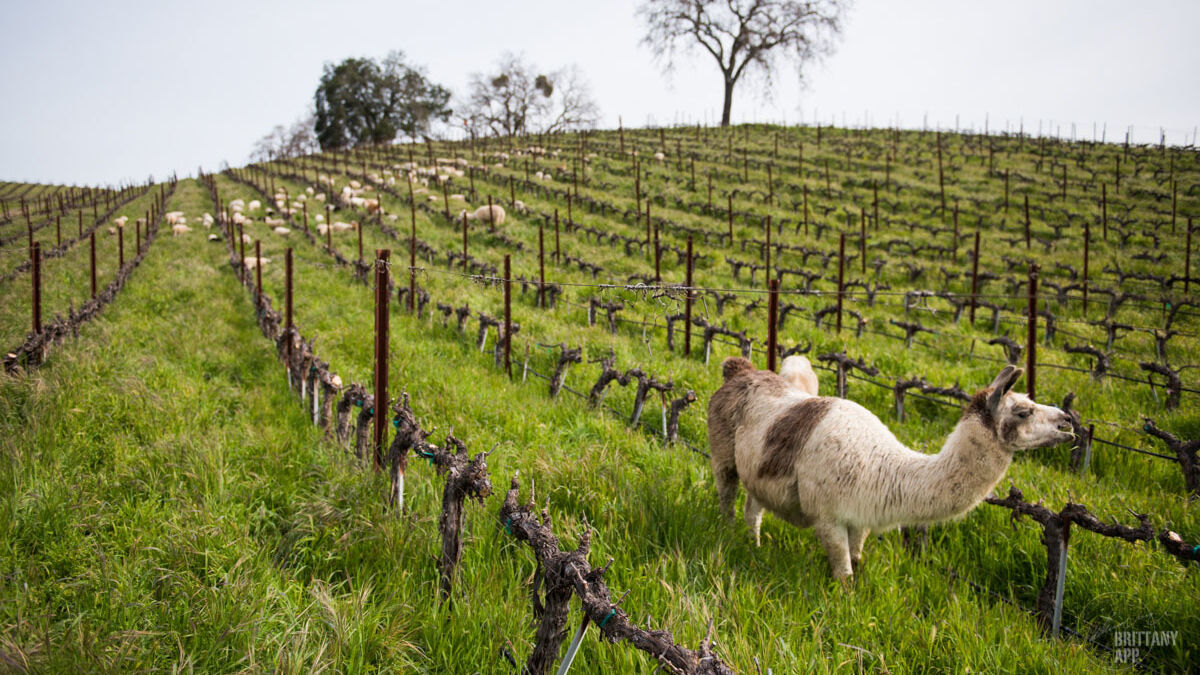
Tablas Creek has become as well known for how it farms as for what it bottles. The estate was certified organic in 2003, and in 2020 it became the first Regenerative Organic Certified winery in the United States. The farming program leans on cover crops, composting, minimal tillage, and a flock of sheep and other animals that graze the vineyard. The philosophy is simple: build soil health first, and let the wine follow.
Visiting Tablas Creek
The hilltop tasting room at 9339 Adelaida Road looks out over the estate vineyards and the rolling limestone hills of the Adelaida District. Seated and walk-in tastings are offered, with reservations recommended on weekends. It is an easy pairing with the other Adelaida wineries on the west side, and a natural stop for anyone trying to understand where Paso Robles Rhône wines come from.
Not sure where to start with Rhône wines?
Take the two-minute quiz and we will point you toward the Paso Robles bottles that match your taste.
Find your wineFrequently asked questions
Our free wine pairing tool matches any dish to the right bottle, with the reason it works.
Find your pairingWho founded Tablas Creek Vineyard?
What is Tablas Creek known for?
Where is Tablas Creek located?
What makes the terroir special?
Can you visit Tablas Creek?
Does Tablas Creek Vineyard offer private tastings?
More wineries in Paso Robles
- JUSTIN Vineyards & Winery
- DAOU Vineyards
- Aaron Wines
- Absolution Cellars
- Adelaida Vineyards & Winery
- Allegretto Wines
Are you affiliated with this winery?