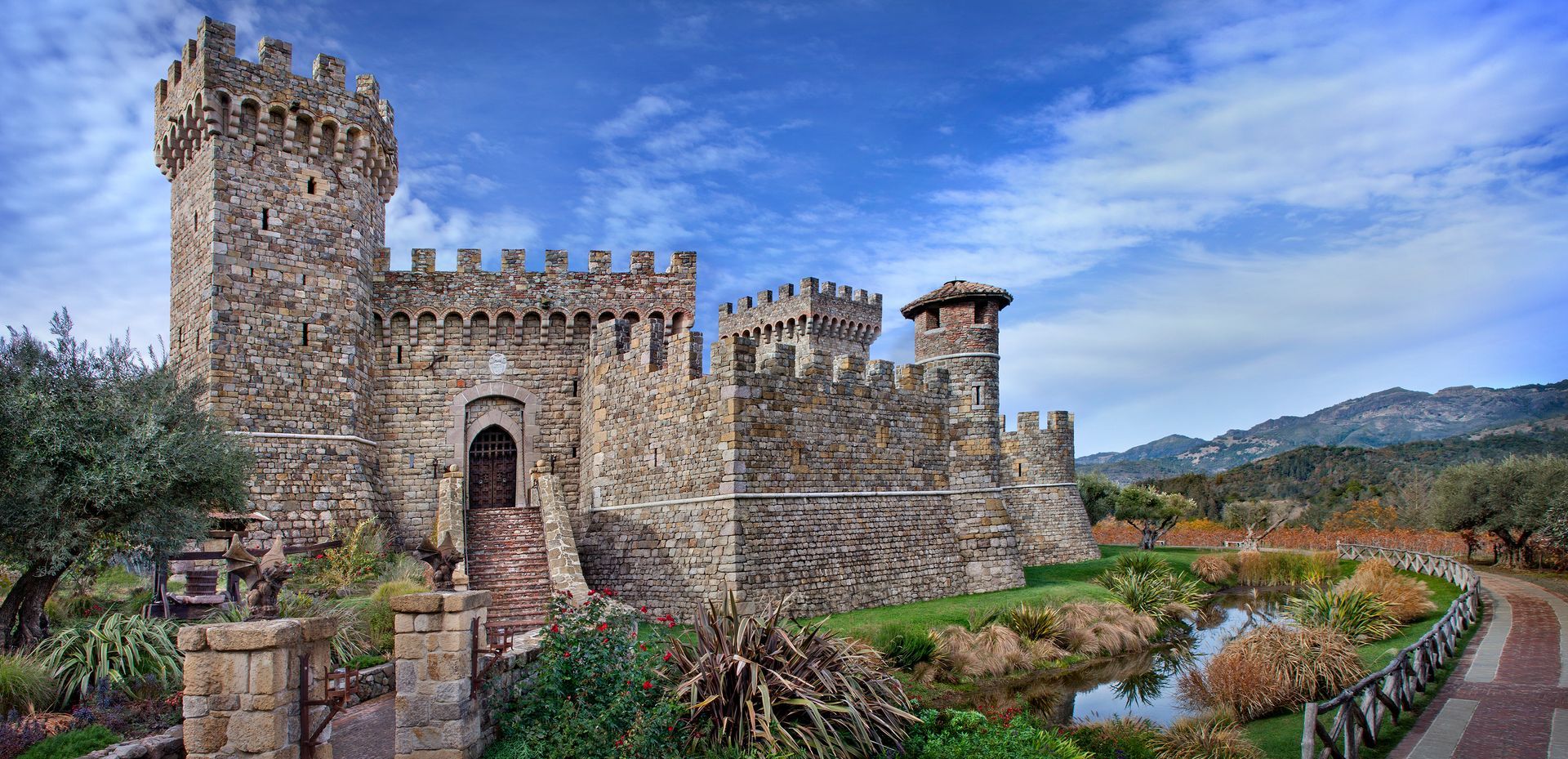
Castello di Amorosa is unlike any other winery in Napa Valley, or anywhere else in California. Built over 14 years by Dario Sattui, the great-grandson of pioneering Bay Area vintner Vittorio Sattui, the 121,000-square-foot castle was constructed using authentic medieval building techniques and materials, producing a structure that could convincingly stand in the Tuscan hills while containing one of Calistoga’s most serious Cabernet programs.
Dario Sattui: From $8,000 and a Dream to a Tuscan Castle
Dario Sattui is the great-grandson of Vittorio Sattui, one of the pioneering Italian immigrant vintners who helped establish the Bay Area wine tradition in the nineteenth century. After earning an MBA from the University of California at Berkeley in 1969, Dario traveled Europe for years, living out of an old Volkswagen van and developing a deep affinity for medieval architecture, Italian wine culture, and the kind of centuries-old stone buildings that exist nowhere in California. He returned to the United States in 1972 determined to revive his family’s wine legacy, and with just $8,000 reopened V. Sattui Winery in St. Helena in 1975, turning a profit in the first year.
With V. Sattui established, Dario turned his attention to his second dream: building a genuine medieval Tuscan castle in the Napa Valley. He began planning in the 1990s, sourcing authentic materials from Europe, employing craftsmen trained in medieval construction techniques, and personally overseeing a project that would take 14 years to complete. Castello di Amorosa, which translates from Italian as “Castle of Love,” opened in 2007 as a 121,000-square-foot, 13th-century-style Tuscan castle winery, complete with a drawbridge, moat, great hall, torture chamber, and production facilities built into its stone walls.
Dario Sattui spent 14 years and sourced authentic medieval materials from Europe to build Castello di Amorosa, not as a themed attraction but as a genuine expression of his lifelong passion for Tuscany and his conviction that a medieval castle was the right home for great Napa Valley wine.
Answer a few quick questions and get your wine personality, your best matches, and where to taste them.
Start the quizThe Castle: Medieval Architecture in Calistoga
Castello di Amorosa is not a replica or a theme park interpretation of a medieval castle. Dario Sattui sourced bricks, stones, timber, and decorative elements from Europe and employed artisans trained in authentic medieval building methods to construct a structure that could pass architectural scrutiny as the real thing. The result includes 107 rooms across four stories and eight towers, with a drawbridge over a real moat, a dungeon and torture chamber, frescoed ceilings, Romanesque staircases, and a great hall that hosts events within walls of genuine medieval character.
The setting in Calistoga, at the northern end of Napa Valley, adds to the drama. The castle rises from the hillside along St. Helena Highway at a scale and with a presence that stops traffic. Tours of the structure give visitors access to the wine caves, the great hall, and the various architectural marvels that Dario spent 14 years and his personal fortune bringing to life. It is one of the most visited destinations in Napa Valley not simply because of the wine, though the wine is serious, but because there is genuinely nothing else like it in American wine country.
The Wines: Napa Cabernet and Italian Varietals
The wines at Castello di Amorosa are as serious as the architecture that houses them. Cabernet Sauvignon from the Calistoga AVA is the anchor of the portfolio, and the warm valley floor conditions of Calistoga produce Cabernet of notable richness and concentration. The reserve tiers and single-vineyard selections showcase what this northern end of the valley can produce when the farming is precise and the winemaking restrained.
Beyond Cabernet, Dario’s Italian heritage and love of Tuscany extend naturally into the wine program: Pinot Noir from cooler California sites, rosé of real character, and sweet wines that draw on the dessert wine tradition of southern Tuscany. The white and sparkling programs round out a lineup designed to showcase the range of what a serious Italian-inspired California producer can offer. Visitors can taste across the full portfolio in settings ranging from the great hall to the wine caves, each providing a different layer of the Castello experience.
Tell us what is on the table and our pairing generator finds the wine that makes the meal.
Find your pairingPairing Castello di Amorosa Wines with Food
Calistoga Cabernet Sauvignon is one of the richer expressions of the variety in Napa Valley, shaped by the warm growing conditions and volcanic soils at the valley’s northern end. The tannin structure and concentrated dark fruit call for food with fat and substance: a bone-in prime rib, braised short ribs, or grilled lamb chops all provide the protein and fat that allow the wine’s tannins to soften and the fruit to come forward. Aged hard cheeses, particularly Parmigiano-Reggiano and Pecorino Toscano, also work with the wine’s structure in the Italian tradition.
For the lighter wines in the Castello lineup, the Italian heritage of the estate provides natural pairing guidance. Rosé with antipasto and cured meats, white wines with fresh pasta and lighter cream sauces, and the sweet wines alongside Panforte or almond biscotti all follow the logic of Tuscan food and wine culture. The estate’s Italian roots make it a natural fit for guests who want to explore the connection between Italian winemaking tradition and California terroir. Pair your visit planning with a stop at our Napa Valley wine guide.
Find your perfect Napa Valley wine match
Take 60 seconds and we will point you to the Napa Valley wines and tasting rooms that suit your palate and your visit.
Find your wine