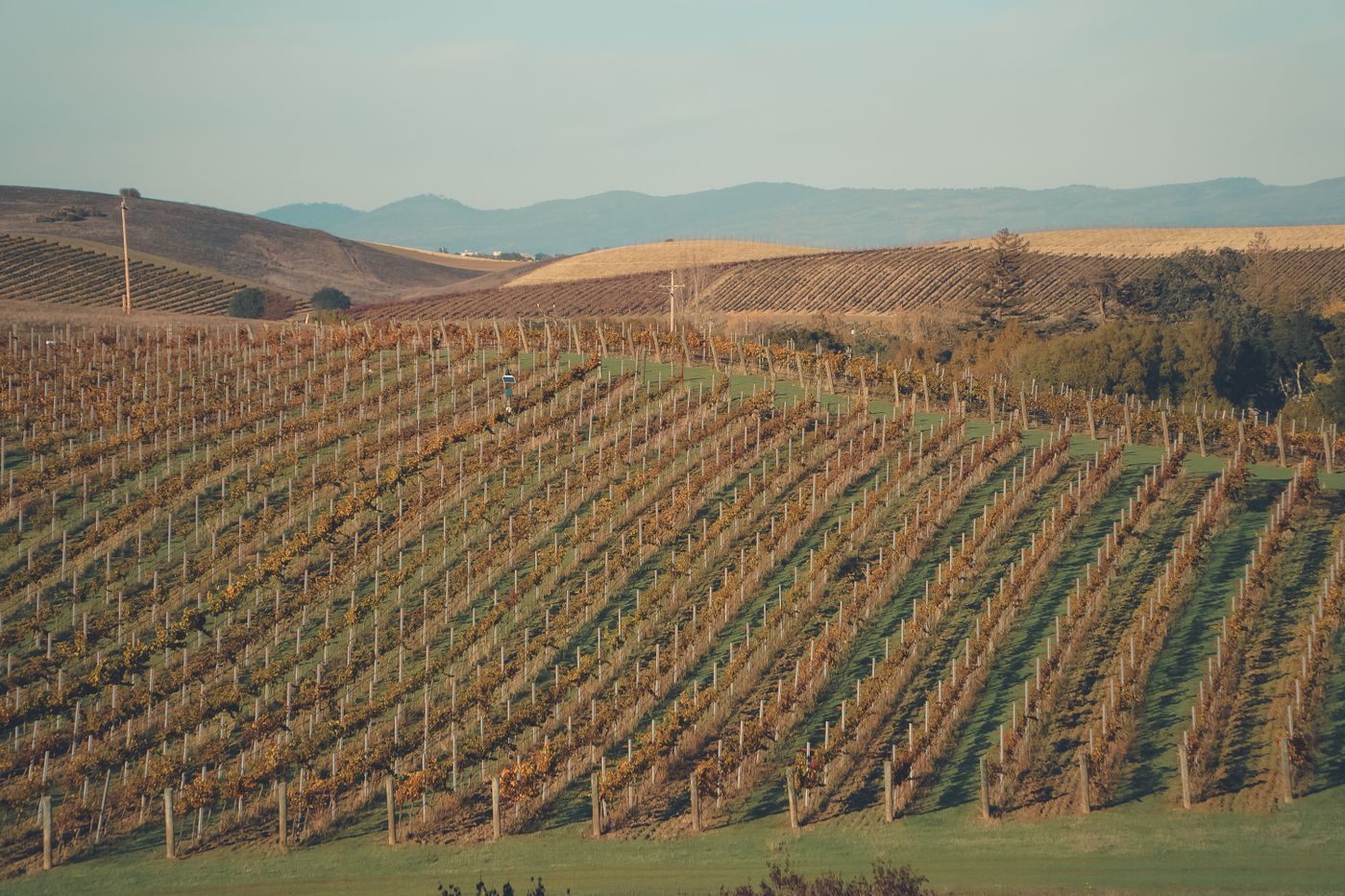
In 1972, a young French winemaker named Bernard Portet was driving south through Napa Valley in a borrowed Dodge Charger when he rolled down the window and held out his hand. The air had turned suddenly cold. He had been searching two years across four continents for the right place, and in that sheltered pass in the Stags Leap District, he recognized it. Clos du Val was born from that moment, founded by the Goelet family of New York with Portet as winemaker, and built on a French conviction that great wine is inseparable from the table it is served at.
A French winemaker, a Napa valley pass, and a family that stayed
Bernard Portet arrived from France with a precise sensibility and a family background in wine: his father had been cellar master at Chateau Latour. He searched the world for land that could produce Bordeaux-style Cabernet on its own terms, and the cool, sheltered air of the Stags Leap District told him he had found it. John Goelet provided the backing, and Clos du Val opened in 1972, one of the earliest serious Cabernet producers in what would become the most celebrated sub-AVA of Napa Valley.
Portet, now Winemaker Emeritus, shaped the house style: elegant rather than opulent, structured rather than extracted, wines built for ten or twenty years in a cellar rather than maximum score at release. Today winemaker Carmel Greenberg and third-generation owner Olav Goelet lead the winery forward with the same conviction. Olav has described his role as holding the line between preservation and evolution, guarding traditions while setting a new vision that connects past, present, and future.
Three generations of the Goelet family have kept Clos du Val true to its original conviction: that the Stags Leap District makes Cabernet Sauvignon meant for the table, not the trophy case.
Answer a few quick questions and get your wine personality, your best matches, and where to taste them.
Start the quizThe Stags Leap District and the cold pass that started it all
The Stags Leap District owes much of its modern reputation to the discovery that Bernard Portet made on that drive down Highway 29. The geological feature that created the cold air he felt is the volcanic Palisades to the east of the district, which trap heat during the day and funnel cool marine air south from the San Pablo Bay gap each afternoon. The result is an unusual microclimate: warm enough to ripen Cabernet fully, cool enough to preserve acid and aromatic finesse in a way that the warmer parts of Napa Valley do not always achieve.
The soils in the Stags Leap District are a mix of volcanic tuff, ancient alluvial deposits, and shallow benchland clays. The thin soils stress the vines, concentrating flavor and producing tannins that are notably fine-grained compared to the bolder structure of Rutherford or St. Helena Cabernet. This is why Stags Leap Cab has long been described as elegant: the geology is pulling the wine toward finesse whether the winemaker intends it or not, and at Clos du Val, the intention and the terroir have always agreed.
Estate wines and the Clos du Val style
The estate Cabernet Sauvignon from Clos du Val is the clearest expression of the house philosophy. It is not a wine built to impress in the first sip but one designed to reveal itself slowly over a meal and improve over years in a cellar. The tannins are present but polished, the fruit dark and layered rather than fruit-forward, and the finish carries the mineral, iron quality of the Stags Leap District benchland through to the end.
The lineup extends beyond Cabernet. Clos du Val produces estate Merlot that shows a plush, supple texture well suited to the Stags Leap District terroir, and a Chardonnay and Pinot Noir that reflect the cooler growing conditions the winery favors. Tastings are held at Hirondelle House, an intimate estate setting named for the swallows that return to the property each spring, where each experience is designed to connect the wine in the glass to the land and culture that produced it.
Tell us what is on the table and our pairing generator finds the wine that makes the meal.
Find your pairingPairing Clos du Val wines with food
Clos du Val Cabernet Sauvignon was built from the start for the French tradition of wine at the table, where the food and the glass are in conversation rather than in competition. The restrained style means it pairs with a broader range of dishes than more extracted Napa Cabernets. A rack of lamb with herbs, a roasted duck breast, or a simple steak with good salt are all ideal: the fine tannins engage the protein and fat without overwhelming the food, and the wine reveals more complexity as the meal progresses.
For white wine pairings, the Clos du Val Chardonnay works well with roasted fish, butter-basted chicken, or a risotto built on mushroom or corn. The wine has enough acid to cut through richness and enough body to stand beside flavors that would overwhelm a lighter white. The Merlot, soft and rounded with a plum and herb character, bridges the gap between the lighter proteins and the full weight of the Cabernet, pairing naturally with roasted pork, duck ragu, or a cheese board anchored by soft-ripened styles like Brie or Camembert.
Find the right Napa Cabernet for your next dinner
Take the 60-second quiz and we point you to the Napa Valley wines and tasting rooms that match your palate and your plans.
Find your wine