How to Taste Wine Like a Pro
There is a world of difference between drinking wine and tasting it. The first is a gulp. The second is a few minutes of paying attention that turn a glass into a story. The good news: the method takes about thirty seconds to learn.
Most people drink wine. Far fewer people taste it. There is a real difference, and you can feel it the first time you do it on purpose. You pour a glass you have had a dozen times, hold it up to the light, give it a slow swirl, and put your nose deep into the bowl, and suddenly there is cherry and pencil shaving and something like dried tea leaves that you never noticed because you were talking over dinner. Tasting wine is not a talent you are born with. It is a repeatable process anyone can learn in an afternoon and keep sharpening for the rest of their life. This guide walks through every step, the framework the pros use, how to set up a proper tasting at home, and the handful of mistakes that hold beginners back.
Why tasting works: the science behind the swirl and the sniff
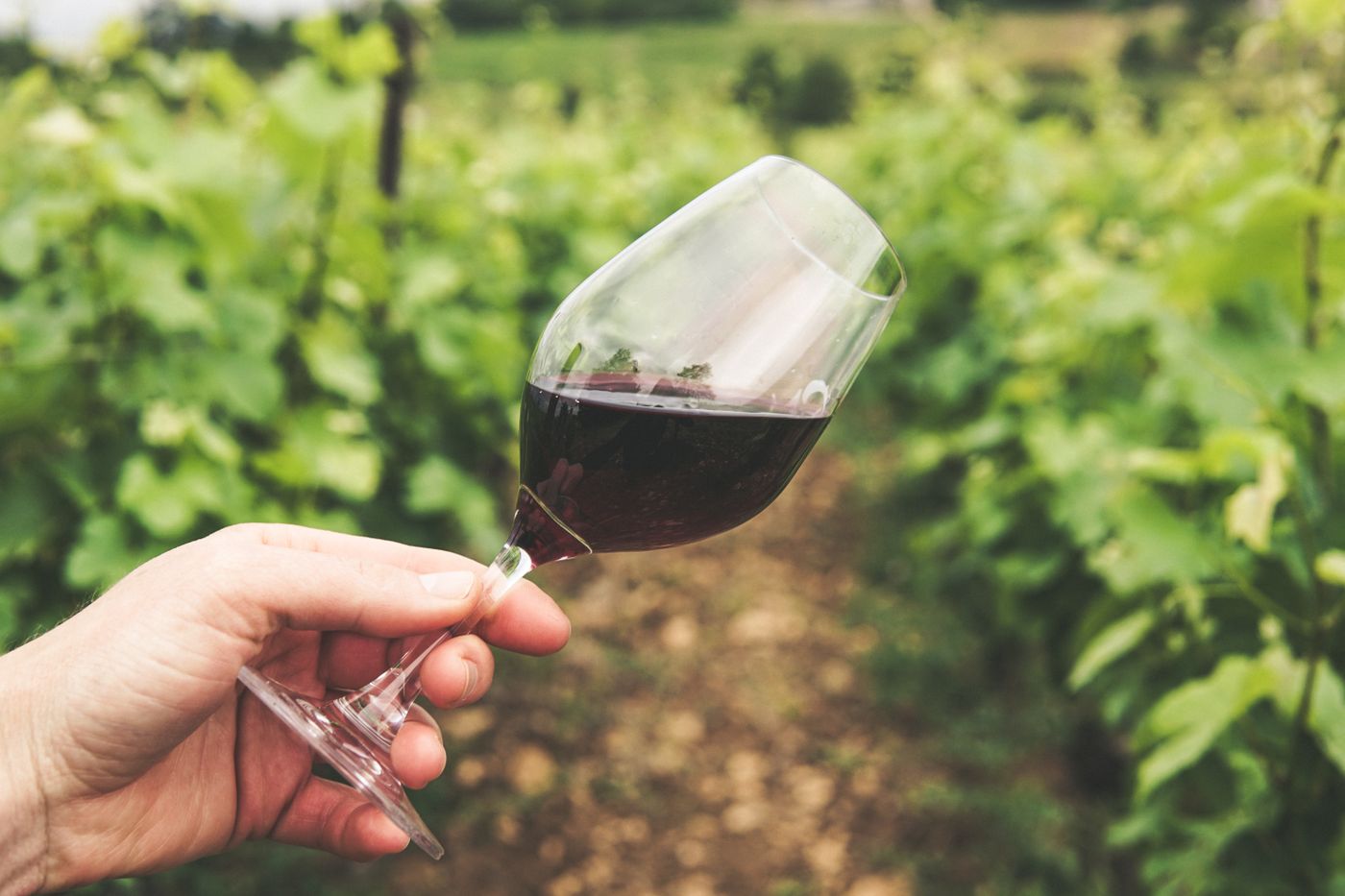
Flavor is mostly smell. The tongue only registers a handful of basic sensations, sweet, sour, salty, bitter, and savory, plus the physical feel of texture and temperature. Everything else you think of as the taste of a wine, the cherry, the vanilla, the leather, the wet stone, arrives through the back of your nose as aroma. That is why a wine tastes flat when you have a head cold and why professionals spend more time smelling than sipping. When you understand that flavor is roughly eighty percent aroma, the whole ritual starts to make sense.
Swirling matters for the same reason. Wine carries hundreds of aromatic compounds that are locked in until they evaporate into the air above the liquid. Spinning the glass coats the inside of the bowl with a thin film, exposing more surface area to oxygen and releasing those volatile compounds, the aromas, into the space your nose is about to fill. Tannin, the drying grip you feel in big reds, comes from grape skins, seeds, and oak, and it softens slightly with that same exposure to air. None of this requires special equipment. It requires attention and a few seconds of patience.
The last piece is the order in which your senses fire. You see the wine before you smell it, you smell it before you taste it, and you keep tasting it after you swallow. Each stage feeds the next. The color sets an expectation, the aroma confirms or surprises it, the palate measures the structure, and the finish tells you how good it really is. That sequence is the backbone of every tasting method ever written, including the popular five S’s.
The five S’s of wine tasting at a glance
The five S’s, See, Swirl, Smell, Sip, and Savor, are the simplest way to remember the full sensory framework. Each step has a job. Run through all five and you will notice more in one glass than most people notice in a year.
| Step | What you do | What you are looking for |
|---|---|---|
| See | Tilt the glass over a white background | Color, depth, clarity, viscosity (the legs) |
| Swirl | Spin the glass on the table or in the air | Aeration, legs, a sense of body and alcohol |
| Smell | Nose deep in the bowl, two or three short sniffs | Fruit, floral, oak, earth, and age aromas |
| Sip | Small sip, swish, draw in a little air | Sweetness, acidity, tannin, body, alcohol, flavor |
| Savor | Swallow or spit, then wait | Length of the finish, balance, overall quality |
You do not need to be rigid about the count. Some sommeliers add a sixth S for savor versus spit, and some teaching systems use Look, Smell, Taste, Conclude instead. The labels do not matter. What matters is that you cover sight, aroma, palate, and finish every time, in that order.
The five steps in depth
Here is what is actually happening at each stage and how to get more out of it. Work through the cards below the next time you open a bottle, ideally with the glass in your hand.
See
Color and clarity
Tilt the glass away from you at about a forty-five degree angle over something white, a napkin or a sheet of paper. Look at the color in the center and out at the watery rim. Pale lemon suggests a young, unoaked white. Deep gold hints at age or oak. A purple rim on a red signals youth, while a brick or garnet edge means the wine has some years on it. Clarity matters too, though a little haze in an unfiltered natural wine is normal, not a flaw.
Swirl
Aeration and legs
If you are nervous about spilling, keep the base on the table and trace small circles. Swirling opens the wine, blowing off any reductive or stinky notes and lifting the aromas. As the wine settles, watch the tears, or legs, slide down the glass. Slow, thick legs usually point to higher alcohol or residual sugar, not quality. Legs are a clue, not a score.
Smell
The bouquet
Put your nose right into the bowl and take two or three short sniffs rather than one long inhale, which fatigues your sense of smell. Do not chase a perfect answer. Start with broad families, is it fruity, floral, herbal, earthy, oaky. Then narrow down. Red fruit or black fruit. Citrus or stone fruit. Vanilla and baking spice mean oak. Mushroom, leather, and dried fruit mean age.
Sip
Structure on the palate
Take a small sip and let it spread across your whole tongue, then draw a little air in through pursed lips to aerate it in your mouth. Now read the structure. Is it sweet or dry. How much acidity makes your mouth water. Do the tannins grip and dry your gums. Is the body light like skim milk or rich like cream. Does the alcohol warm your throat. Then notice the flavors, which should echo what you smelled.
Savor
The finish
After you swallow or spit, stop and count. How many seconds do the flavors hang on. A short finish fades in a second or two. A long, evolving finish that lasts fifteen seconds or more is one of the clearest signs of a serious wine. Ask whether everything was in balance, with no single element sticking out, and whether you actually want another sip.
Think
The conclusion
The unofficial sixth step. Put it together. Young or aged. Cool climate, with its high acid and tart fruit, or warm climate, with its ripe, jammy fruit and higher alcohol. Light, easy, and cheerful, or dense, structured, and built to age. You do not need to name the grape. Forming an opinion is what turns drinking into tasting.
Understanding aromas: primary, secondary, and tertiary
Once you can smell a wine on purpose, the next leap is knowing where each aroma comes from. Sommeliers sort them into three groups, and that map makes the glass far easier to read. Primary aromas come from the grape itself and the place it grew. These are the fresh fruit, flower, and herb notes, grapefruit in Sauvignon Blanc, blackcurrant in Cabernet Sauvignon, violet in Syrah. Secondary aromas come from winemaking, mainly fermentation and oak. Vanilla, toast, baking spice, and smoke come from the barrel, while a creamy, buttery note often comes from a process called malolactic conversion, common in many Chardonnays. Tertiary aromas come from age, in the bottle or in oak over time, and they show up as dried fruit, leather, tobacco, mushroom, forest floor, and nuttiness.
You do not need to name twenty aromas. A beginner who can reliably say red fruit versus black fruit, then spot whether oak and age are present, is already tasting at a higher level than most. The grape and region clues stack from there, and our guide to the major types of wine shows which aromas tend to belong to which grapes.
Set up a tasting at home: glassware, temperature, and order
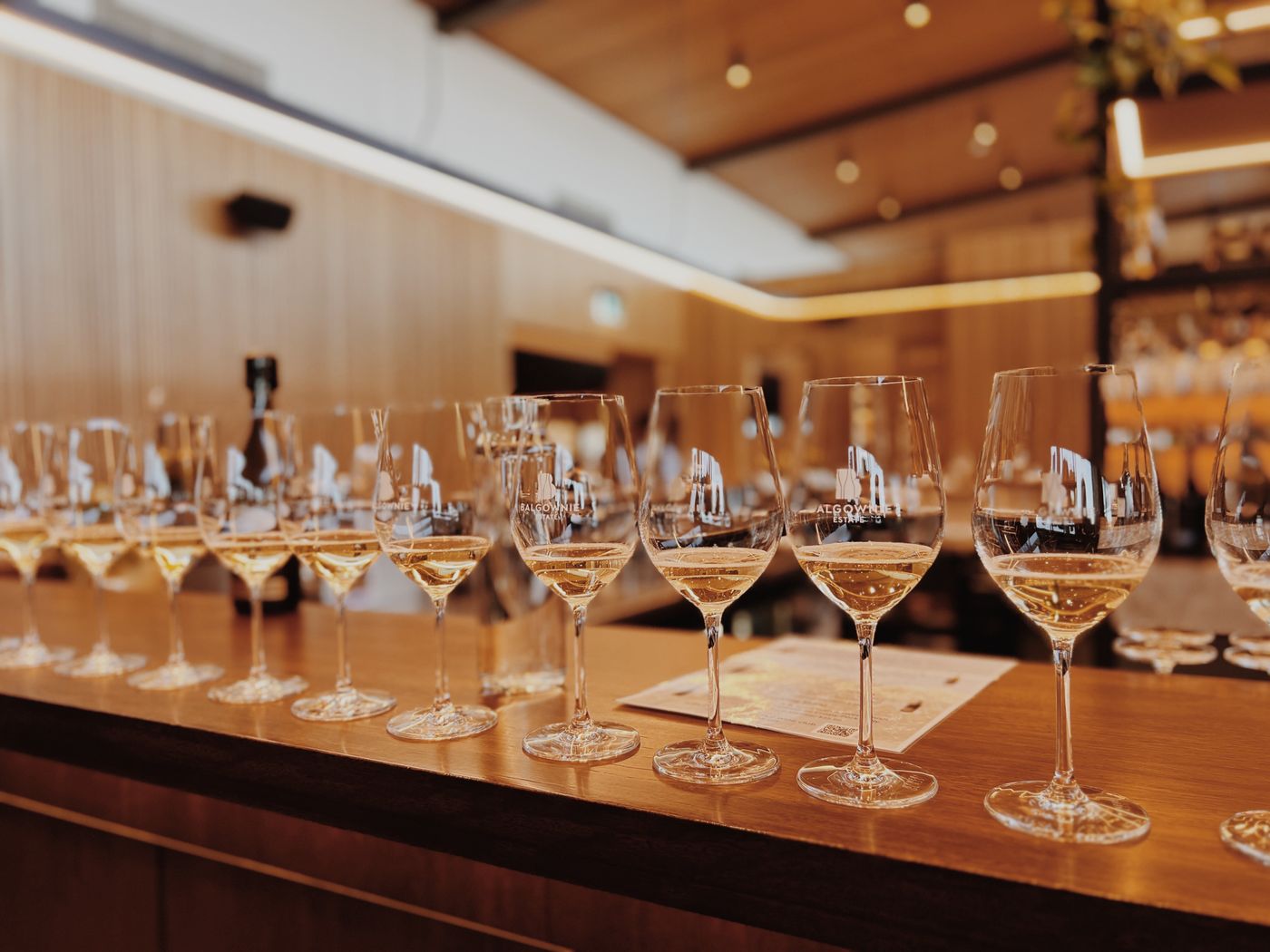
You can taste seriously with almost nothing, but a few choices make a real difference. Pick a well-lit room with a white surface to view color. Pour modest amounts, around two ounces per wine, so you have room to swirl and so a flight of several wines does not turn into a party. Keep plain water and neutral palate cleansers like unsalted crackers, plain bread, or mild plain crackers nearby, and use room temperature water so you do not numb your tongue.
Glassware tiers
Temperature and order
Temperature changes everything. Serve whites and sparkling too warm and they taste flabby and dull. Serve reds straight from a warm room and the alcohol dominates. As a rule, sparkling and light whites belong around 45 to 50 degrees Fahrenheit, fuller whites and rose around 50 to 55, light reds around 55, and full-bodied reds around 60 to 65, which is cooler than most rooms. Twenty minutes in the fridge does a red more good than people expect. When you taste several wines, go light to heavy and dry to sweet. Sparkling and crisp whites first, then richer whites, then light reds, then full reds, and save any dessert wine for the very end, because sweetness and heavy tannin both flatten the wines that follow.
Taking notes, building your palate, and blind tasting basics
Tasting without notes is like studying without writing anything down. You do not need a fancy journal. Jot the wine, the color, two or three aromas, the structure (acid, tannin, body), the finish, and a one-line verdict. Over months those notes become a map of your own taste. The single fastest way to improve is comparison tasting. Pour a cool-climate wine next to a warm-climate version of the same grape, say a French Chablis beside a California Chardonnay, and the difference in acidity, fruit ripeness, and oak becomes obvious in a way no book can teach. Train your nose away from the glass too, by smelling fruit, herbs, and spices in the kitchen so you build a library of scents to draw on.
Blind tasting, where you assess a wine with the label hidden, is the ultimate workout because it forces you to rely only on what is in the glass. The trick is to follow a grid. Work from color to aroma to structure, then reason toward conclusions. High acid and tart fruit point to a cool climate. Ripe, jammy fruit and high alcohol point to a warm one. Grippy tannin points to a thick-skinned red like Cabernet Sauvignon or Nebbiolo. You will be wrong often at first, and that is the point. Each miss teaches you something a correct guess never would. If you want a low-pressure way to test yourself, our Wine IQ Quiz turns palate knowledge into a quick, fun check.
Pairing what you taste with food
Tasting is not just an end in itself, it is the skill that makes pairing wine with food click. Once you can feel a wine’s acidity, you understand why a high-acid Sauvignon Blanc cuts through goat cheese and why a crisp Chianti loves tomato sauce. Once you can feel tannin, you understand why a tannic Cabernet Sauvignon needs the fat of a ribeye to soften it and feel smooth. Sweetness, body, and alcohol all behave the same way at the table, each one a lever you can now read in the glass. The structure you taste, not the grape name, is what tells you how a wine will land with a dish, which is exactly the logic behind our guide to how to pair wine with food. Understanding wine body and where a bottle sits on the dry versus sweet spectrum gives you the two most useful pairing dials of all.
Mistakes to avoid
The errors below quietly hold most beginners back. None of them are about taste, they are about approach, which means every one is easy to fix.
Chasing every aroma
Overreaching
You do not need to find twelve descriptors. Trying to name everything paralyzes you. Start with one broad family, fruity or earthy, and stop there if that is all you get. Specificity comes with repetition, not effort.
Tasting too many at once
Palate fatigue
Your palate tires fast. Three or four wines is the practical limit for a focused session. Past that, everything blurs and tannin and alcohol numb you. Quality of attention beats quantity of bottles.
Serving at the wrong temperature
Warm whites, hot reds
A warm white tastes dull and a too-warm red tastes like alcohol. Chill whites properly and give reds twenty minutes in the fridge. This one fix improves more wines than any glassware upgrade.
Memorizing instead of feeling
Descriptors over structure
Knowing a wine should taste like grapefruit is far less useful than feeling that it is high in acid and light in body. Structure is the skeleton. Learn to feel it and the flavor names take care of themselves.
Skipping the notes
No record
If you write nothing, you remember nothing. Even one line per wine builds a personal reference faster than you would believe. The act of writing also forces you to actually decide what you tasted.
Only drinking what you know
Comfort zone
You learn from contrast, not from comfort. If you only ever taste the wines you already like, your palate stops growing. Reach for the unfamiliar grape or region on purpose.
A short history of the tasting ritual
The structured way we taste wine today is surprisingly modern. For most of history, wine was simply judged good or bad by drinking it. The analytical approach, the deliberate look, swirl, and sniff, was formalized in the twentieth century as wine education professionalized. The standardized ISO tasting glass, designed to present any wine neutrally, was developed in France in the 1970s by the International Organization for Standardization so that judges and students everywhere could assess wine on equal footing. The five S’s themselves are a teaching mnemonic, popularized by wineries and wine schools to give newcomers an easy, memorable order of operations. Beneath the catchphrase sits a genuinely useful method, and that is why it has stuck. You are joining a practice that turned an instinct into a craft anyone can learn.
From here, the path is simple. Start with the pillar guide to the types of wine to learn which grapes carry which flavors, get the foundations in our primer for wine for beginners, then sharpen the two structural dials that matter most with wine body and the dry versus sweet wine guide. When you are ready to turn tasting into great meals, how to pair wine with food brings it all together.
You have learned the method. Now put it to the test. Take a few minutes, answer a handful of questions, and see where your wine knowledge really stands, then keep building from there.
How to taste wine, common questions answered
What are the five S’s of wine tasting?
The five S’s are See, Swirl, Smell, Sip, and Savor. You look at the wine’s color and clarity, swirl to release its aromas, smell the bouquet, sip while assessing sweetness, acidity, tannin, body, and alcohol, then savor the finish after you swallow. They are a simple order of operations that covers sight, aroma, palate, and finish every time.
Do I really need to swirl the wine?
Yes, swirling does real work. It coats the inside of the glass with a thin film that exposes the wine to oxygen, which releases the volatile aroma compounds into the air above the liquid where your nose can catch them. Since flavor is mostly smell, swirling makes a wine noticeably more expressive. If you are worried about spills, keep the base on the table and trace small circles.
How do I describe a wine if I am a beginner?
Start broad and stay honest. Decide first whether the aroma is fruity, floral, herbal, earthy, or oaky, then narrow only as far as you comfortably can, such as red fruit versus black fruit. For the palate, focus on structure, is it sweet or dry, high or low in acid, grippy or smooth in tannin, light or full in body. You do not need flowery language to taste well.
What is the difference between primary, secondary, and tertiary aromas?
Primary aromas come from the grape and where it grew, the fresh fruit, flower, and herb notes. Secondary aromas come from winemaking, mainly oak and fermentation, giving vanilla, toast, spice, and creamy notes. Tertiary aromas come from aging and include dried fruit, leather, tobacco, and mushroom. Reading which are present helps you guess the grape, the winemaking, and the age.
What temperature should wine be for tasting?
Sparkling and light whites taste best around 45 to 50 degrees Fahrenheit, fuller whites and rose around 50 to 55, light reds around 55, and full-bodied reds around 60 to 65, which is cooler than most rooms. A red straight from a warm room tastes hot with alcohol, so giving it twenty minutes in the fridge usually helps. Serving whites too warm makes them taste flat and dull.
In what order should I taste multiple wines?
Go light to heavy and dry to sweet. Start with sparkling and crisp whites, move to richer whites and rose, then light reds, then full-bodied reds, and save any dessert wine for the very end. Heavy tannin and sweetness both overwhelm your palate and flatten whatever follows, so the gentle wines have to come first.
What does the finish of a wine mean?
The finish is how long the flavor and sensation linger after you swallow or spit. A short finish fades in a second or two, while a long finish can hang on and evolve for fifteen seconds or more. A long, balanced, evolving finish is one of the most reliable signs of a high-quality wine, which is why the final savor step matters so much.
How do I get better at tasting wine?
Practice with intention and use comparison tasting. Pour two wines that differ in one way, such as a cool-climate Chardonnay beside a warm-climate one, and the contrast teaches your palate fast. Keep short notes on every wine, train your nose by smelling fruit and spices in daily life, and taste unfamiliar grapes on purpose, since you learn more from contrast than from comfort.