Up a remote canyon in the eastern Arroyo Grande Valley grow some of the oldest grapevines in California. They were planted in 1880, abandoned for decades, and swallowed by brush and poison oak, until a young dreamer named Bill Greenough found them in the 1970s and dug each gnarled vine back to life with a pick and a shovel. That three-acre block of head-pruned, dry-farmed Zinfandel is the oldest commercial vineyard in San Luis Obispo County, and it still makes wine today.
Bringing an 1880 vineyard back to life
The story begins with Henry Ditmas, who planted Zinfandel and Muscat in remote Saucelito Canyon around 1879 and 1880. The vineyard was eventually abandoned and left to the brush for decades. In 1974, Bill Greenough bet his future on those forgotten vines, clearing poison oak and overgrowth and digging down to the crown of each plant to restore it, one trunk at a time. He revived more than a thousand of the original vines, an act of devotion that produced one of California most distinctive Zinfandels.
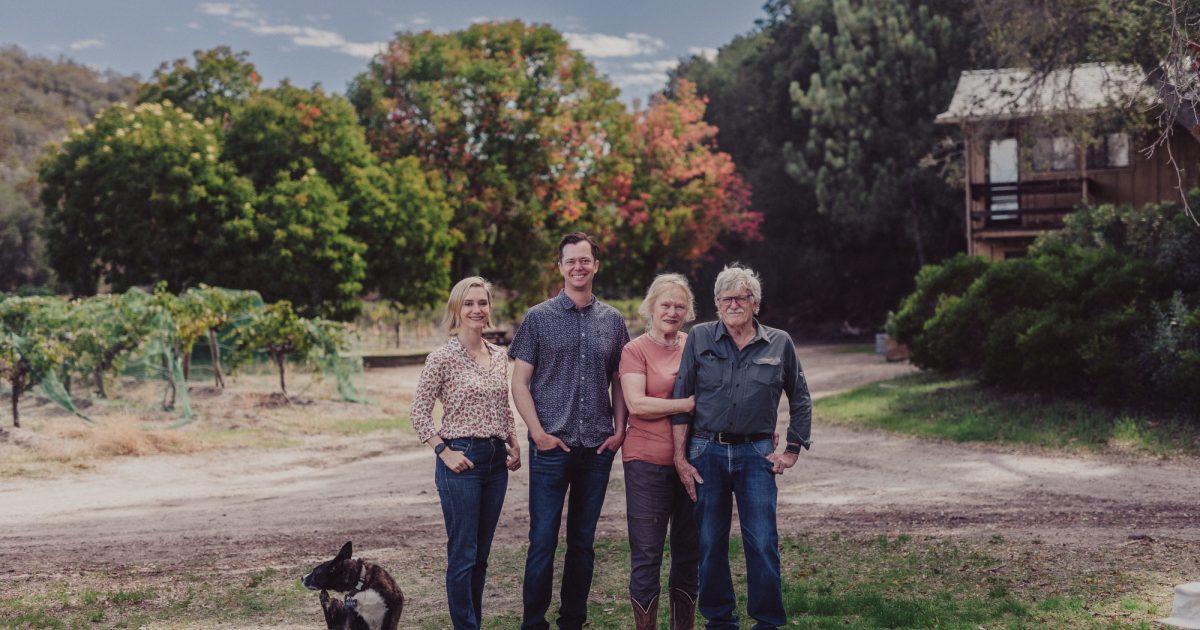
Today the winery is a family affair, with Tom Greenough, the second-generation winemaker, working in small lots to ferment and age the wines. The original three-acre block is dry-farmed and head-pruned, the old way, with additional Zinfandel planted in the late 1970s and 1980s and a new block in 2014 grown from the original heritage vines. Few vineyards in California can claim a living link this direct to the nineteenth century.
Bill Greenough dug 1880-planted Zinfandel vines back to life by hand, one gnarled trunk at a time.
Answer a few quick questions and get your wine personality, your best matches, and where to taste them.
Start the quizA warm canyon in a cool valley
Most of the Arroyo Grande Valley is cool and maritime, opening to the Pacific near Pismo Beach. Saucelito Canyon is the exception, tucked inland and up in elevation where the ocean fog thins and the days warm, exactly the conditions Zinfandel needs to ripen its uneven clusters fully. The cool nights that still reach up the valley preserve acidity, so the wines keep freshness even as the fruit ripens deep.
The historic block is dry-farmed, meaning it receives no irrigation. The old vines send roots deep to find water, which naturally limits the crop and concentrates the fruit. That combination of ancient vines, a warm canyon, and dry farming is why these Zinfandels taste of more than just ripeness, carrying a savory, structured complexity that young irrigated vines rarely match.
Old-vine Zinfandel and more
The flagship is the 1880 Old Vine Zinfandel, made from the original block, a wine of real depth and history, brambly and dark-fruited with a savory, peppery edge and genuine structure. Alongside it, the estate makes other Zinfandel bottlings from the newer blocks, plus small lots of other varieties, all in the same careful, small-production style.
For all the romance of the history, these are serious wines, not relics. The 1880 Zinfandel in particular earns its reputation each vintage, a living taste of where California wine came from. Drinking it is as close as you can get to the flavor of nineteenth-century California.
Tell us what is on the table and our pairing generator finds the wine that makes the meal.
Find your pairingWhat to pour it with
Old-vine Zinfandel is a big, generous red, and it wants food with fat, char, and a little sweetness. It is a natural with barbecue, smoked brisket, pulled pork, or grilled sausages, where the smoke and caramelized edges meet the brambly dark fruit of the wine and its structure cuts through the richness. The tannins bind to the protein and fat, so the meat tastes cleaner and the wine tastes rounder.
Because Zinfandel runs high in alcohol, keep it away from very spicy food, since alcohol amplifies chile heat. Steer it instead toward a peppery grilled steak, lamb, or aged hard cheese, where its power has something to push against. A tomato-rich barbecue sauce works too, the touch of sweetness and acidity in the sauce echoing the fruit in the glass.
Find your Arroyo Grande match
Take the 60-second quiz and we will point you to the wines and tasting rooms you will love.
Find your wineSaucelito Canyon Vineyard: common questions
What is Saucelito Canyon known for?
Who restored the historic vineyard?
Where is the Saucelito Canyon tasting room and when is it open?
How old are the vines at Saucelito Canyon?
What does dry-farmed mean?
What food pairs with Saucelito Canyon Zinfandel?
More wineries in the SLO Coast
See all the SLO Coast wineries
Are you affiliated with this winery?