
Romantic Dinner Ideas to Cook at Home
A romantic dinner at home beats any crowded restaurant on Valentine’s Day, if you plan it right. The trick is a menu that feels indulgent and intimate but lets you stay at the table, not chained to the stove.
The most romantic dinners we have ever had at home were not the most ambitious ones. They were the nights when one dish came out right, the wine in the glass felt like it belonged with it, and nobody was sweating over four pans at once. That is the whole secret, and it is the thing the recipe roundups tend to skip. They give you twenty-five gorgeous photos and never tell you what to pour. A romantic dinner is a meal plus a mood plus a bottle, and when those three line up the evening takes care of itself. This guide gives you complete menus, each built around the wine that makes it, from a fifteen-minute no-cook spread to a steakhouse dinner that tastes like a reservation you did not have to make.
Why the wine is what makes a dinner feel romantic
Food alone is dinner. Food with the wine that suits it is an occasion, and the difference is not snobbery, it is chemistry. Wine does three things on the palate that no glass of water can. Acidity resets your mouth between rich bites, which is why a crisp white makes butter and cream taste lighter than they are. Tannin, the grippy texture in a red, binds to fat and protein, which is why a Cabernet feels right with a fatty ribeye and wrong with delicate sole. And the aromatics in a wine can echo or contrast the dish, so a herbal Sauvignon Blanc lifts a lemony seafood plate while a dark, brooding Syrah deepens a peppercorn steak.
There is also the simple fact of pacing. A bottle of wine is a clock. It slows a meal down to the speed of conversation, gives your hands something to do, and turns a thirty-minute dinner into a two-hour evening. That is the real reason a paired dinner feels romantic. It is built to linger. If you want to understand the mechanics behind any match in this guide, our explainer on how to pair wine with food walks through the same acid, tannin, and weight rules in more depth.
One more principle worth saying out loud. Match the weight of the wine to the weight of the food. Light dishes want light wines, rich dishes want rich wines, and almost every pairing in this article comes back to that single idea. Once it clicks, you can build a romantic menu around anything in your fridge.
The menu-to-wine cheat sheet
This is the fast version. Pick the menu that fits your night, pour the wine in the right column, and read on for the full course-by-course build. Budget bottles here run roughly fifteen to twenty-five dollars, splurge bottles forty and up.
| The menu | Effort | The wine that makes it | Budget vs splurge |
|---|---|---|---|
| Steakhouse at home (ribeye, potatoes) | Medium | Cabernet Sauvignon or Malbec | Argentine Malbec vs Napa Cabernet |
| Italian (pasta, ragu or aglio e olio) | Easy | Chianti Classico or Barbera | Barbera d’Asti vs Brunello di Montalcino |
| French bistro (steak frites, roast chicken) | Medium | Cotes du Rhone or red Burgundy | Cotes du Rhone vs Gevrey-Chambertin |
| Seafood (scallops, salmon, risotto) | Easy | Chardonnay or Albarino | Macon-Villages vs white Burgundy |
| Vegetarian (mushroom risotto, squash) | Easy | Pinot Noir or oaked Chardonnay | Willamette Pinot vs village Burgundy |
| No-cook board (cheese, charcuterie) | None | Sparkling or rose | Cremant vs vintage Champagne |
| Dessert (chocolate, fruit tart) | Easy | Port or late-harvest Riesling | Ruby Port vs vintage Port |
Seven romantic dinner menus, each with the wine that completes it
Each card below is a full plan, the dish, the wine, and the reasoning. Choose one. The single best move for a relaxed romantic night is to cook one thing well rather than three things anxiously.
Steakhouse at Home
Impressive, medium effort
Two ribeyes seared in cast iron and basted with butter, garlic, and thyme, with crisp roast potatoes and a simple arugula salad. Pour a Cabernet Sauvignon or an Argentine Malbec. The tannin in a bold red grips the fat in the steak and scrubs the palate clean for the next bite. This is the most reliably romantic dinner there is, and our full guide on what wine goes with steak covers the cut-by-cut details.
Italian Trattoria Night
Easy, warm, low stress
Spaghetti aglio e olio, garlic gently gold in olive oil with chili and parsley, or a slow Sunday ragu over pappardelle. A Chianti Classico or a juicy Barbera is the move. Their bright acidity and red-cherry fruit cut through olive oil and tomato the way no white can. Finish with a little Parmigiano and you have a meal that feels generous without being heavy.
French Bistro for Two
Medium effort, classic
Steak au poivre with a cognac and cream pan sauce, green beans almondine, and a baguette. A Cotes du Rhone or a red Burgundy threads the needle here. The peppercorn crust wants a wine with some spice and savor, and Grenache and Pinot Noir both deliver without overwhelming the cream. This is a restaurant plate you can run at home in forty minutes.
Seafood, Candlelit
Easy, elegant
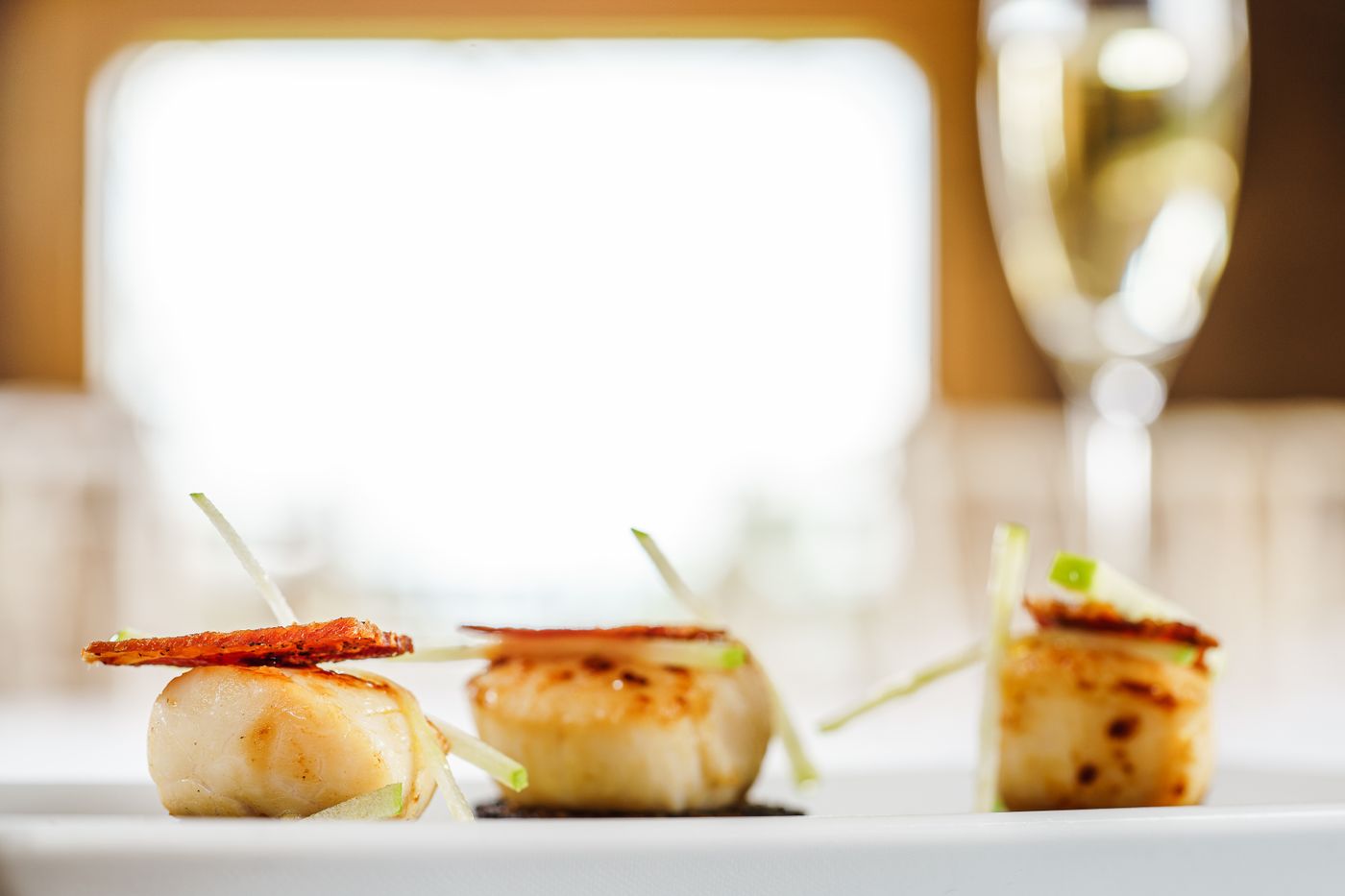
Seared scallops with brown butter, or a lemon-garlic shrimp baked in white wine, or a salmon roasted low and slow. A Chardonnay, an Albarino, or a Macon-Villages keeps everything bright. White wine with high acidity lifts butter and lemon and never fights delicate seafood. For salmon specifically, a light Pinot Noir also works beautifully.
Mushroom Risotto Night
Easy, vegetarian
A wild-mushroom risotto stirred slow with Parmesan and a knob of butter. Pour a Pinot Noir from Oregon or Burgundy, or an oaked Chardonnay if you prefer white. Earthy mushroom and earthy Pinot are one of the great congruent pairings, flavors that rhyme rather than contrast. The stirring is also weirdly romantic to do together with a glass in hand.
The No-Cook Spread
No effort, all charm
A board of two or three cheeses, a cured meat, olives, marcona almonds, honey, and good bread. Open a bottle of sparkling or a dry rose and you are done in ten minutes. This is the secret weapon for a low-energy night that still feels special. Our guide to wine and cheese pairing tells you exactly which cheese wants which bottle.
The Splurge: Surf and Turf
Impressive, big night
A filet and a lobster tail with drawn butter, for an anniversary or a milestone. Here you can run two wines, a white Burgundy or Champagne for the lobster and a Napa Cabernet or Bordeaux for the filet. Two glasses each, two small courses, and the evening earns its occasion. Save this one for when the date deserves the production.
Budget bottle, splurge bottle: how to pick at any price
You do not need to spend forty dollars to pour the right wine. You need to spend it well. Here are three tiers that cover almost every romantic dinner in this guide, with real price ranges so you can shop with confidence.
Setting the mood: glassware, temperature, candles, pacing
The food and the wine are two thirds of a romantic dinner. The third is the setting, and it is the cheapest upgrade you can make. Start with the light. Turn off the overhead and use candles or a single lamp. Warm, low light is the entire reason restaurants feel like restaurants, and it costs you a dollar in tealights.
Serve the wine at the right temperature, because warm white and ice-cold red both taste worse than they should. Whites and sparkling want to be properly cold, around forty-five to fifty degrees, so give them an hour in the fridge or twenty minutes in an ice bucket. Reds are best slightly cool, around sixty to sixty-five degrees, which usually means pulling a red out of a warm room and putting it in the fridge for fifteen minutes before you pour. Most rooms are warmer than ideal serving temperature, so when in doubt, chill the red a touch.
Decent glassware matters more than expensive glassware. Any clear, thin-rimmed glass with a bowl big enough to swirl will do, and a larger bowl genuinely helps a red open up. Pour modestly, a third of the glass, so there is room for the aroma to gather. And pace the night. Open the wine before you cook, pour the first glass while you are at the stove, and let the bottle be the clock that keeps you at the table.
Building the full evening: sparkling to start, dessert wine to finish
A truly romantic dinner has a beginning, a middle, and an end, and wine marks each one. Begin with bubbles. A glass of sparkling, a Cava, a Cremant, or a Champagne if the night calls for it, is the single best way to signal that this is an occasion. It is cold, high in acidity, low in commitment, and it pairs with the salty nibbles you put out while you cook. Brut, the dry style, is the safe default.
The middle is the main course and its wine, which you have already chosen from the menus above. Match the weight, pour the right temperature, and let it breathe if it is a bigger red.
Then finish sweet, and pour a small glass of something sweeter still. The golden rule of dessert pairing is that the wine must be at least as sweet as the dessert, or the wine tastes thin and sour by comparison. For a flourless chocolate cake or chocolate fondue, pour a Ruby or Tawny Port, whose dark fruit and warmth wrap around chocolate perfectly. For a fruit tart or anything citrus, a late-harvest Riesling or a glass of off-dry sparkling lifts the fruit. For creme brulee, a Sauternes or a sweet sparkling cuts the custard. A small two-ounce pour is plenty. Dessert wine is rich, and the point is a sip, not a glass.
Calibrating the night: first-date-at-home vs anniversary
Not every romantic dinner carries the same weight, and the menu should match the moment. A relaxed early-relationship dinner at home should be low-stakes and conversation-first. Cook one easy thing, the no-cook board or the Italian trattoria night, open an approachable crowd-pleaser like a Cotes du Rhone or a dry rose, and keep the focus on the talking. Nothing kills a budding evening faster than one person hiding in the kitchen for two hours. Keep it simple on purpose.
An anniversary or a milestone earns the production. This is when the surf and turf, the splurge bottle, the two-wine progression, and the proper dessert course all make sense. Plan it as three small courses, start with Champagne, and pull out the bottle you have been saving. If you want a complete planned-out evening with timing, our date night dinner ideas guide maps the courses end to end. Read the room, match the effort to the occasion, and you will never overcook the night or undersell it.
Mistakes to avoid
The errors that flatten a romantic dinner are almost always the same handful, and they are all easy to dodge once you know them.
Cooking something you have never made before. Date night is not the night to debut a new technique. Make the dish you already make well. A confident plate of pasta beats a stressful, half-failed beef Wellington every time.
Serving the wine at the wrong temperature. Warm white wine tastes flabby and dull, and red wine straight from a warm room tastes hot and alcoholic. Chill your whites properly and give your reds fifteen minutes in the fridge. This one fix improves more bottles than any upgrade in price.
Picking a wine that fights the food. A big tannic Cabernet will steamroll delicate scallops, and a light Pinot Grigio will vanish behind a ribeye. Match the weight. Heavy with heavy, light with light. When unsure, our date night wine pairing tool will tell you exactly what to pour with your menu in seconds.
Overbuying and overcomplicating. You do not need three bottles and five courses. One great bottle and one well-made dish, lit by candle, beats a sprawling buffet. The romance lives in the focus, not the abundance.
Eating under bright overhead light. It is the least romantic light there is. Kill it, light a candle, and watch the whole table transform for free.
Why this works, and where the tradition comes from
The idea of a wine for each course is not a marketing invention. It comes from the European table, where food and wine grew up together over centuries. Tuscany makes Sangiovese, the grape in Chianti, because its bright acidity was built by the same land and climate that produces the region’s tomato-rich, olive-oil cooking. The two evolved to flank each other. The same is true in Burgundy, where Pinot Noir and the region’s mushroom-and-cream cooking share a deep, earthy register, and in coastal Spain, where the briny Albarino of Galicia tastes like it was made for the shellfish pulled from the same Atlantic. When a pairing feels inevitable, it is usually because it was forged by a place where those flavors have shared a table for generations.
That is the quiet reason a paired dinner feels romantic rather than fussy. You are not performing sophistication. You are tapping a tradition that has been making people linger at the table, glass in hand, for a very long time. If you want to understand the styles behind these bottles, our pillar guide to the types of wine lays out every grape and style in plain language, and our best wine gifts guide is the place to look if the dinner is leading toward a present.
Tell us what you are cooking and we will name the bottle that completes it, from the budget pick to the splurge, in seconds.
Romantic dinner ideas, answered
What is the easiest romantic dinner to make at home?
A no-cook board of two or three cheeses, a cured meat, olives, honey, and good bread, served with a chilled bottle of sparkling or rose, is the easiest romantic dinner there is. It takes ten minutes, requires zero cooking skill, and still feels generous and special. Seared scallops or a baked lemon-garlic shrimp are the next step up if you want a warm plate.
What wine should I serve for a romantic dinner?
Match the wine to the weight of the food. Pour a bold red like Cabernet or Malbec with steak, a bright white like Chardonnay or Albarino with seafood, and a juicy Chianti or Barbera with Italian food. Start the evening with sparkling and finish with a small glass of Port or late-harvest Riesling alongside dessert.
What is the most romantic dinner to cook for someone?
A steakhouse dinner at home, two ribeyes seared in cast iron and basted with butter and thyme, with roast potatoes and a Cabernet Sauvignon, is the most reliably romantic dinner there is. It feels like a special-occasion restaurant meal but is genuinely simple to execute. For a bigger night, a surf and turf of filet and lobster raises the stakes.
What should I serve before the main course?
Start with a glass of sparkling wine, a Cava, a Cremant, or Champagne for a milestone, alongside something salty to nibble like olives, nuts, or a small cheese plate. Sparkling is cold, high in acidity, and low in commitment, which makes it the perfect opener while you finish cooking. Choose a brut, meaning dry, as the safe default.
What wine goes with chocolate dessert?
A Ruby or Tawny Port is the classic match for chocolate. Its dark fruit, warmth, and sweetness wrap around the bitterness of chocolate without being overwhelmed. The key rule for any dessert pairing is that the wine must be at least as sweet as the dessert, or the wine will taste thin and sour by comparison. Pour a small two-ounce glass.
How do I make dinner feel romantic without spending a lot?
Turn off the overhead light and use candles, serve your wine at the right temperature, and cook one dish you already make well rather than an ambitious new one. A budget bottle like an Argentine Malbec or a Cotes du Rhone, poured with a simple plate by candlelight, beats an expensive sprawling meal every time. The mood does more work than the price tag.
What is a good romantic dinner for a first date at home?
Keep it low-stakes and conversation-first. Cook one easy thing like pasta aglio e olio or set out a cheese and charcuterie board, and open an approachable, crowd-pleasing bottle like a dry rose or a Cotes du Rhone. The goal is to stay at the table together rather than disappear into the kitchen, so simple is the smart choice.
Should I serve red or white wine for a romantic dinner?
It depends entirely on the food, not the occasion. Serve red with steak, lamb, ragu, and mushroom dishes, and white with seafood, chicken, and lighter fare. If you want one bottle that flatters almost anything on a romantic table, a light, chillable red like Pinot Noir or a dry sparkling both bridge a wide range of dishes gracefully.