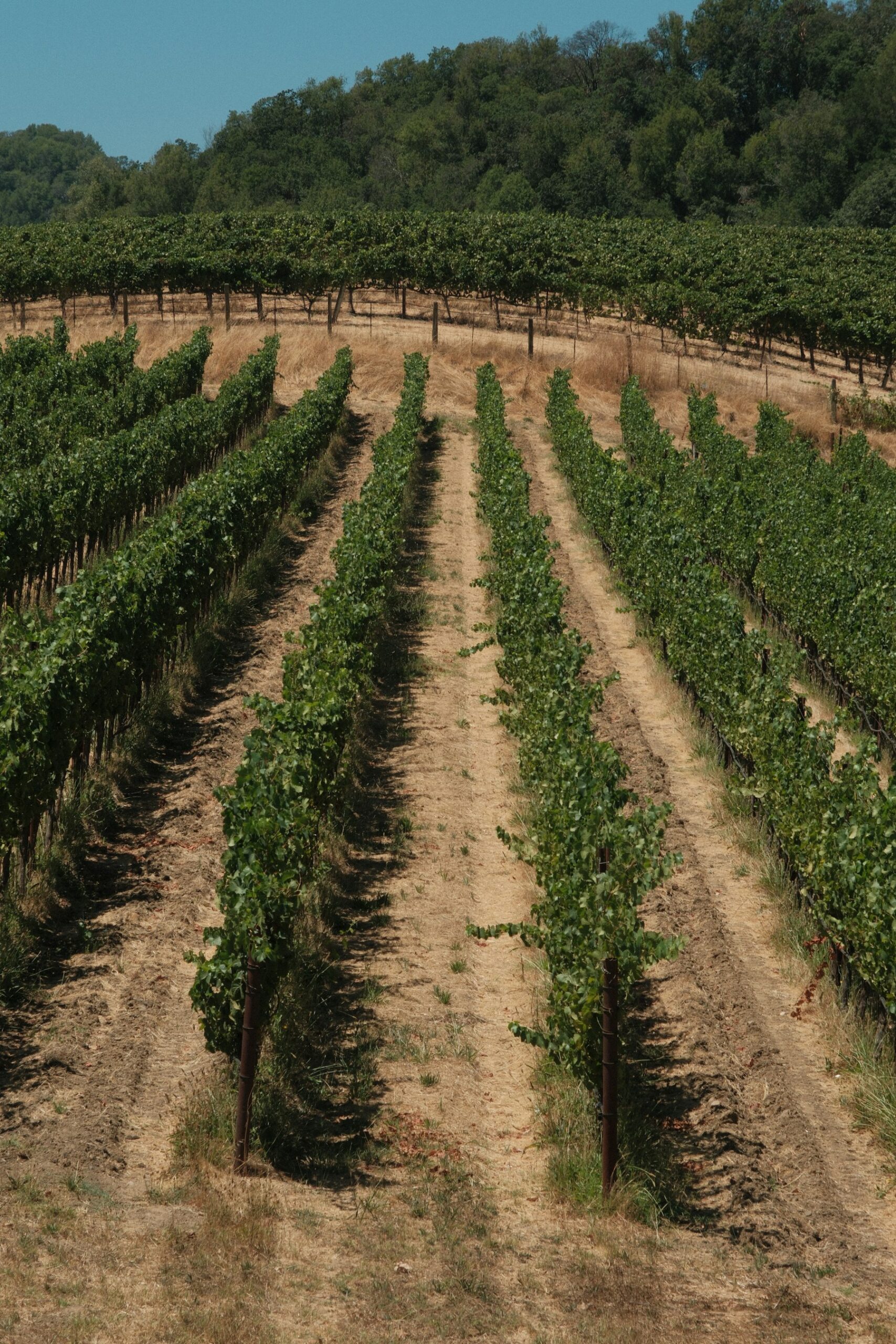
Stand on the hilltop terrace at Oso Libre and the vineyard does not look like a vineyard so much as a homestead. Dorper sheep nose through the cover crop, alpacas watch from a pasture, and Black Angus cattle drift along the row ends doing the weeding. The wind turbine turns on the ridgeline. In 1996 Linda and Chris Behr bought 90 acres of raw land on the cool west side of Paso Robles, learned the slow way how to grow vines, and did not open the doors until October 2009. The name is theirs twice over, Free Bear stitched from Freeland and Behr.
The Behrs and the building of a ranch
Linda and Chris Behr were not handed a winery. They bought 90 acres in 1996 with no vines on it, spent years figuring out which blocks the land wanted, planted in 2000, and waited almost a decade before they poured a single glass for the public in 2009. That patience is the whole personality of the place. Oso Libre, Free Bear, is a blend of their surnames, Freeland and Behr, and the bear is a nod to the early California pioneers who broke this same ground.
What they built is a ranch first and a tasting room second. The livestock are not decoration. The Dorper sheep, the alpacas, and the grass-fed Black Angus are the vineyard crew, grazing the rows for weed control, dropping fertilizer where it is needed, and keeping the soil alive. The Behrs run their estate Angus beef program on the same land, so the animals that tend the vines are part of the working economy of the property, not props for a photo.
The wind turbine and 77 solar panels make more power than the winery uses, which is how a working cattle ranch ends up with a zero carbon footprint.
Answer a few quick questions and get your wine personality, your best matches, and where to taste them.
Start the quizWest-side ground and a self-powered hilltop
Oso Libre sits in the Adelaida District on the cool, high western edge of Paso Robles, the side ruled by calcareous limestone soils and the Templeton Gap. That gap is a low break in the Santa Lucia Range that lets marine air spill in off the Pacific most afternoons, and it is the reason this ground swings so hard from a warm afternoon to a genuinely cold night. Grapes ripen in the heat and then lock in acid overnight, which is exactly what you want in a structured red.
The shallow chalky bedrock here forces vines to dig and to fight, and stressed vines on limestone tend to make small, concentrated berries. The Behrs lean into the place rather than overriding it. SIP Certified for sustainability, the property runs on a wind energy conversion unit paired with 77 solar panels that together supply more than 100 percent of the winery’s needs, which is how a beef-and-wine ranch lands at carbon-neutral.
Cabernet, Mourvedre, Primitivo, and the patient cellar
The reds here taste like they were given time, because they were. Oso Libre ages its reds roughly 36 months, and you feel that in the glass as resolved tannin rather than green grip. The estate Cabernet Sauvignon shows the cool west side in its bones, cassis and graphite and a savory edge, with the firm chalky tannin that long calcareous-soil reds carry. The Primitivo runs the other direction, plush and brambly, jammy dark fruit with a peppery snap that keeps it from going soft.
The Mourvedre is the one to watch, earthy and meaty with dried herbs and a wild gamey streak under the dark fruit, a wine that wants food and time. For a change of pace the Viognier brings stone fruit and honeysuckle with enough acid to stay lively. Across the lineup the through-line is restraint. These are estate wines made in small quantities, built to be poured with dinner rather than analyzed.
Tell us what is on the table and our pairing generator finds the wine that makes the meal.
Find your pairingWhat to pour Oso Libre with
Start with the house specialty. Oso Libre raises grass-fed Black Angus, and a red-oak-grilled tri-tip or a hard-seared ribeye is the textbook match for the estate Cabernet. The tannin in a young Cab binds to the protein and fat in the meat and to the char on the crust, so the wine that feels firm on its own turns silky against a fatty, charred steak while the steak tastes richer. That is real chemistry, not poetry. The Mourvedre wants lamb, braised short ribs, or anything with dried herbs and smoke, where its savory side has something to grab.
The Primitivo is your pizza-night and barbecue wine, its fruit and pepper standing up to tomato and spice, though go easy on the chili heat because alcohol amplifies it. The Viognier is for roast chicken, pork, or a soft cheese plate, its acid cutting through the richness. Want to push past the obvious pairing, run your dish through the wine pairing generator and let it suggest the cut, the sauce, and the side.
Visiting Oso Libre
Plan to slow down. Oso Libre is a hilltop tasting experience on a working ranch, with views over the vineyards and pastures where the sheep, alpacas, and Angus graze, and it is one of the more dog-friendly and family-friendly stops on the west side. Tastings are best arranged by reservation, so confirm current days and hours directly before you drive out Vineyard Drive, since a small estate operation can change its schedule with the season. Give yourself time to walk the grounds and meet the animals, because that is half the point of coming. For where Oso Libre fits among the west-side stops and how to build a day around the Adelaida District, see our Paso Robles guide.
Let us match you to the right Paso bottle
Take the 60-second quiz and we will point you to the Paso wines and tasting rooms you will love.
Find your wineOso Libre Winery: common questions
What does Oso Libre mean?
Is Oso Libre really carbon-neutral?
Why are there alpacas and cattle at a winery?
What wines does Oso Libre make?
What food pairs best with Oso Libre wines?
Where is Oso Libre located?
Is Oso Libre dog-friendly and family-friendly?
How long does Oso Libre age its red wines?
More wineries in Paso Robles
- Paix Sur Terre
- Paris Valley Road Estate Winery
- Parrish Family Vineyard
- PasoPort and Per Caso Cellars
- Peachy Canyon Winery
- Pelletiere Estate Vineyard and Winery
Are you affiliated with this winery?