Bill and Julie Lapp went looking for a beach cottage and ended up with a vineyard instead. In 2015 they bought a small block called Hollyhock on the Paso Robles west side, and by 2020 they had gone all in, taking on the historic Rotta Winery site, where the first vines went into the ground in 1891 and the cellar was bonded in 1908. That makes it one of the oldest continuously operating wineries on the Central Coast. Their label, mid-point, names the goal: a midpoint between extremes, where acid, tannin, alcohol, and fruit are made to agree.
The Lapps and a winery that refused to disappear
The plan was a beach cottage. Bill and Julie Lapp ended up with rows of old vines instead. The first detour came in 2015, when they bought Hollyhock, a small vineyard on the Paso Robles west side, and discovered that growing grapes is a slower and stranger education than anyone warns you about. The second detour was bigger. In 2020 they took on the historic Rotta Winery site, a property whose story stretches back further than almost anything else in the region.
The Rotta name carries real weight here. Vines were first planted on the land in 1891, and the winery was bonded in 1908, which puts it among the original wineries of the Central Coast and one of the oldest still operating. Rather than scrub that history away, the Lapps chose to honor it, keeping touchstones like the Rotta Zinfandel and the old-vine Black Monukka alive while building their own mid-point wines alongside them. The name is a thesis statement. Bill and Julie are not chasing the biggest, ripest, or oakiest wine in the room. They are aiming for the middle ground where everything holds together.
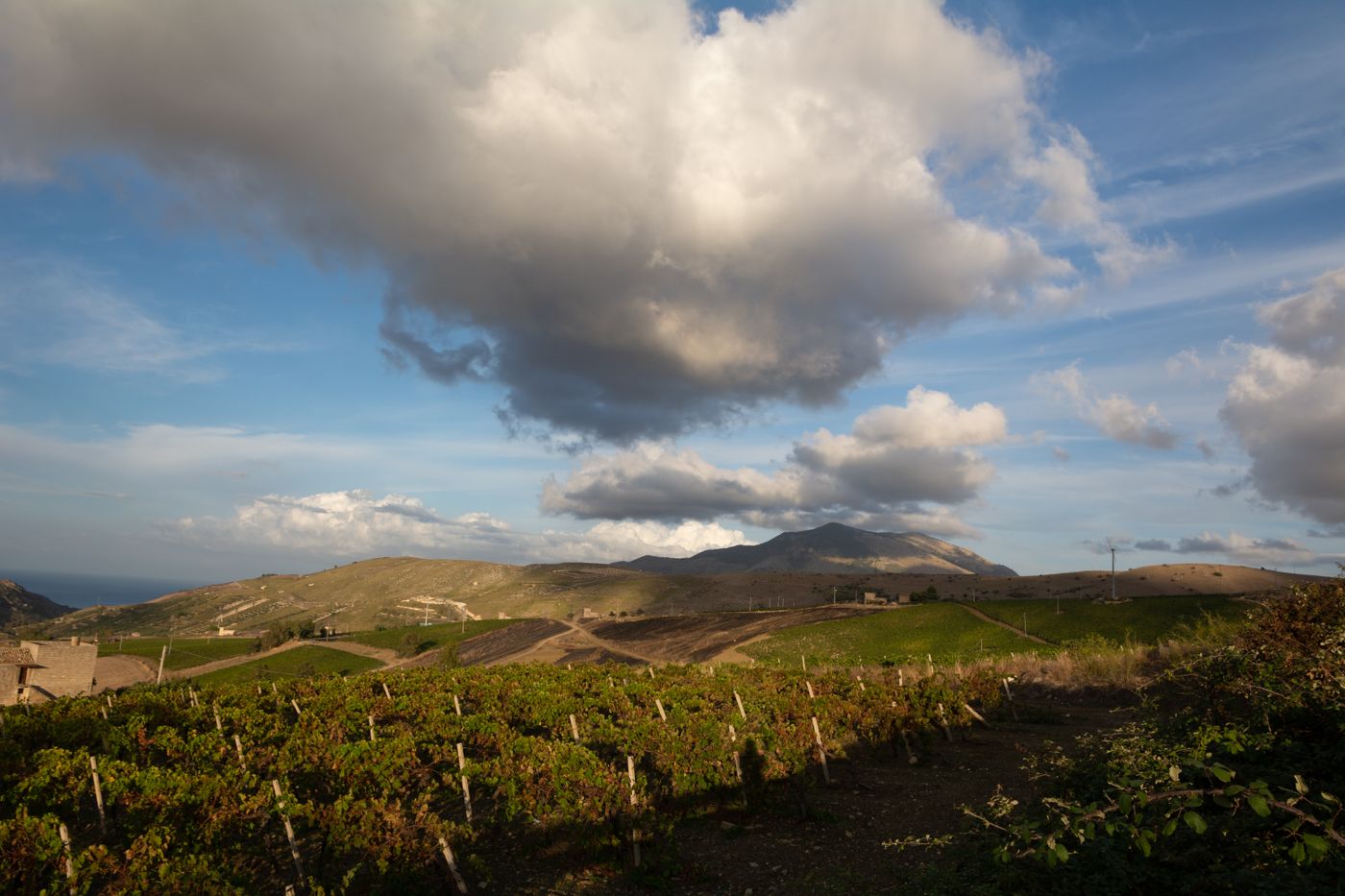
One of the oldest continuously operating wineries on the Central Coast, with vines first planted in 1891.
Answer a few quick questions and get your wine personality, your best matches, and where to taste them.
Start the quizWest-side fruit and the limestone backbone of Paso
Paso Robles is not one place but many. The cool, high western hills sit on calcareous limestone and Monterey-Formation soils, while the warmer benchlands stretch east toward the Salinas River. mid-point works across that spread, drawing on west-side and historic Paso fruit to build wines with both ripeness and spine. The calcareous ground is the quiet hero. Limestone-rich soils tend to give wines a firm acid line and a saline, mineral lift that keeps even powerful reds from turning heavy.
Then there is the air. The Templeton Gap, a break in the coastal hills, funnels marine cooling inland most afternoons, and the result is one of the most dramatic day-to-night temperature swings in California wine country. Hot afternoons ripen the fruit. Cold nights lock in acidity and slow the loss of aromatics. For a label built on balance, that swing is everything. It is the natural mechanism that lets a grape get fully ripe without going flabby, and the Lapps lean on it to keep their wines poised rather than ponderous.
The wines: balance you can taste
The flagship is Kickover, a red blend that shows exactly what mid-point means by balance. A recent bottling ran roughly half Merlot with Cabernet Sauvignon, a splash of the Portuguese variety Souzao, and a little Cabernet Franc. It pours with bursting blackberry and dark cherry, a hint of peppery perfume, and a structure that stays composed rather than showy. The Merlot core gives plushness, the Cabernet adds backbone, and the Souzao lends a dark, savory edge that keeps the fruit honest.
The historic wines are their own pleasure. The Rotta Zinfandel speaks to old-vine Paso tradition, brambly and spiced, while the Rotta Black Monukka is a genuine rarity, a wine made from an old table-grape variety that almost no one else bottles. Across the range the through-line is restraint in the best sense. These are not wines built to win a first sip and exhaust you by the second glass. They are built to drink, with acidity that stays lively and tannins that resolve instead of clamp.
Tell us what is on the table and our pairing generator finds the wine that makes the meal.
Find your pairingWhat to pour mid-point with
Balance is a gift at the table, because a wine that is not maxed out on any one axis can flex to fit the food. Pour the Kickover or the Rotta Zinfandel with Paso’s signature dish, red-oak-grilled tri-tip. Here the chemistry is straightforward and satisfying. The firm tannins in these reds bind to the protein and fat of the beef, softening on your palate while the meat tames the grip, so each makes the other taste rounder. A little char on the tri-tip echoes the smoky, peppery notes in the wine.
For lighter fare, the wines’ natural acidity does the work, cutting through the richness of a mushroom risotto or a board of aged cheeses and resetting the palate between bites. If you want a more precise match for a specific dish, our wine pairing generator can take a varietal or a blend and suggest pairings that respect its structure. A simple rule holds with mid-point reds: match the weight of the dish to the weight of the wine, and let that bright Paso acidity carry the rest.
Visiting mid-point
You will not find mid-point at the end of a long rural lane. Their tasting room sits downtown at the Paso Robles Public Market on Railroad Street, which makes it one of the easiest stops to fold into a walkable afternoon in town. The setting is relaxed and conversational, the kind of place where the people pouring actually want to talk about why an old Black Monukka vine still matters and how a blend gets dialed in for balance. Because it is in the heart of downtown, it pairs naturally with a meal and other nearby tasting rooms. To build a fuller itinerary around the rest of the region, our Paso Robles guide maps out the districts, the drives, and the rhythm of a weekend here.
Let us match you to the right Paso bottle
Take the 60-second quiz and we will point you to the Paso wines and tasting rooms you will love.
Find your winemid-point winery: common questions
Who owns mid-point winery?
How old is the Rotta Winery site?
What does the name mid-point mean?
What wines does mid-point make?
What food pairs well with mid-point wines?
Where is the mid-point tasting room?
What is Black Monukka?
Is mid-point a good stop for a downtown Paso visit?
More wineries in Paso Robles
- Misty Oaks Vineyards
- Mitchella Vineyard & Winery
- Moose Mountain Vineyards
- Nenow Family Wines
- Niner Wine Estates
- Nix Cellars
Are you affiliated with this winery?