
In 2004 Steve Martell bought about 24 acres on a southwest-facing slope in the Willow Creek District, parked his Airstream trailer at the edge of the dirt, and rolled up his sleeves. He put in roughly 2,500 vines on a little more than an acre to start, learning the ground one row at a time. He had trained under Wes Hagan at Clos Pepe and Scott Hawley at Summerwood, but Kaleidos began the way the best Paso garagiste stories do, with one person, a small idea, and a slope of limestone that asked to be planted.
The Airstream and the kaleidoscope
Steve Martell is one of the original Paso garagistes, the wave of small, hands-on producers who built the west side’s reputation a few hundred cases at a time. He learned the craft working harvests and cellars before striking out on his own in 2004, and the early years were exactly as scrappy as they sound, an Airstream for a base camp and a patch of young vines to nurse along. His wife Heather works the brand alongside him, and the operation is still family-run today.
The label’s name reaches back further, to a shop his mother kept when he was young, where she sold kaleidoscopes and other small works of art. The word itself comes from the Greek kalos, beautiful, and eidos, form. Martell ties that to his winemaking directly, the way soil and sunlight combine in a vine the way colored glass and light combine in a kaleidoscope. It is a fitting frame for a producer who treats each bottling as a slightly different turn of the same tube.
The name comes from a kaleidoscope shop Martell’s mother ran when he was a boy, a place built on light and color combining, which is exactly what he chases in the glass.
Answer a few quick questions and get your wine personality, your best matches, and where to taste them.
Start the quizA southwest slope at 1,200 feet
Kaleidos farms its estate in the middle of the Willow Creek District, the cool, limestone-laced core of the Paso Robles west side. The vineyard sits around 1,200 feet on a southwest-facing slope, high enough to catch the marine air that pours through the Templeton Gap on summer afternoons. That cooling drives the big day-to-night temperature swing this district is known for, warm sun by day to push ripeness, cold nights to preserve acid and color.
The ground here is the calcareous, Monterey Formation material that defines west Paso, loam and clay over limestone bedrock, soils that stress a vine and reward it with concentration. Martell farms sustainably and without chemical inputs, letting the site speak. In a Region II climate this far from the valley heat, the fruit ripens slowly and keeps its freshness, which is why these wines can be rich and lifted at the same time.
Mythic names, real intensity
Kaleidos makes limited-production Rhone wines, mostly Grenache, Syrah, and Mourvedre, the GSM trio, and many carry names from Greek and Egyptian myth. Osiris, the Grenache named for the Egyptian lord of wine, earned 94 points from Wine Enthusiast for the 2021. It pours bright and perfumed, red cherry and dried rose and a dusting of white pepper, the kind of Grenache that feels weightless until the finish reminds you how much is there.
Morpheus, named for the Greek god of dreams, is a Syrah-heavy GSM blend that also took 94 points for the 2021, darker and brooding with blackberry, smoked meat, and crushed stone. The Praying Mantis bottlings, both a Grenache and an estate red, have landed in the low 90s as well, the 2020 estate red at 93. Martell has said the winery has earned nearly 100 scores of 90 or better over the years, a remarkable run for a house that makes only around 750 cases.
Tell us what is on the table and our pairing generator finds the wine that makes the meal.
Find your pairingWhat to pour Kaleidos with
A Grenache-led wine like Osiris is one of the most flexible reds on a Paso table because its tannin is moderate and its acidity is bright. Acid cuts richness, so this is the bottle for a roast chicken crackling with schmaltz, for a wood-fired pizza heavy with cheese, or for the herb-roasted vegetables that show up at every Paso harvest dinner. The wine’s red-fruit lift mirrors a tomato-based sauce and refreshes the palate between bites of anything fatty.
Morpheus, the Syrah-driven blend, wants more muscle. Reach for red-oak-grilled tri-tip or lamb, where the wine’s firmer tannin binds the protein and fat in the meat and turns both softer and richer on the tongue. A peppercorn or rosemary crust echoes Syrah’s own savory streak. Match sweetness where it appears, so a fruit-glazed pork or a hoisin note finds its partner in Grenache rather than the drier Syrah. To pin down a dish for a specific Kaleidos cuvee, our wine pairing generator will narrow it for you.
Visiting Kaleidos
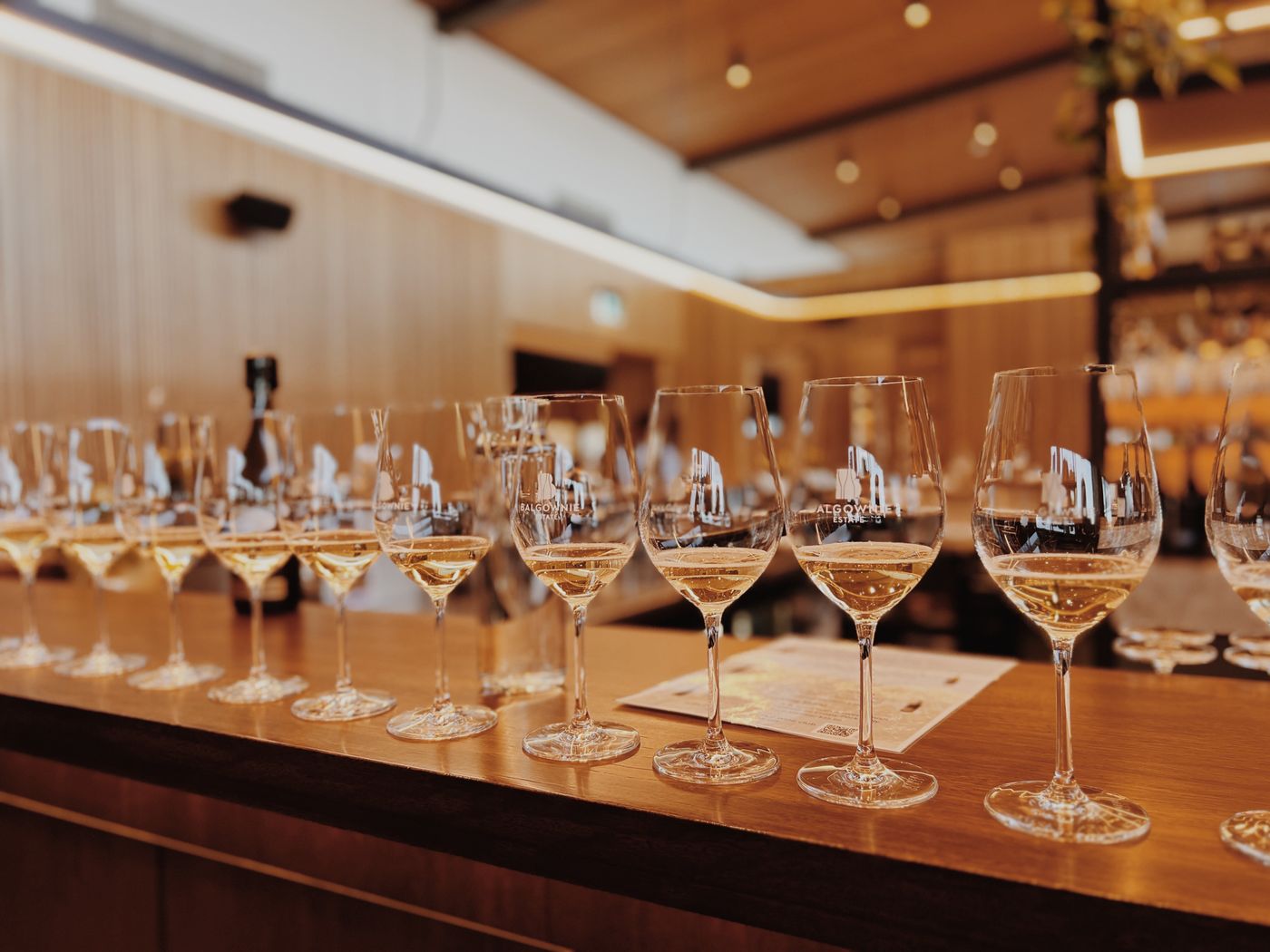
Kaleidos hosts seated tastings by appointment on a shaded outdoor patio at its Blue Rock Road location, an intimate, personal experience where you may well find Steve Martell himself pouring. Tastings are small and unhurried, and the winery has been known to offer a wine-and-cupcake pairing on select weekends, a playful turn that suits the brand’s name. Reserve ahead through the winery, and confirm current hours, fees, and any special pairings when you book, since a 750-case house keeps a small calendar. For a sense of how this corner of the west side connects to the rest of the region, our Paso Robles guide lays out the districts and the drive.
Let us match you to the right Paso bottle
Take the 60-second quiz and we will point you to the Paso wines and tasting rooms you will love.
Find your wineKaleidos: common questions
Who founded Kaleidos
Why is it called Kaleidos
What kind of wine does Kaleidos make
How small is Kaleidos production
What food pairs best with Kaleidos wines
Where is Kaleidos located
Can you visit Kaleidos
What are the highest-rated Kaleidos wines
More wineries in Paso Robles
- Keplinger Wines
- Kiamie Wine Cellars
- Kiler Canyon Vineyard
- kukkula
- Kula Vineyards & Winery
- L’Aventure Winery
Are you affiliated with this winery?