Raymond Smith took the long way to the cellar, and the wines are better for it. Born and raised in Oakland, he worked as a ship joiner and a grocery clerk before he relocated to Paso Robles in the late 1980s, when the town was still a quiet farming community on the edge of a wine boom. He built and ran a fleet of mobile bottling lines, learned the business from the growers and producers he served, and eventually launched his own label. As the first Black winemaker in Paso Robles, Smith has watched the region grow from the inside, and his downtown tasting room is one of its most welcoming rooms.
From Oakland to the Paso cellar
Raymond Smith was born and raised in Oakland, California, and came to wine by an unlikely road. He worked as a ship joiner and a grocery clerk before relocating to Paso Robles in the late 1980s, drawn to the small Central Coast town just as its wine industry was beginning to stir. Rather than start with vines, he started with the practical end of the business, helping build and eventually owning and operating a small fleet of mobile wine bottling lines that served wineries across the region.
That work gave him something money cannot buy: relationships. Growers and producers shared the intricacies of the trade with him, and he absorbed it all. He launched Indigené Cellars in the mid-2000s with a clear purpose, captured in his own phrase, crafting wines of authority and profound expression. As the first Black winemaker in Paso Robles, Smith occupies a meaningful place in the region’s history, and he has witnessed its phenomenal growth from the ground up.
The name says it all. Indigené means native, and every bottle is meant as a clear expression of wines that belong to their environment.
Answer a few quick questions and get your wine personality, your best matches, and where to taste them.
Start the quizDowntown Paso and the idea of the native
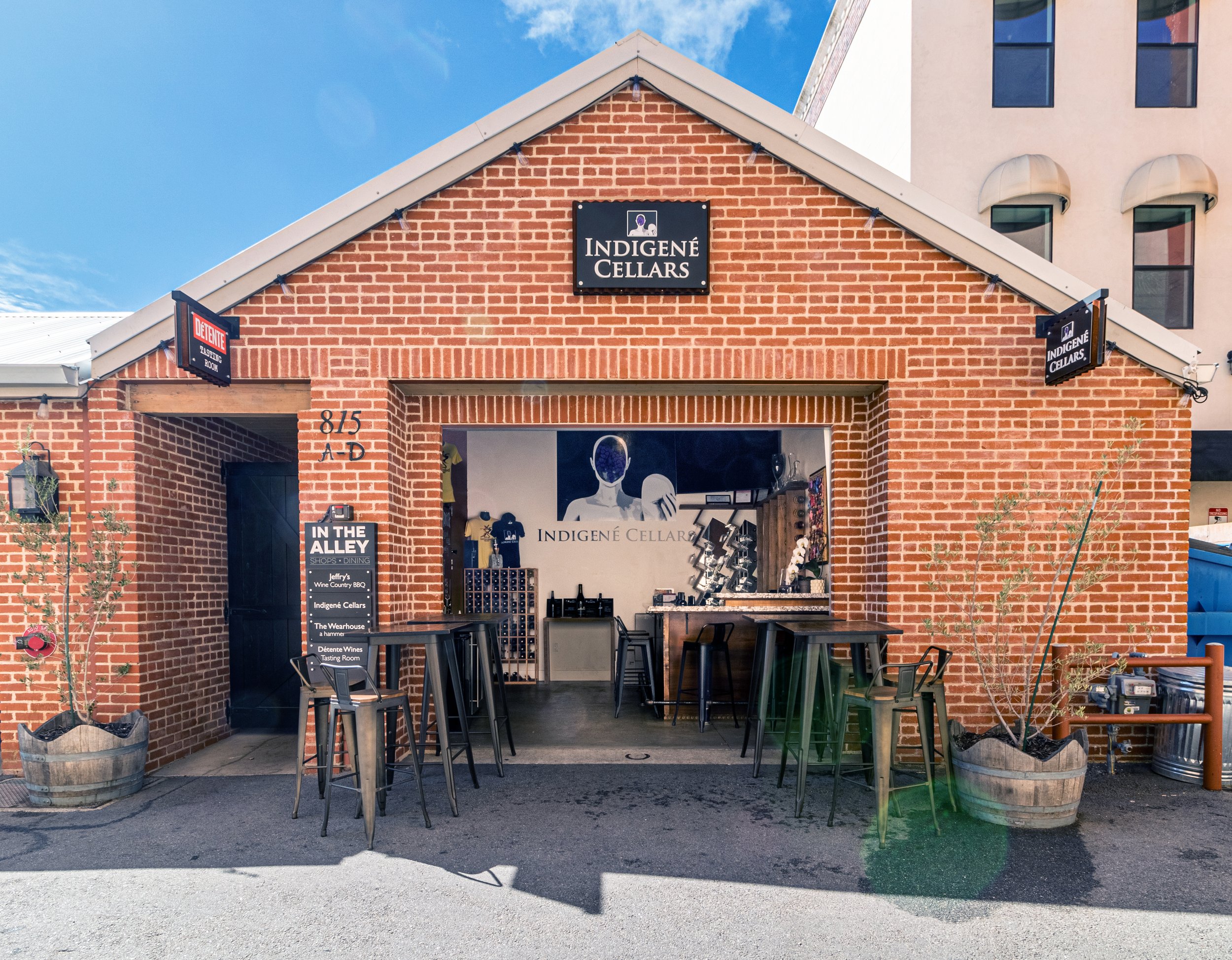
Indigené Cellars pours in prime downtown Paso Robles, at 815 12th Street, in the walkable wine district around the town square where dozens of producers share a few leafy blocks. It is a warm, welcoming room, an easy and rewarding stop on a downtown tasting afternoon, and Smith’s presence and story make it one of the more memorable.
The name is the philosophy. Indigené means native, and Smith uses it to describe wines that are a clear expression of their environment, true to the ground and the season that made them. The fruit comes from the warm Paso Robles area, a region of hot days and cold nights whose wide daily temperature swing lets grapes ripen fully while holding their acidity. That balance is what gives Smith the raw material for the structured, expressive wines he is after, and the blends that have become his calling card.
The wines: blends and bold varietals
Indigené Cellars works to make the best blends you will ever experience, and the lineup reflects that mission, balanced red blends alongside expressive single varietals. Expect Petite Sirah, the inky, powerful grape that thrives in Paso heat, and Syrah, dark and savory and peppery, anchoring the reds, with Pinot Noir and a Rosé rounding out the range for lighter moments.
Smith’s gift is blending, the art of fitting parts together so the whole is more balanced and complete than any single component. Tasting through the Indigené wines is a lesson in that craft, and in a point of view earned over decades in and around the Paso Robles industry. These are wines made with intention by someone who knows the region as well as anyone, poured by the person who made them.
Tell us what is on the table and our pairing generator finds the wine that makes the meal.
Find your pairingWhat to pour it with
Petite Sirah is a wine for fat and char. Its big tannins bind to protein and fat, so it tastes rounder and softer against a fatty ribeye, braised short ribs or barbecue, while the wine cuts the richness of the meat. The same grape turns bitter against delicate fish, where the tannin has nothing to grab, so save it for the hearty plates.
Syrah loves grilled lamb, sausage and smoky, peppery dishes, meeting the char and spice on its own terms. The red blends are versatile dinner wines, happy with roasted meats, hard aged cheeses and a charcuterie board, where salt rounds the tannin and lifts the fruit. The Pinot Noir is the gentler option, a natural with duck, mushrooms or salmon, while the Rosé is the easy warm-weather pour for salads, charcuterie and an afternoon on the square.
Want a downtown room with real history and great blends?
Take the 60-second quiz and we will match you to the Paso Robles wines and tasting rooms you will love.
Find your wineIndigené Cellars: common questions
What is Indigené Cellars known for?
Who is Raymond Smith of Indigené Cellars?
Where is the Indigené Cellars tasting room?
What does the name Indigené mean?
What are the Indigené Cellars hours?
What food pairs with Indigené Petite Sirah?
What wines does Indigené Cellars make?
More wineries in Paso Robles
- J Dusi Wines
- J. Lohr Vineyards & Wines
- Jack Creek Cellars
- Jada Vineyard and Winery
- Kaleidos
- Keplinger Wines
Are you affiliated with this winery?