
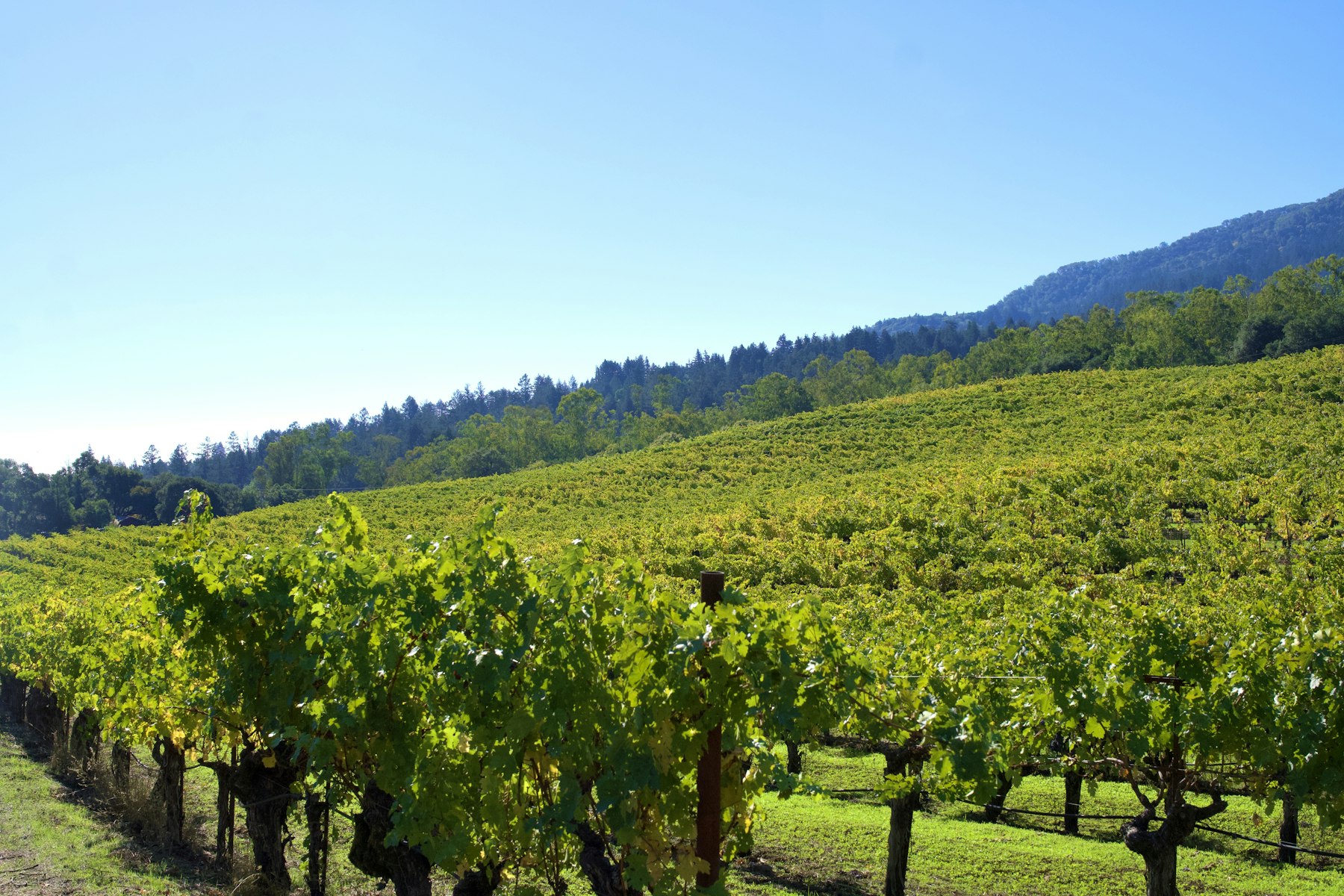
Sit in the Hunt Cellars tasting room long enough and David Hunt may sit down at the white grand piano in the center of it and play. Hunt is a working musician who has recorded with bands including Ambrosia, and he is also legally blind, having lost his sight to the hereditary condition retinitis pigmentosa. He says blindness sharpened his senses of taste and smell, and he founded Hunt Cellars in 1996, naming the Destiny Vineyard after his daughter. The wines carry music names: Rhapsody in Red, Outlaw Ridge, Cabovation, Zinovation.
David Hunt, the musician who reads wine by taste
David Hunt did not come to wine through commerce. He came to it as a musician, songwriter, author, and inventor who carried a maverick streak into everything he touched. He is legally blind, the result of retinitis pigmentosa, a hereditary disease that slowly strips away sight, and rather than treat that as a limitation he turned it into a method. With vision gone, his sense of taste and smell took over, and he learned to read a wine entirely through nose and palate. He founded Hunt Cellars in 1996 and named his Destiny Vineyard after his daughter.
The music never left. Hunt has recorded with bands including Ambrosia, and he keeps a white grand piano as the centerpiece of the tasting room, where he is known to play a number or two for guests, especially after winemaker dinners. That fusion of music and wine runs all the way to the labels: many of the bottles are named for his songs and his sensibility, from Rhapsody in Red to Unforgettable. A visit here is part tasting, part recital.
David Hunt cannot see the grapes, so he reads his wine entirely by nose and palate, and the bottles are named after the songs he writes.
Answer a few quick questions and get your wine personality, your best matches, and where to taste them.
Start the quizPaso Robles fruit and the west-side limestone
Hunt Cellars works within the broad Paso Robles AVA, drawing on the region’s defining strength: a huge day-to-night temperature swing that builds ripe fruit under warm sun and then locks in acidity through cold nights. That swing, driven by cool Pacific air that pushes inland through gaps in the coastal range, is what lets Paso produce reds that are both generous and structured. The calcareous limestone soils that run through the west side give the wines a mineral backbone and the firm tannins that reward cellaring.
That range of terroir is exactly what a portfolio as broad as Hunt’s needs. Bordeaux varieties like Cabernet Sauvignon and Merlot want the warmth and the limestone structure; Rhone grapes like Syrah want the cooling marine influence to keep their savory edge; Italian varieties like Sangiovese want bright acidity to stay food-friendly; and Port-style dessert wines need fully ripe, concentrated fruit. Paso Robles, with its wide swings and varied soils, can deliver all of it, which is why Hunt can range so far across styles without losing the thread of ripe, sun-driven California fruit.
Music in a glass: the wines
The Hunt lineup spans Bordeaux, Rhone, and Italian varieties plus Port-style dessert wines, and almost all of it wears a musical name. Cabernet Sauvignon shows up as Cabovation, a dark, structured wine of cassis and cocoa with the firm grip Paso limestone gives. The Bordeaux-style blend Rhapsody in Red layers black fruit, cedar, and spice into something built for the long haul. Zinfandel arrives as Outlaw Ridge and Zinovation, brambly and peppery with the kind of jammy ripeness that Paso sun delivers.
The range keeps going, into Merlot bottled as Unforgettable, into Syrah, Sangiovese, and whites like Chardonnay and Viognier, and into the sweet finale of Port-style dessert wines that lean rich and chocolatey. Hunt’s wines have collected serious recognition over the years, with the Zinfandel, the Cabernet, and the Rhapsody blend all earning top honors in major competitions. Whatever the variety, the house style favors big, expressive, fully ripe wines, the vinous equivalent of a song played loud and confident.
Tell us what is on the table and our pairing generator finds the wine that makes the meal.
Find your pairingWhat to pour Hunt Cellars with
The big Bordeaux reds here, the Cabernet and the Rhapsody blend, are tailor-made for red-oak-grilled tri-tip and a ribeye, because their firm tannins bind to the protein and fat of a charred, marbled steak, softening the wine and letting its dark fruit shine. Outlaw Ridge Zinfandel loves barbecue and anything with a sweet-smoky glaze, since its ripe, jammy fruit can match the sweetness in the sauce instead of being flattened by it. Sangiovese, with its bright acidity, is the one to pour with tomato-based pasta and pizza, where the acid cuts the richness and refreshes the palate.
The Port-style dessert wines call for their own strategy. Pair them with dark chocolate or a blue cheese, and remember the rule that the wine should be at least as sweet as the dessert, or the wine will taste thin and sour next to it. Watch chili heat across the whole lineup, because alcohol amplifies the burn of spicy food, so a high-octane Zinfandel and a fiery dish can fight each other. To match a specific dish to the right Hunt bottle, run it through our wine pairing generator and let the chemistry do the planning.
Visiting Hunt Cellars
A Hunt Cellars visit is unlike most Paso tastings, because the music is part of the experience: the white grand piano sits at the center of the room, and David Hunt is known to play for guests. Some visits include barrel tastings down in the cellar alongside the standard pours, so it is worth asking what is available when you book. Hours and tasting options can change with the season, so confirm current hours and any reservation details with the winery before you go. To plan a full day around this stop and understand how the broader Paso Robles AVA and its west-side limestone fit together, see our Paso Robles guide, which lays out the region and helps you pace your tastings so you enjoy them rather than rush.
Let us match you to the right Paso bottle
Take the 60-second quiz and we will point you to the Paso wines and tasting rooms you will love.
Find your wineHunt Cellars: common questions
Who founded Hunt Cellars?
Why are Hunt Cellars wines named after music?
Is there really a piano in the tasting room?
What kinds of wine does Hunt Cellars make?
What food pairs best with Hunt Cellars wines?
How does a blind winemaker make wine?
Where is Hunt Cellars located?
Have Hunt Cellars wines won awards?
More wineries in Paso Robles
- ídola wine co.
- Indigené Cellars
- J Dusi Wines
- J. Lohr Vineyards & Wines
- Jack Creek Cellars
- Jada Vineyard and Winery
Are you affiliated with this winery?