On the wall of the Fratelli Perata tasting room there is a mural of a house in Genoa, Italy, where a grandfather named Giuseppe Perata learned to make wine. That is the whole story in one image: an Italian winemaking family that crossed an ocean, kept the craft alive in California, and eventually planted it for good in the hills of Paso Robles. Fratelli Perata means Perata Brothers, and that is exactly who built it.
The Perata Brothers
Gino and Joe Perata were sons of Italian immigrants who learned winemaking at the knees of their father and great-uncle, men who made hundreds of gallons a year for family and friends down in Camarillo. The brothers wanted land of their own, and in 1977 they bought a property in Paso Robles. Starting in 1980 they planted twenty-five acres, beginning with Cabernet, Merlot, and the Paso favorite, Zinfandel, and in 1987 they bonded the winery and started selling under their own name.
Fratelli Perata has stayed small, dry-farmed, and deeply family-run ever since. The wines are made in the old Italian style the brothers grew up with, built for the table and meant to age, and the unpretentious tasting room still carries that Genoa mural like a family crest. A visit here is a visit with a family, not a brand, and the wine tastes like it.
Fratelli Perata means Perata Brothers, and the family has dry-farmed estate, Italian-style wines in Paso Robles since planting their first vines in 1980.
Answer a few quick questions and get your wine personality, your best matches, and where to taste them.
Start the quizDry-farmed ground in the Templeton Gap
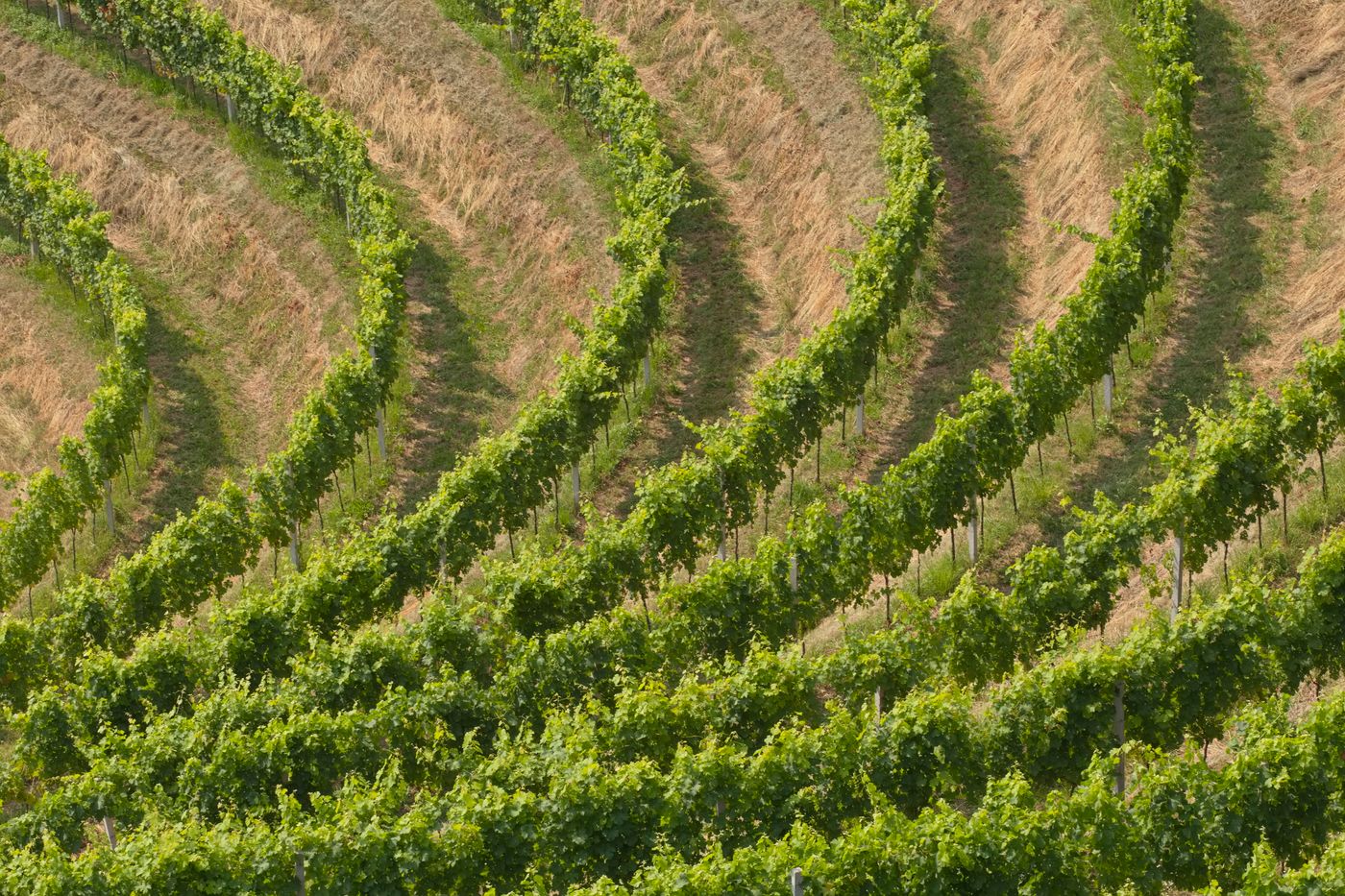
Fratelli Perata farms in the Templeton Gap District on the west side of Paso Robles, where a gap in the coastal mountains lets Pacific air and fog drift inland. The hot afternoons ripen the Bordeaux and Italian reds fully, while the cool nights that follow preserve the acidity and structure that let these wines age the way the Peratas intend.
The estate is dry-farmed, which is the heart of the philosophy. Without irrigation, the vines push their roots deep into the alluvial loams and chalky subsoils, yields drop, and the fruit concentrates. It is how the old country farmed, and it gives Fratelli Perata wines their density, their savor, and their honest connection to a single piece of ground.
The wines: structured and built to age
The Peratas built their winery on Bordeaux reds and Zinfandel, and that remains the core: Cabernet Sauvignon, Merlot, and Zinfandel, often with the structure and restraint of old-world wines rather than the lush, fruit-forward Paso norm. These are reds made to be cellared and made to be eaten with, firm when young and rewarding with a few years in the bottle.
Dry farming and small production give the wines real concentration and a savory, earthy edge that sets them apart from their bigger, glossier neighbors. There is a reason longtime Paso Robles drinkers keep Fratelli Perata on their shortlist. The wines are unfashionable in the best way, honest, structured, and built to improve, the kind of bottles an Italian family would actually drink.
Tell us what is on the table and our pairing generator finds the wine that makes the meal.
Find your pairingWhat to pour it with
These are Italian-family wines, so set an Italian-family table. The Cabernet and Merlot, with their firm tannins, want red meat and fat: a grilled steak, a braised beef ragu over pappardelle, osso buco. Tannin binds to protein and fat, so the wine softens and the meat tastes cleaner, while the wine’s structure stands up to a rich, slow-cooked sauce.
The Zinfandel is your grill and tomato wine. Its acidity cuts through a long-simmered Sunday gravy or a sausage-and-pepper sandwich, and its pepper note loves char. Because these reds carry real tannin and age, they also shine with hard aged cheeses like Parmigiano and pecorino, where the salt and fat round out the wine. Pour them young with food, or cellar them and let time do the rest.
Find your kind of red
Take the 60-second quiz and we will point you to the wines and tasting rooms you will love.
Find your wineFratelli Perata Winery: common questions
What is Fratelli Perata known for?
Who founded Fratelli Perata?
Where is the Fratelli Perata tasting room?
What does Fratelli Perata mean?
What grapes does Fratelli Perata grow?
What food pairs with Fratelli Perata wines?
More wineries in Paso Robles
- Fulldraw Vineyard
- Glunz Family Winery & Cellars
- Grosso Kresser Vineyard
- Guyomar Wine Cellars
- Halter Ranch
- Hawks Hill Ranch Winery
Are you affiliated with this winery?