A bronze boar guards the door at Eberle, the ninety-third cast of a famous Florentine statue, and Gary Eberle has met visitors at that door more mornings than almost any winemaker alive. The name is German for small boar, and the welcome is the point. Few people did more to turn Paso Robles from cattle country into wine country than the former defensive tackle who built this place.
The pioneer at the door
Gary Eberle came to wine sideways. A Pittsburgh kid, he played defensive tackle for the Penn State Nittany Lions while studying biology, and a taste of old Bordeaux from a professor’s cellar set the hook. He went to UC Davis for graduate work in enology and viticulture, then moved to Paso Robles and co-founded the Estrella River Winery in 1973, when the region had almost no wine industry to speak of.
In the late 1970s he struck out on his own, buying nearly 64 acres just down the road. His first Cabernet Sauvignon came in 1979, and the winery and tasting room opened in 1984. Eberle did not just make wine here, he helped build the region, working to establish the Paso Robles AVA in 1983 and championing the place for decades. In 1994 he went underground, carving the first wine caves in Paso Robles, now more than 16,000 square feet of cool tunnels beneath the hillside. The bronze boar, the daily handshake, the caves: this is a founder’s winery in every sense.
Gary Eberle helped write the case for the Paso Robles AVA, then dug the first wine caves in the region.
Answer a few quick questions and get your wine personality, your best matches, and where to taste them.
Start the quizThe Geneseo District ground
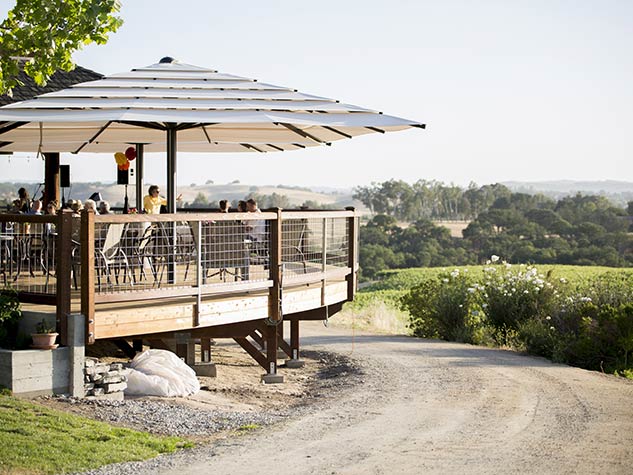
Eberle sits on the east side of Paso Robles along Highway 46 East, in the Geneseo District. This is warm, upfaulted country, old terraces and low hills on the gravelly Paso Robles Formation laced with decomposed granite, a Region III to IV climate that ripens Cabernet and Rhone reds with ease. The soils drain hard and keep yields honest, which concentrates the fruit.
The east-side rhythm is all about the swing. Hot afternoons drive ripeness while cool nights, fed by marine air that slips through gaps in the coast range after dark, pull the heat back and protect the acid. Eberle’s caves take that one step further, holding the barrels at a steady cellar coolness year round so the wines age slow and even, no matter how hot the day above.
The wines
Cabernet Sauvignon is the soul of Eberle, the grape Gary fell for and the one that made the winery’s name. The estate Cabernets are classic warm-climate Paso: ripe cassis and black cherry, cocoa and a little cedar, full but never clumsy. Alongside them the winery makes a serious Rhone lineup, with Syrah and Viognier from estate fruit, plus an off-dry Muscat Canelli that has been a tasting-room favorite for years.
What ties it together is balance. Eberle’s reds are generous and ripe, in the Paso style, but they carry enough structure and freshness to age, which the caves were built to allow. These are wines made by someone who has tasted first-growth Bordeaux and never stopped chasing that benchmark under a California sun.
Tell us what is on the table and our pairing generator finds the wine that makes the meal.
Find your pairingWhat to pour it with
An Eberle Cabernet is a red-meat wine, and the reason is chemistry. The tannins that give the wine its grip bind to the proteins and fat in a grilled ribeye, so the wine softens and rounds while the steak tastes cleaner and less rich. Add a crust of char and cracked pepper and the match gets better still. This is the bottle for a steak night or a leg of lamb.
The estate Syrah wants the grill too, its peppery, savory edge echoing a charred lamb chop in a congruent match. Pour the Viognier with roast chicken or a soft cheese on the patio, where its weight and stone-fruit perfume hold their own. And keep the off-dry Muscat Canelli for the end of the night, with fruit and a not-too-sweet dessert, since the wine needs to be at least as sweet as the plate or it falls flat. Skip the big reds with delicate fish, which leaves the tannins nothing to grab.
Let us match you to the right Paso Cabernet
Take the 60-second quiz and we will point you to the wines and tasting rooms you will love.
Find your wineEberle Winery: common questions
What is Eberle Winery known for?
Who is Gary Eberle?
Where is Eberle Winery?
Does Eberle Winery have wine caves?
What is the Geneseo District known for?
What food pairs with Eberle Cabernet?
Why is there a boar at Eberle Winery?
More wineries in Paso Robles
- Ecluse Wines
- End of the Day Wines
- Epoch Estate Wines
- Four Lanterns Winery
- Fratelli Perata
- Fulldraw Vineyard
Are you affiliated with this winery?