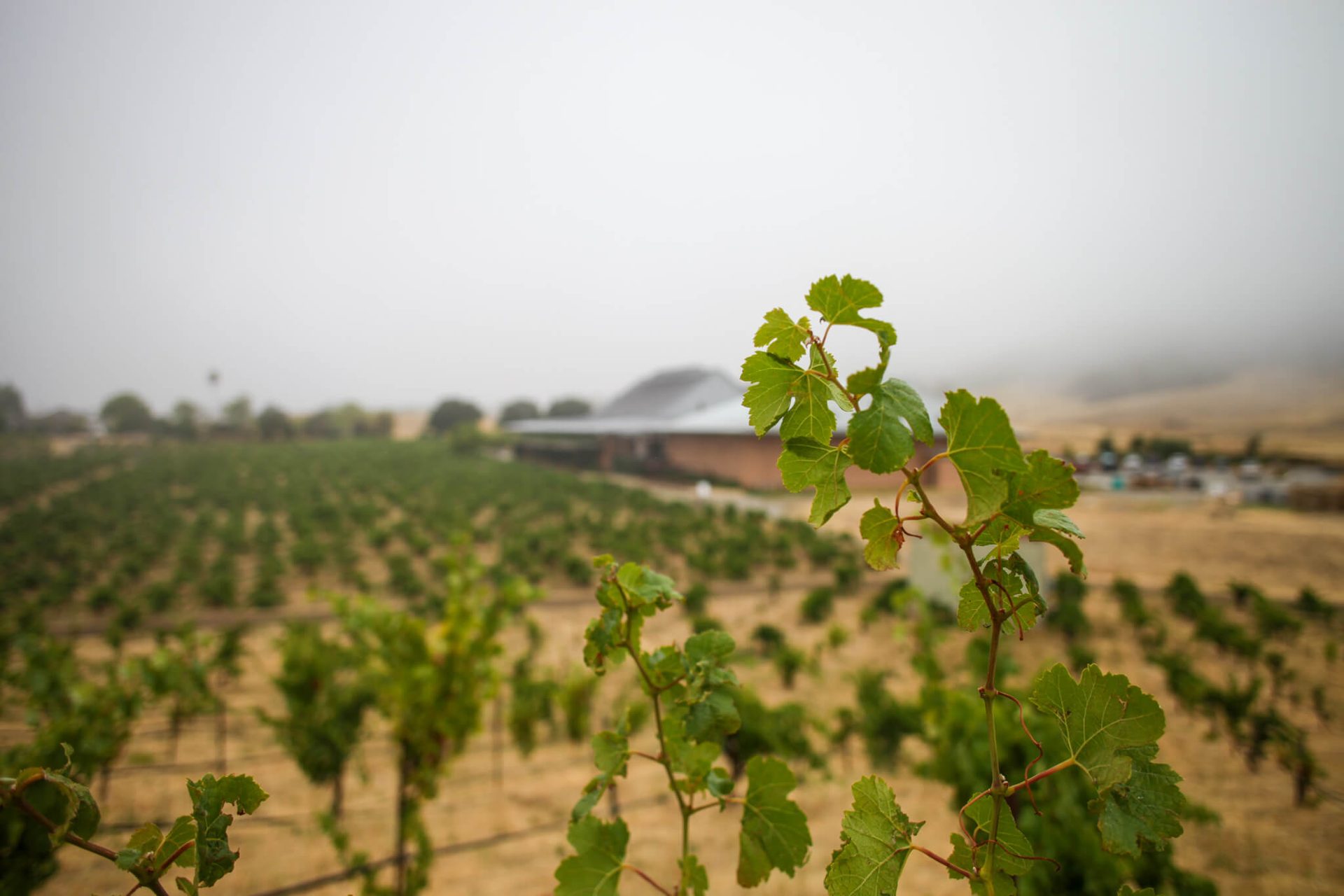
Drive to the top of the hill off the Paso west side and the view does the talking: rows of old-vine reds falling away in every direction, the Templeton Gap opening toward the coast, and a mission-style winery with an unmistakable New Zealand accent in its lines. This is Croad, a 50-acre hilltop estate where owner Martin Croad, raised in New Plymouth, New Zealand, brought a southern-hemisphere sensibility to the limestone slopes of Willow Creek. The family farms here, makes wine here, and, unusually, lets you stay the night here.
A New Zealand family on a Paso hilltop
Croad Vineyards carries its origins in plain sight. Owner Martin Croad hails from New Plymouth, on the west coast of New Zealand’s North Island, and that heritage shows up in the architecture, which blends California mission style with a distinct down-under sensibility, and in the hospitality, which treats a tasting as the start of a longer stay rather than a quick pour. The family planted and built on a 50-acre hilltop estate in the Willow Creek District, choosing the high ground for its views and, more importantly, for its drainage and exposure.
What sets the place apart is its commitment to staying put. The Croads did not just open a tasting room; they built lodging into the estate, so guests can wake up inside the vineyard. That choice tells you how the family thinks about wine: not as a transaction but as a setting, a hilltop where the wine, the view, and the hours you spend there are meant to run together.
Croad dry-farms its hilltop vines, refusing irrigation so the roots chase water deep into the limestone and the wine tastes like the place rather than the hose.
Answer a few quick questions and get your wine personality, your best matches, and where to taste them.
Start the quizDry-farmed on the high limestone
The defining practice at Croad is dry farming. In most of California, vines are irrigated; at Croad, the estate reds are grown without it, forcing roots to drive deep into the calcareous, high-bedrock soils of Willow Creek in search of water. The vines yield less fruit, but that fruit is more concentrated, and the wine carries a sense of the ground it came from. On the limestone-rich loams and clay of the west side, dry farming is less a gimmick than a return to how this country was once routinely farmed.
The site sits high in the Willow Creek District, on cool slopes classed Region II and swept by the Templeton Gap, the gap in the coastal hills that funnels marine air inland each afternoon. Hot days and genuinely cold nights produce one of California’s widest temperature swings, which ripens powerful varieties like Zinfandel and Petite Sirah while holding onto acidity. For dry-farmed, deep-rooted vines, that combination of stress and swing is exactly the recipe for structured, age-worthy reds.
Big west-side reds with backbone
Croad pours the muscular side of Paso. Expect Cabernet Sauvignon, Zinfandel, Syrah, and Petite Sirah, the kinds of reds that fill a glass and hold their shape. The dry-farmed Zinfandel tends to show brambly black and red fruit with a peppery snap, while the Petite Sirah is the heavyweight, inky and firmly tannic, the sort of wine that stains the glass and rewards a few years in the cellar.
The Cabernet and Syrah split the difference, offering darker fruit, savory edges, and the grippy structure that comes from low-yield, deep-rooted vines. Across the lineup these are wines built on backbone rather than polish, reds that taste best with food and a little air. Tasted at the top of the hill with the valley below, they make the case for the west side’s reputation as Paso’s serious red-wine country.
Tell us what is on the table and our pairing generator finds the wine that makes the meal.
Find your pairingWhat to pour Croad with
These are tannic, full-bodied reds, and tannin is the key to pairing them. Tannin binds to protein and fat, so when you set a firm Petite Sirah or Cabernet next to a fatty, red-oak-grilled tri-tip or a marbled ribeye, the tannin grabs the fat instead of drying your mouth. The wine turns plush, the meat turns cleaner, and both come out ahead. Char from the grill adds a savory layer that the savory edges in these reds happily meet.
Think hearty: braised short ribs, lamb shoulder, aged hard cheeses, anything rich enough to stand up to the structure. Acidity in the wine cuts through fat, which is why these reds feel refreshing against heavy dishes rather than ponderous. Avoid pairing a big tannic red with very spicy food, since heat magnifies the perception of alcohol and makes the wine feel hot. To match a specific dish to the right Croad bottle, our wine pairing generator can point you to the smartest plate.
Visiting Croad Vineyards
Croad is one of the rare Paso estates where you can taste at the top of a hill and then simply not leave, thanks to lodging built into the property for travelers and groups. Tastings and stays are best arranged by reservation, and because hours and availability shift through the year, confirm current times directly with the winery before you plan your day or book a room. Set aside enough time to take in the Templeton Gap view, since the panorama is half the experience, and consider folding Croad into a broader west-side itinerary among the surrounding Willow Creek vineyards. For help mapping a route and understanding the appellation, see our Paso Robles guide.
Let us match you to the right Paso bottle
Take the 60-second quiz and we will point you to the Paso wines and tasting rooms you will love.
Find your wineCroad Vineyards: common questions
What is Croad Vineyards known for?
Does Croad Vineyards offer lodging?
What does dry-farmed mean at Croad?
Where is Croad Vineyards located?
What is the New Zealand connection at Croad?
What food pairs well with Croad wines?
Do I need a reservation to visit Croad?
What wines does Croad make?
More wineries in Paso Robles
Are you affiliated with this winery?