
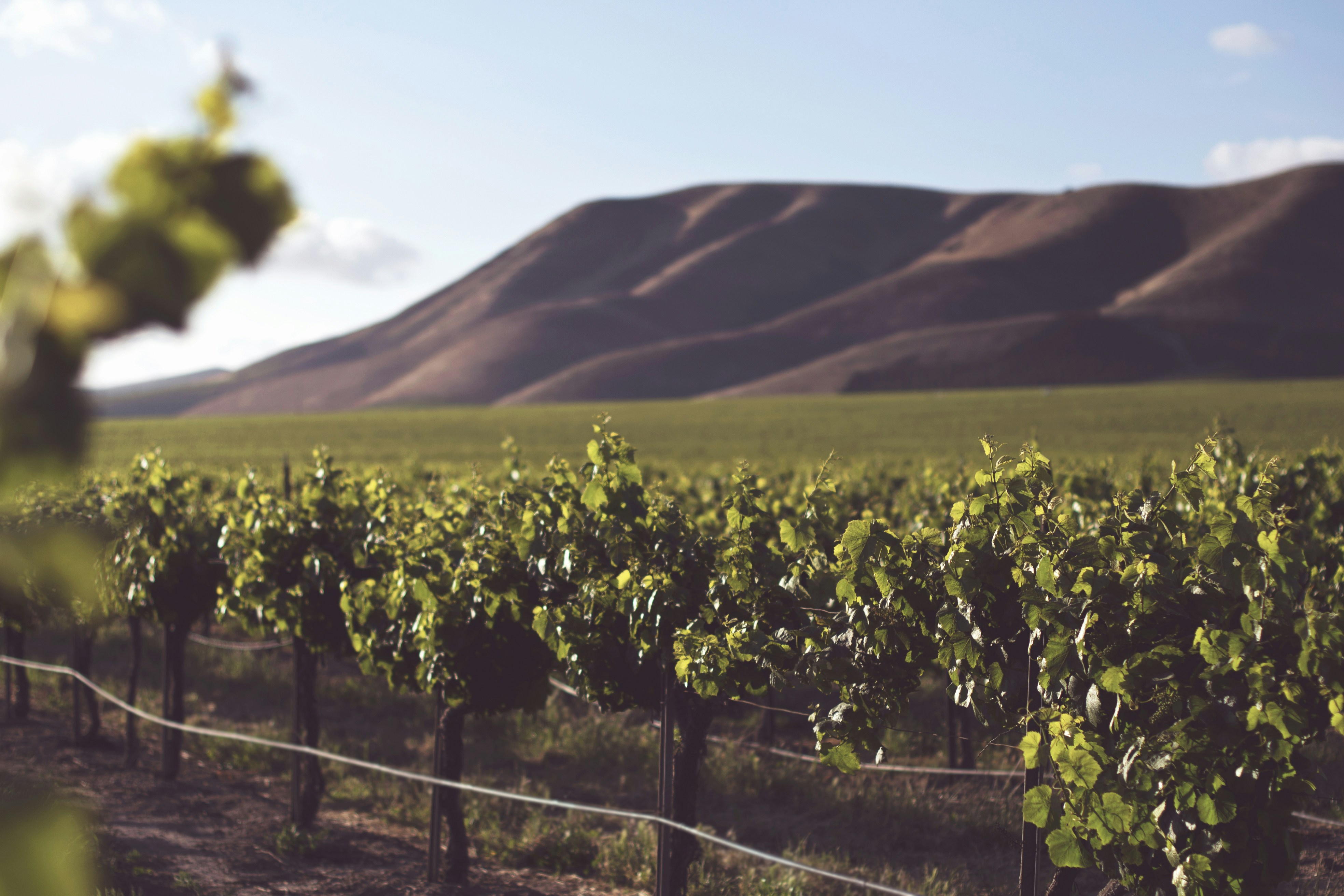
Most Paso Robles wineries lead with Cabernet or Zinfandel. Clesi leads with Aglianico, Sagrantino, and Nero d’Avola, southern Italian grapes most Americans have never heard of, grown under a California sun. Chris Ferrara fell for these obscure varieties working a harvest in 2002, and he named his winery for his great-great-grandmother, Anna Clesi Ferrara. Tucked off Templeton Road behind vegetable gardens and roaming chickens, his tasting room is a little slice of southern Italy in the Templeton Gap.
A slice of southern Italy in Templeton
Chris Ferrara and Adrienne Lindsay met working the 2002 harvest at a Templeton winery, where Chris worked under the legendary central-coast winemaker Ken Volk and discovered a passion for exotic, heirloom grape varieties. The couple founded Clesi in 2004, making Italian-varietal wines from fruit sourced across the Central Coast’s many microclimates. For years Chris made the wine in San Luis Obispo, and in 2015 the family moved back to Templeton, not far from Wild Horse, where Chris now produces a few thousand cases a year.
The name carries the whole point. Clesi was the surname of Chris’s great-great-grandmother, Anna Clesi Ferrara, and the wines are shaped by his extensive travels through Italy’s wine regions. In May 2017 the family opened a tasting room on Templeton Road, surrounded by vegetable gardens and roaming chickens, an unpretentious, farm-to-glass kind of place that feels exactly like the wines taste, personal, rooted, and proudly off the beaten path.
Clesi is named for the winemaker’s great-great-grandmother, Anna Clesi Ferrara, and specializes in rare Italian grapes like Aglianico, Sagrantino, and Nero d’Avola.
Answer a few quick questions and get your wine personality, your best matches, and where to taste them.
Start the quizWhy Italian grapes love this ground
Clesi sits in the Templeton Gap District, the cool western edge of Paso Robles where ocean air funnels inland through a gap in the coastal range. That marine influence matters enormously for Italian varieties, which prize freshness and acidity. The warm days ripen these southern grapes fully, while the cold nights preserve the bright acidity and aromatic lift that make them sing rather than sag.
Chris sources from a range of Central Coast sites chosen to suit each grape, the kind of matchmaking that separates a true variety specialist from a generalist. Aglianico and Sagrantino, two of Italy’s most tannic, age-worthy grapes, need heat and a long season. Greco and Malvasia want cooler ground to hold their perfume. By farming and buying across these microclimates, Clesi can grow a remarkably wide Italian palette that few California wineries would even attempt.
The wines: a tour of the Italian peninsula
Clesi is one of California’s most committed Italian-variety specialists, and the lineup reads like a tour of the peninsula: Malvasia Bianca and Greco among the whites, and Dolcetto, Barbera, Sangiovese, Montepulciano, Nero d’Avola, Negroamaro, Aglianico, and Sagrantino among the reds. These are not novelties. They are serious, well-made wines that show what southern Italian grapes can do on the Central Coast.
The house style favors freshness, savor, and food-friendliness over power for its own sake. The reds tend to be bright, structured, and savory rather than jammy, with the firm acidity and grip that make Italian wine such a natural at the table. For anyone tired of the same three California grapes, Clesi is a revelation, proof that Paso Robles can do far more than its reputation suggests.
Tell us what is on the table and our pairing generator finds the wine that makes the meal.
Find your pairingWhat to pour it with
These wines were born for the Italian table, and the pairing logic is almost foolproof: high acidity loves tomato, fat, and salt. Pour the Sangiovese or Barbera with pasta in a long-simmered ragu, a margherita pizza, or eggplant parmesan, and the wine’s tartness meets the tomato’s, cutting the richness and refreshing the palate between bites. This is congruent pairing at its most classic.
The bigger reds, Aglianico and Sagrantino, carry serious tannin, so give them serious protein and fat: braised lamb, a hearty beef stew, aged pecorino. Tannin binds to protein, the wine softens, and the food tastes cleaner. For the whites, Greco and Malvasia Bianca, think seafood, roast chicken, or antipasti, where their acidity and aroma lift lighter, brighter dishes. With Clesi, when in doubt, set an Italian table and you cannot go wrong.
Find your kind of Italian red
Take the 60-second quiz and we will point you to the wines and tasting rooms you will love.
Find your wineClesi Wines: common questions
What is Clesi Wines known for?
Who founded Clesi Wines?
Where is the Clesi tasting room?
What does the name Clesi mean?
What Italian grapes does Clesi grow?
What food pairs with Clesi wines?
More wineries in Paso Robles
Are you affiliated with this winery?