
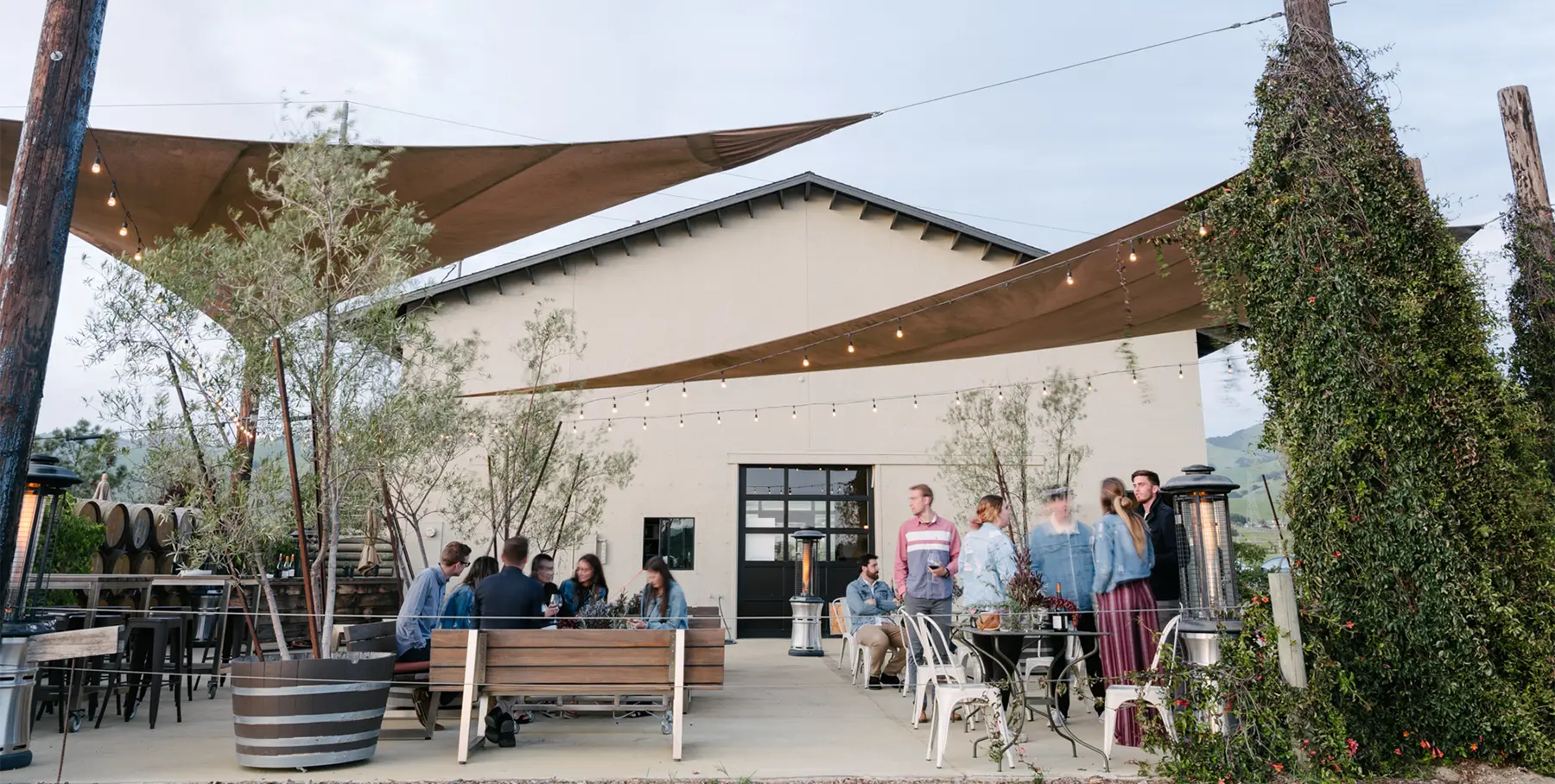
Some places in wine country are first by accident. Chamisal was first on purpose. In 1972, Norman Goss looked at the cool, foggy ground just outside San Luis Obispo and saw what nobody else had yet, and the next year he planted the first commercial vineyard in what would become the Edna Valley. More than fifty years later, those original blocks are still here, still producing, and Chamisal is still doing the thing it was built to do: turn this maritime valley into Chardonnay and Pinot Noir with nerve and clarity.
The valley first vineyard
Chamisal is named for the chamise, the hardy native shrub that covered these hills before the vines did. Norman Goss bought the land in 1972 and planted the first commercial vineyard in the Edna Valley the following year, a genuine pioneer move in a region that had no track record yet. For a time the estate was known as Domaine Alfred under later owner Terry Speizer, who pushed quality hard and put the site on the radar of serious collectors.
Today Chamisal is part of the Crimson Wine Group, and the cellar is led by a team of wine-industry veterans, with Brianne Engles as winemaker and Andrea de Palo overseeing estate innovation. What has not changed across owners and decades is the source. The estate vineyard around the tasting room, with its fifty-plus-year-old roots, remains the heart of everything poured here.
Planted in 1973, Chamisal was the first commercial vineyard in the Edna Valley, and the original blocks still bear fruit today.
Answer a few quick questions and get your wine personality, your best matches, and where to taste them.
Start the quizCool air, calcareous ground
The Edna Valley earns its reputation through geography. A gap in the coastal hills near Los Osos opens the valley directly to the Pacific only a few miles west, and marine fog and cold ocean wind move inland almost every day through the growing season. The result is one of the longest, coolest hang times in California, which lets Chamisal fruit develop flavor slowly while holding bright natural acidity.
Beneath the vines sit ancient marine soils, sandy loams over limestone and shale laid down when this was seabed. Those calcareous soils are part of the same family that underpins the great white wines of Burgundy and Chablis, and they give Chamisal Chardonnay its mineral spine. Grape and ground are well matched here, which is exactly why a grower in 1972 was willing to bet on dirt nobody had farmed for wine before.
Stainless, oak, and old vines
Chamisal is best known for two faces of Chardonnay. The Stainless bottling is fermented without any oak, a bright, citrus-and-orchard expression that shows the raw mineral cut of the valley. The barrel-aged estate and reserve Chardonnays add texture and depth while keeping that signature acidity underneath. The Pinot Noirs are cool-climate in the best sense, red-fruited and savory, with the fine-grained structure that long Edna hang time delivers.
Drinking the Stainless and an estate Chardonnay next to each other is one of the most instructive tastings in the valley. Same fruit, same ground, two very different choices in the cellar, and a clear lesson in what oak does and does not do. It is the kind of side-by-side that turns a casual visitor into someone who suddenly understands why Chardonnay is so endlessly argued over.
Tell us what is on the table and our pairing generator finds the wine that makes the meal.
Find your pairingWhat to pour it with
The unoaked Stainless Chardonnay is a pairing workhorse. Its high acidity and lack of oak make it a clean blade against fried and briny food, so it shines with oysters on the half shell, fish tacos, or a plate of fritto misto, cutting the fat and resetting the palate for the next bite. This is complementary pairing, the wine acidity contrasting the richness of the dish.
The barrel Chardonnay wants congruence instead, richness beside richness. Pour it with roast chicken, crab with drawn butter, or a creamy pasta and the textures echo each other while the acid keeps things lively. The estate Pinot Noir is the table red for salmon, seared duck, or mushroom risotto, where its acidity handles the fat and its earthy savory notes bridge to the mushrooms. Keep the tannic reds away from raw shellfish, and let the Stainless do that job.
Find your Edna Valley match
Take the 60-second quiz and we will point you to the cool-climate wines and tasting rooms you will love.
Find your wineChamisal Vineyards: common questions
What is Chamisal Vineyards known for?
When was Chamisal founded and who owns it?
Where is the Chamisal tasting room and when is it open?
What is the difference between Chamisal Stainless and estate Chardonnay?
What is special about Edna Valley for Chardonnay?
What food pairs with Chamisal wines?
More wineries in the SLO Coast
- Claiborne & Churchill
- Cutruzzola Vineyards
- Kynsi Winery
- Saucelito Canyon Vineyard
- Sinor-LaVallee
- Stephen Ross Wine Cellars
See all the SLO Coast wineries
Are you affiliated with this winery?