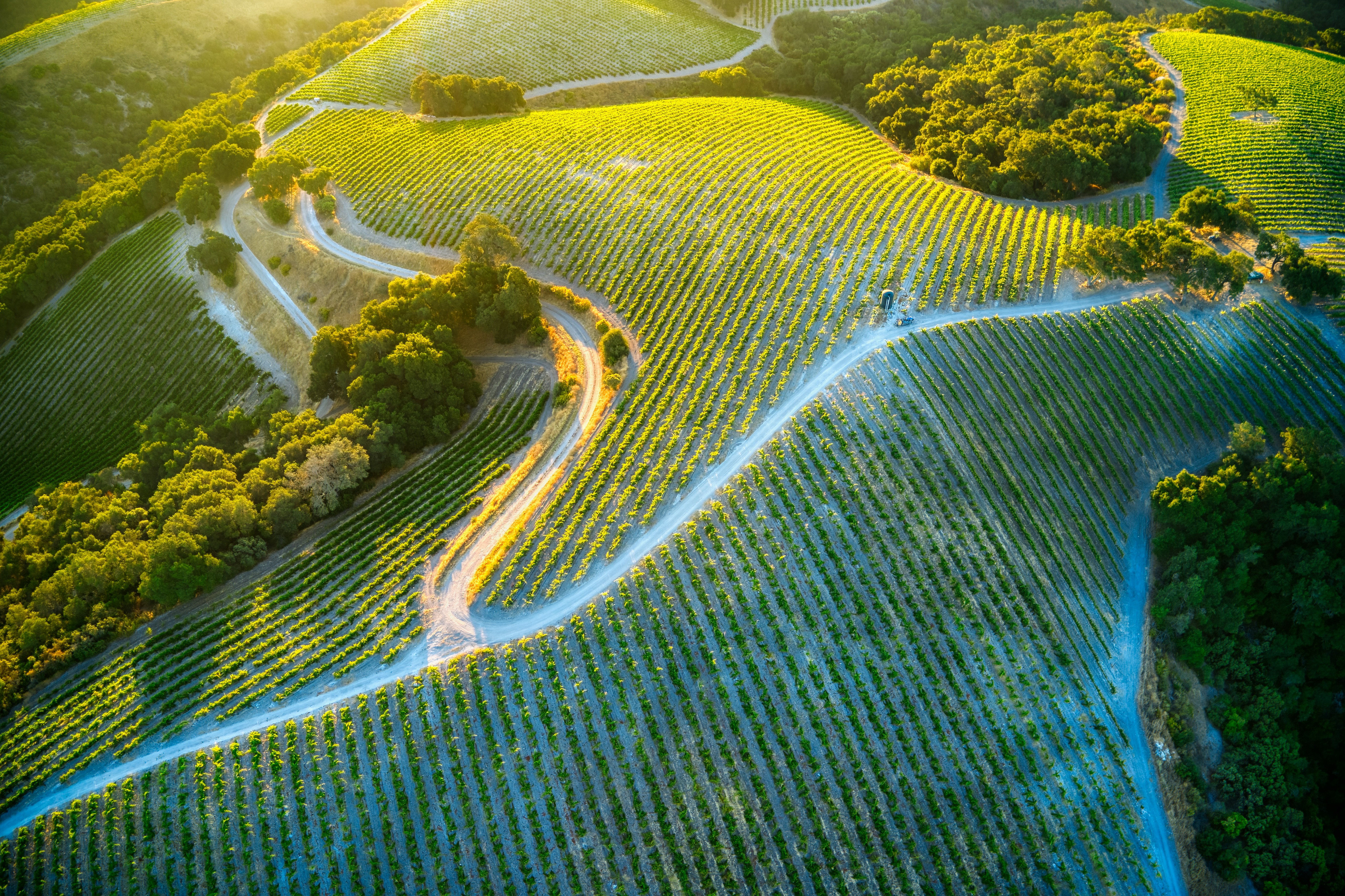
Turn off Highway 46 West onto Bethel Road and the noise of the world drops away. Rows of organically farmed vines run to the foot of the hills, a hand-painted beaver points the way, and on a summer evening the lawn fills with folding chairs and the sound of a band warming up. This is Castoro Cellars, where Niels and Bimmer Udsen have spent four decades proving that serious wine and unpretentious fun belong in the same glass.
A beaver, a nickname, and a family winery
Niels Udsen grew up in Ventura and came north to study agribusiness at Cal Poly San Luis Obispo, close enough to the vineyards to fall hard for them. Friends had already given him the nickname Beaver, and when he worked a harvest in Italy his Italian crew started calling him Il Castoro, the beaver. The name stuck, the wine followed, and in 1983 he and his wife Bimmer started Castoro Cellars with very little money and a clear idea: make wine people actually want to drink, and sell it for a price that respects them.
That idea became a tagline you still see on every cork and crate, Dam Fine Wine, the kind of self-aware joke a family business earns the right to make. Four decades on, Castoro is one of the largest family-owned wineries in Paso Robles and still feels like a kitchen-table operation. The Udsens raised their kids here, the next generation works the business, and the summer concert series on the vineyard lawn has become a Templeton tradition, a place where locals spread blankets under the oaks while the sun goes down behind the rows.
Castoro farms more than 1,400 acres of certified-organic vineyard in Paso Robles, one of the largest family-owned organic growers on California’s Central Coast.
Answer a few quick questions and get your wine personality, your best matches, and where to taste them.
Start the quizThe Templeton Gap, where the coast gets a word in
Castoro sits in the Templeton Gap District, the cool corner of Paso Robles where the Pacific reaches inland. A literal gap in the Santa Lucia Range lets afternoon fog and ocean air slide in from Morro Bay, dragging the temperature down after blazing afternoons. That daily swing, hot sun and then a genuine chill by dusk, is the engine behind the region’s wines, ripening fruit fully while the cold nights lock in acidity and color.
The estate vineyards spread across alluvial terraces and fans, sandy and silty clay loams with calcareous streaks, the chalky old-seabed soils that give Paso reds their backbone. Castoro farms more than 1,400 acres here, all of it certified organic by CCOF and certified sustainable under the SIP program. For a winery this size that is not a marketing line, it is a daily commitment to the ground, the watershed, and the people who work it.
The wines: red at heart, easy to love
Castoro makes a wide range, but the heart of the house is red, and Zinfandel is the soul of it. Paso Robles built its early reputation on old Zinfandel, and Castoro treats the grape with the warmth it deserves, bramble fruit and black pepper, ripe but not heavy, a wine that wants a plate in front of it. The estate Cabernet Sauvignon is the other anchor, dark and structured from those calcareous soils, generous in the Paso way without losing its grip.
Around those two sit Rhone reds, Italian varieties that nod to Niels’ winemaking roots, and crisp whites for the warm months. The thread running through all of them is drinkability and value. These are wines made to be opened on a Tuesday, not saved for a museum, and the price almost never matches the quality in the bottle. That gap, generous and deliberate, is the whole point.
Tell us what is on the table and our pairing generator finds the wine that makes the meal.
Find your pairingWhat to pour it with
Start with the estate Zinfandel and something off the grill. Zinfandel carries bright acidity and moderate tannin under all that ripe fruit, so it slices through fat instead of fighting it. Pour it with pork ribs in a peppery dry rub, or a platter of grilled Italian sausage and peppers, and the wine’s black-pepper edge echoes the char on the meat, a congruent match that makes both taste like more.
The Cabernet wants protein and fat to soften its tannins. A ribeye or a braised short rib is the classic move: tannins bind to the proteins and the wine turns plush, while the steak tastes cleaner and less greasy. Avoid pairing that Cabernet with delicate white fish, where there is nothing for the tannin to grab and the wine goes metallic and bitter. When in doubt at Castoro, think of the food at a long Italian family table, roasted meats, tomato and garlic, hard cheese, and pour accordingly.
Find the Paso red that fits your table
Take the 60-second quiz and we will point you to the wines and tasting rooms you will love.
Find your wineCastoro Cellars: common questions
What is Castoro Cellars known for?
Who founded Castoro Cellars?
Where is the Castoro Cellars tasting room?
Is Castoro Cellars organic?
What wine should I buy from Castoro Cellars?
What food pairs with Castoro Cellars wines?
More wineries in Paso Robles
Are you affiliated with this winery?