
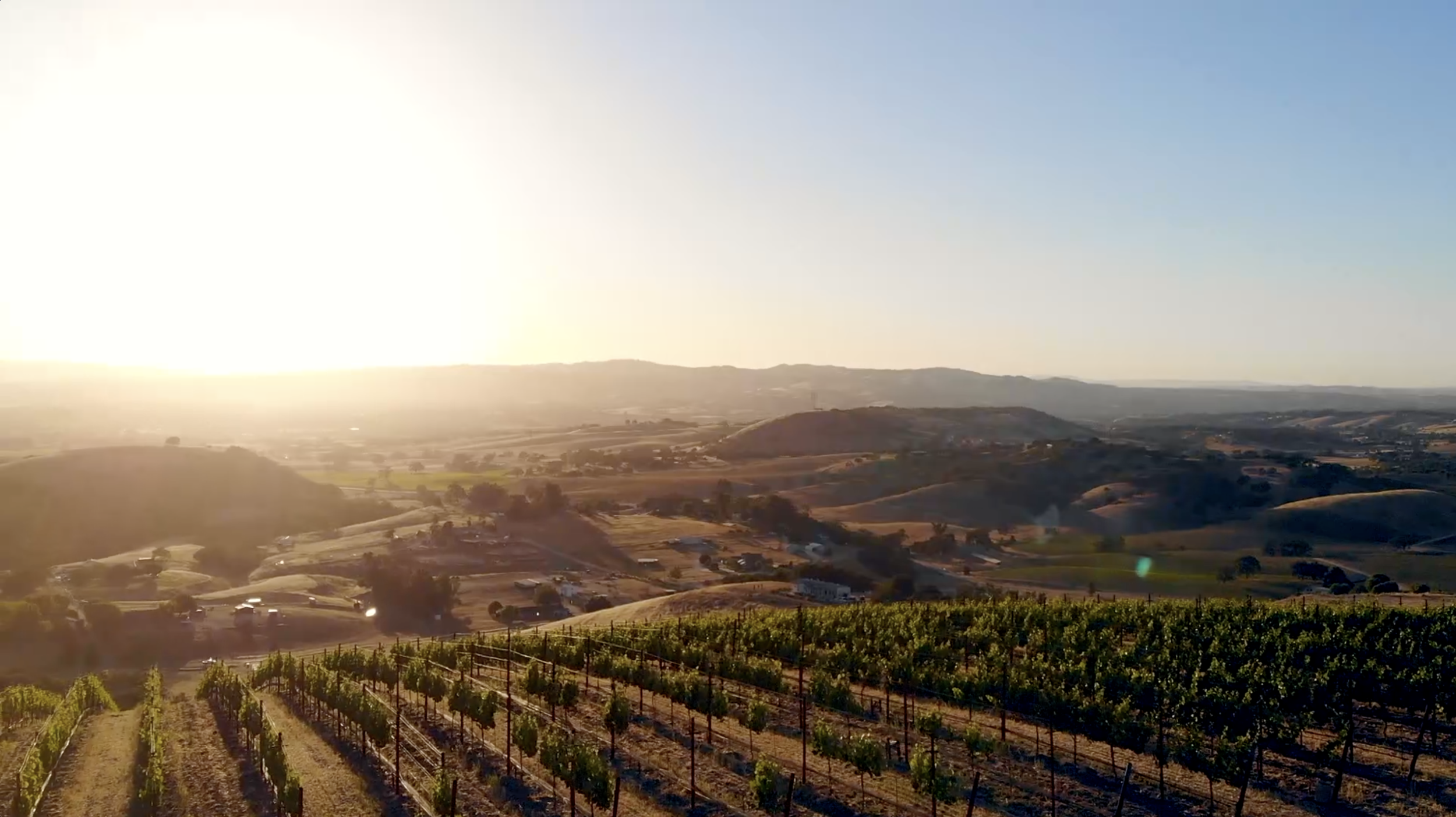
At 1,400 feet, with the vineyard falling away in every direction and the coastal fog pooling in the valleys below, Caelesta feels like the top of the world. This Templeton Gap estate is two passions on one hilltop: thirty-five acres of vines grown on Linne Calodo limestone, and a ten-acre orchard of black truffles, the rare, earthy treasure usually associated with the oak forests of France and Italy. Few wineries anywhere offer a glass of estate Rhone red and a truffle hunt in the same afternoon.
A hilltop of vines and truffles
Caelesta is a family-owned, boutique operation, a generational ranch that the Farrell family has shaped into something genuinely unusual. The vision pairs serious estate winegrowing with a working black truffle orchard, two slow, patient crops that demand deep knowledge of the land. Brian Farrell leads the estate, and his son Brian Farrell Jr brings a young winemaker’s energy to the cellar, the kind of father-and-son project that wine country does best.
The estate began using its own fruit for production in 2019, and the tasting room and winery opened soon after, perched on the hilltop with 360-degree views. The truffière, a cultivated truffle orchard, is the rare flourish. The family hosts mock truffle hunts with trained truffle dogs, followed by farming education, a live cooking demonstration, and a truffle and wine pairing brunch with fresh truffles, an experience you simply cannot find at an ordinary winery.
Caelesta grows both estate wine grapes and black truffles on one Templeton Gap hilltop, a pairing of crops almost unheard of in California.
Answer a few quick questions and get your wine personality, your best matches, and where to taste them.
Start the quizWhy limestone grows both
Caelesta sits high in the Templeton Gap District at around 1,400 feet, and elevation is everything here. The hilltop catches cool ocean air and fog rolling in through the gap in the coastal range, while the 360-degree aspects mean different blocks face different directions and ripen in their own time. The soils are Linne Calodo, the prized calcareous, limestone-rich series that gives some of Paso’s most structured, mineral wines.
That combination, high elevation, marine cooling, diverse aspects, and limestone soil, yields wines with velvety tannins, vibrant acidity, and a real sense of place. It is also, remarkably, the same kind of cool, calcareous, well-drained ground that black truffles need to grow in symbiosis with the roots of host trees, which is why one hilltop can produce both world-class grapes and one of the world’s most coveted fungi.
The wines
Caelesta produces estate-grown Rhone, Bordeaux, and Spanish varieties, an ambitious spread that the diverse hilltop aspects make possible. The Rhone reds, Grenache and Syrah and their blends, show the warm, generous side of Paso, while the Bordeaux grapes lean on the limestone for structure and length. The Spanish varieties, less common in California, are a sign of a family willing to follow curiosity rather than convention.
Across the range the house signature is that velvety tannin and bright acidity the high-elevation limestone gives. These are polished, age-worthy estate wines, made in small quantities and clearly meant to express this specific, special piece of ground. Paired with the truffle experiences, they make Caelesta one of the most distinctive destinations in all of Paso Robles.
Tell us what is on the table and our pairing generator finds the wine that makes the meal.
Find your pairingWhat to pour it with
Start with the obvious magic: earthy reds and truffles. The estate Rhone and Bordeaux reds, with their savory, earthy edge, meet fresh black truffle on shared aromatic compounds, a bridge pairing where wine and food seem to merge into one flavor. A truffle-laced pasta or risotto against a glass of estate Grenache or Syrah is the whole reason this place exists.
Beyond truffles, the reds follow the usual rules beautifully. Their firm but velvety tannins love the protein and fat of a grilled steak or a herb-crusted rack of lamb, softening against the meat while cutting its richness. The brighter, higher-acid reds handle mushroom dishes and savory, umami-rich food especially well. If you visit for the truffle brunch, let the team guide the pairings, since matching fresh truffle to wine is exactly what they have built this hilltop to do.
Find your kind of red
Take the 60-second quiz and we will point you to the wines and tasting rooms you will love.
Find your wineCaelesta: common questions
What is Caelesta known for?
Who owns Caelesta?
Where is Caelesta Vineyard?
Can you do a truffle hunt at Caelesta?
What wine does Caelesta make?
What food pairs with Caelesta wines?
More wineries in Paso Robles
Are you affiliated with this winery?