
James Boutzoukas was nine years old the first time he stood in his grandparents’ yard in Crete and watched the family make wine, and it never left him. He spent thirty-two years in the bridge repair business in the United States, and for roughly three decades he and his wife had California grapes shipped to Florida every fall so the family could crush them together. Florida fought him at every turn. So James and his son Manoli came to the calcareous hills of Paso Robles, planted Greek vines almost no one in California grows, and started over.
From a Florida crush to Cretan vines
The Boutzoukas roots run to the island of Crete, and the family wears them openly. The logo is the stivania, the tall Cretan boot worn by mountain herders and by warriors like James’s own grandfather, a symbol of courage and independence. They even make a small batch of the Cretan grape spirit raki under the Kri-Kri label.
James is the founder, the former bridge contractor who chased a boyhood memory across the country. His son Manoli is the one you will find on a tractor at odd hours or pulling barrel samples in the cellar. Patience is the family creed. As Manoli puts it, as fast as things are moving, in the big picture winemaking is a very slow process. The bet was simple and audacious, that the Greek grapes of a Mediterranean island would feel at home on Paso’s Mediterranean west side.
Manoli Boutzoukas will tell you flatly, I know for sure no one has Moschofilero and Vidiano in Paso.
Answer a few quick questions and get your wine personality, your best matches, and where to taste them.
Start the quizLimestone that reminded them of home
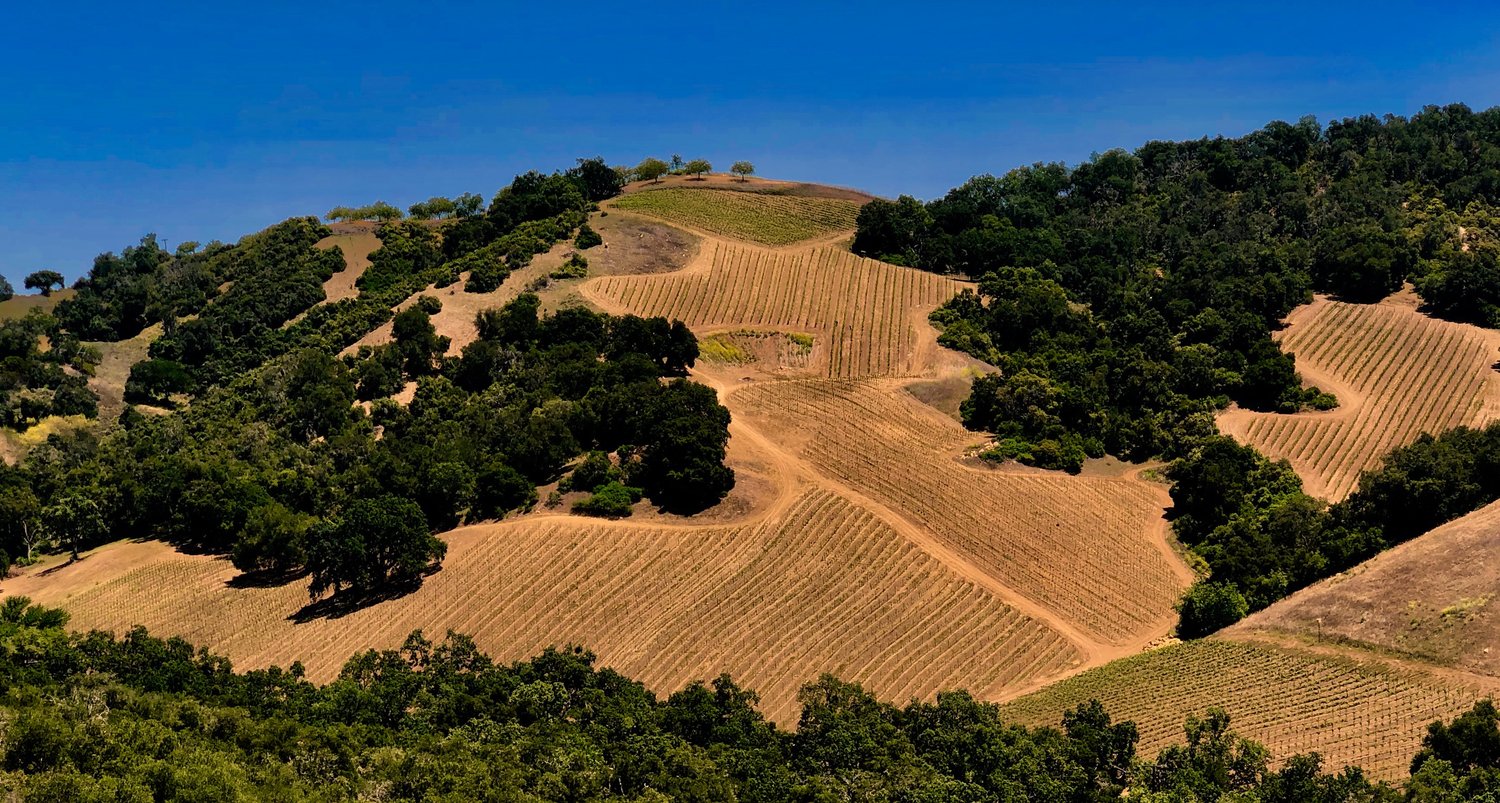
The family farms two estate vineyards in the Adelaida District, the cool, high westside of Paso Robles. Kendros, whose name means center in Greek, climbs to roughly 2,200 feet, among the higher sites in the district. Boutz Ranch holds the bulk of the vines, including the small block of Greek varieties alongside Bordeaux and Rhone grapes and Zinfandel.
This is well-drained, chalky, calcareous ground, rich in calcium carbonate, the same trait that defines the volcanic and limestone soils of the Greek islands. Pacific air pushing through the Templeton Gap drops night temperatures sharply after warm days, and that big diurnal swing is exactly what high-acid Greek whites like Assyrtiko need to hold their nervy, mineral spine. The match of grape to ground is the whole point.
Assyrtiko, Vidiano and a renaissance in a glass
The Greek lineup is the headline. Assyrtiko brings flinty minerality with pear and green apple, a wine that tastes of stone and salt. Moschofilero is the perfumed one, aromatic and floral, in the orbit of the Muscat family. Vidiano is the surprise, nutty and stone-fruited with breezy acidity, almost Chardonnay-like in weight, and Manoli says it drinks like a red wine. Wine Enthusiast scored the Boutz Ranch Vidiano 93 points and noted it may be the only planting of the grape in California.
Reds follow, the bright, savory Agiorgitiko and the tannic, structured Xinomavro, the great age-worthy red of northern Greece. Beyond the Greek varieties the family pours estate Bordeaux and Rhone bottlings too, from a Cabernet they call Angira to a Mourvedre named Dasos, rotating roughly a dozen estate-grown wines through the tasting room.
Tell us what is on the table and our pairing generator finds the wine that makes the meal.
Find your pairingWhat to pour Boutz Cellars with
Greek whites are built for the table, and their high acidity is the tool. Assyrtiko’s mineral, citrus cut slices straight through richness, so pour it with grilled octopus, fried calamari, lemony roast chicken or anything dressed in olive oil and oregano. Moschofilero’s floral aromatics love briny feta, spanakopita and herb-forward mezze. Vidiano, with more body, can stand up to a whole grilled fish.
The reds change the chemistry. Tannic Xinomavro binds to the protein and fat of lamb, so a charred leg of lamb or red-oak-grilled tri-tip tastes softer and rounder against it, the smoke meeting the wine’s savory edge. Lighter Agiorgitiko is happy with tomato-braised dishes, moussaka and pastitsio, where its acidity matches the tomato. To dial in a specific plate, try our wine pairing generator.
Visiting Boutz Cellars
A visit here is intimate and personal, the kind of tasting where the people pouring are the family who grew the fruit. The draw is the chance to try Greek grapes you cannot easily taste anywhere else in the state, lined up beside the estate’s Bordeaux and Rhone wines, roughly a dozen in all. As of early 2026 the family shares a tasting room with neighboring Hawks Hill Ranch on Adelaida Road, so you can taste both labels in one stop. Tastings run by reservation, so book ahead and confirm current hours and the exact location before you go. To build a westside itinerary around it, see our Paso Robles guide.
Let us match you to the right Paso bottle
Take the 60-second quiz and we will point you to the Paso wines and tasting rooms you will love.
Find your wineBoutz Cellars: common questions
What makes Boutz Cellars unique?
Who founded Boutz Cellars?
What Greek wines does Boutz Cellars make?
What is Vidiano wine like?
What food pairs well with Boutz Cellars wines?
Where is Boutz Cellars located?
Do I need a reservation to visit Boutz Cellars?
Why does Greek wine grow well in Paso Robles?
More wineries in Paso Robles
- Bovino Vineyards
- Brecon Estate
- Brochelle Vineyards
- Bushong Vintage Company
- Cab House at Hansen Vineyards
- Caelesta Wines, Vineyard, and Truffiere
Are you affiliated with this winery?