How Many Glasses Are in a Bottle of Wine?
It is the question every host and restaurant-goer eventually asks: how many glasses am I actually getting out of this bottle? The answer is reassuringly simple, with a couple of useful exceptions worth knowing.
You are standing in the wine aisle doing party math in your head. Twelve people are coming, everyone drinks, and you have no idea whether that means four bottles or fourteen. The number that unlocks the whole calculation is small and fixed: five glasses per bottle. Once you know that a standard 750 ml bottle pours about five servings, every other question, how many bottles for a dinner party, whether to buy a magnum, how far a case will stretch, becomes simple division. This guide gives you that number, the pour sizes behind it, and the reference tables to plan any event without guessing.
The math: why a bottle is five glasses
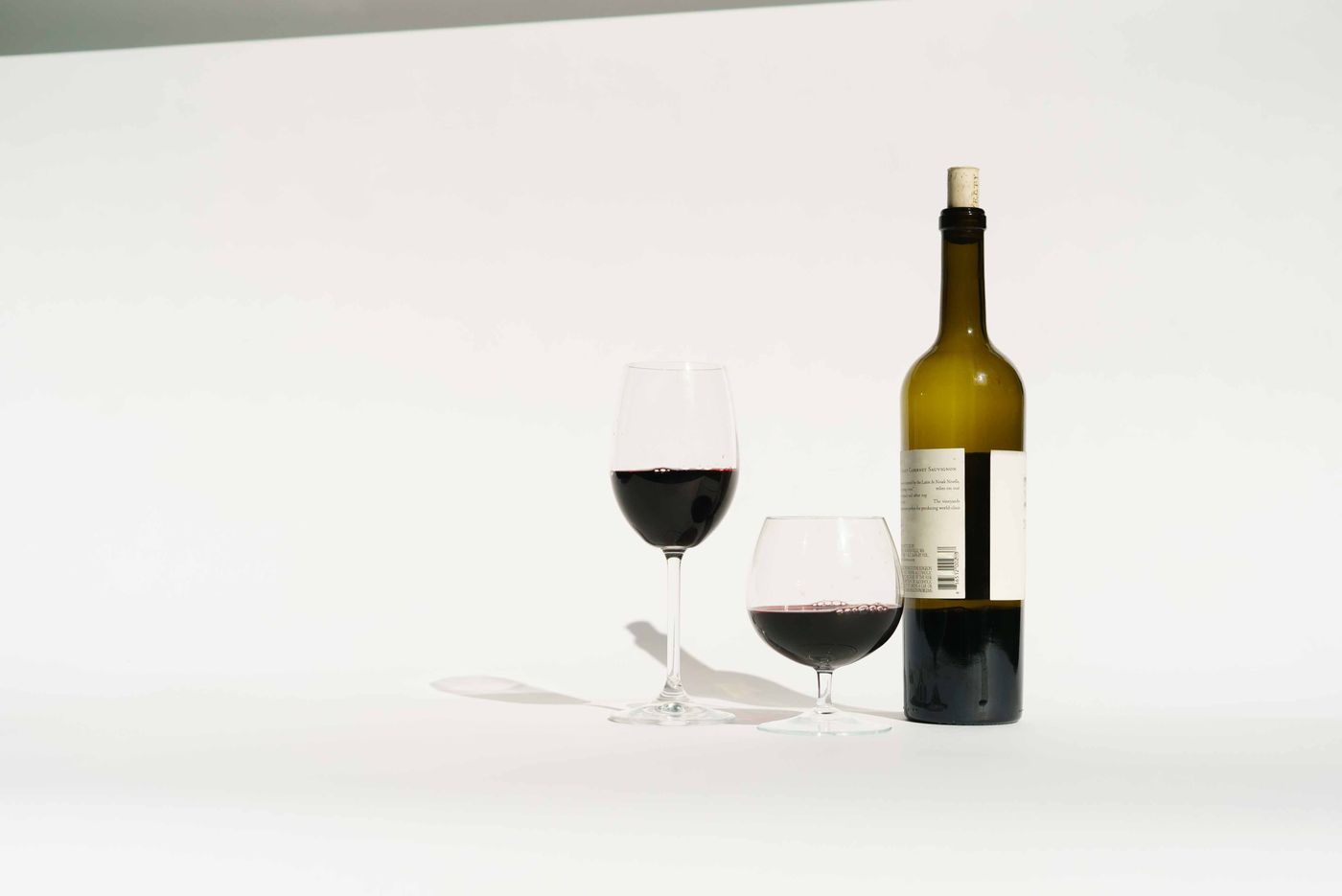
The whole answer rests on two numbers. A standard wine bottle holds 750 milliliters, which converts to 25.4 fluid ounces. The standard pour, the one bartenders are trained on and the one the U.S. dietary guidelines use to define a single serving of wine, is 5 ounces. Divide 25.4 by 5 and you land on 5.08, which rounds to five glasses per bottle. That is not a rule of thumb someone invented. It is arithmetic, and it holds for any dry table wine in a 750 ml bottle, red or white.
The reason five ounces became the standard is alcohol content. A 5-ounce glass of average 12 percent table wine delivers roughly the same amount of pure alcohol as a 12-ounce beer or a 1.5-ounce shot of spirits. That equivalence is why a 5-ounce pour is the official single serving and why restaurants size their by-the-glass program around it. Pour bigger and you are not just emptying the bottle faster, you are serving more alcohol per glass than the standard assumes.
The catch is that almost nobody actually pours five ounces at home. Studies of self-poured wine consistently find people overshoot, especially into a wide bowl or a tinted glass where the wine level is hard to read. A pour that looks modest in a large Burgundy glass can easily be eight or nine ounces, which quietly turns your five-glass bottle into three. If your bottles are vanishing faster than the math predicts, the glass is usually the culprit.
Glasses per bottle by pour size
The single biggest variable is how much you pour. A tasting pour, a standard pour, and a generous dinner pour produce very different counts from the same 750 ml bottle. This table covers the range you will actually use, from a flight-sized taste to a heavy hand.
| Pour size | When you use it | Glasses per 750 ml bottle |
|---|---|---|
| 2 oz (taste) | Wine flights, side-by-side tastings | About 12 |
| 3 oz (small taste) | Tasting events, sampling several wines | About 8 |
| 4 oz (tasting / party pour) | Stretching bottles at a crowd event | About 6 |
| 5 oz (standard) | The official single serving, dinner at home | About 5 |
| 6 oz (generous) | A relaxed dinner, a heavier hand | About 4 |
| 8 oz (heavy) | Accidental over-pour into a big glass | About 3 |
The practical takeaway: if you are hosting and want bottles to go further, pour four ounces, not five. That one-ounce difference turns a case of twelve bottles from sixty glasses into seventy-two, enough to cover an extra two or three guests without buying more wine.
Glasses by bottle size, from split to Nebuchadnezzar
The standard 750 ml bottle is just one rung on a ladder of formats. Wine is bottled in everything from a single-serving split to fifteen-liter giants poured at weddings. Each size is named, and each scales the glass count predictably off the standard five-glass bottle. These counts assume the standard 5-ounce pour.
Split (Piccolo)
187.5 ml
A quarter-bottle, about 6.3 ounces. Pours roughly 1 generous glass, or the single mini-bottle of Champagne you get on a plane. Ideal for one person or a solo toast.
Half (Demi)
375 ml
Exactly half a standard bottle, about 12.7 ounces. Pours about 2 to 3 glasses. Common for dessert wines and a smart size for two people who want one good glass each.
Standard
750 ml
The default bottle, 25.4 ounces. Pours about 5 glasses at the standard pour. This is the unit every other format is measured against.
Magnum
1.5 L
Two standard bottles in one, about 50.7 ounces. Pours about 10 glasses. Wine often ages better in magnum, and one bottle covers a small dinner party.
Double Magnum (Jeroboam, sparkling)
3 L
Four standard bottles, about 101 ounces. Pours about 20 glasses. In Champagne this size is called a Jeroboam; for still Bordeaux a Jeroboam is 5 liters.
Rehoboam
4.5 L
Six standard bottles, about 152 ounces. Pours about 30 glasses. A Champagne format that anchors a large celebration table.
Methuselah (Imperial)
6 L
Eight standard bottles, about 203 ounces. Pours about 40 glasses. Called an Imperial in Bordeaux and a Methuselah in Champagne.
Salmanazar
9 L
Twelve standard bottles, a full case in one vessel, about 304 ounces. Pours about 60 glasses. Strictly event territory.
Nebuchadnezzar
15 L
Twenty standard bottles, about 507 ounces. Pours about 100 glasses. A two-person lift and a wedding showpiece.
The naming gets tangled at the top because Bordeaux and Champagne use different names for the same volumes, and the biblical names (Jeroboam, Methuselah, Balthazar, Nebuchadnezzar) were borrowed from Babylonian and Israelite kings to sound suitably grand. What does not change is the math: every format is a clean multiple of the 750 ml standard, so glass counts always scale by the same five-glasses-per-standard-bottle rule.
How many bottles you need by guest count
This is the table most people actually came for. It assumes each drinking guest has about two glasses in the first hour and one glass each hour after, the standard event-planning rule of one glass per person per hour. Round up, because running out is worse than a leftover bottle that keeps.
| Guests (all drinking) | 2-hour event | 3-hour event | 4-hour event |
|---|---|---|---|
| 4 | 2 bottles | 3 bottles | 4 bottles |
| 6 | 3 bottles | 4 bottles | 5 bottles |
| 10 | 4 bottles | 6 bottles | 8 bottles |
| 12 | 5 bottles | 8 bottles | 10 bottles |
| 20 | 8 bottles | 12 bottles | 16 bottles |
| 30 | 12 bottles | 18 bottles | 24 bottles |
| 50 | 20 bottles | 30 bottles | 40 bottles |
The shortcut behind the table: a case of 12 bottles pours about 60 glasses, which covers roughly 12 guests for a 3-hour dinner. If your crowd skews toward lighter drinkers, or only half drink wine, scale the count down. For a precise, personalized number that factors in red versus white split, season, and event type, run your numbers through our wine party calculator rather than rounding by hand.
Standard pour versus tasting and party pours
The five-glass answer assumes you are pouring the standard serving. In real life you will use three different pour sizes depending on the occasion, and each changes the count.
The standard pour (5 oz) is your baseline: dinner at home, a glass with a meal, the official single serving. Five glasses per bottle, full stop. If you want to pour it consistently, fill a glass to five ounces once with a measuring cup and note where the line sits. In most stemmed glasses that is the widest point of the bowl, never to the rim.
The tasting pour (2 to 3 oz) is for flights and side-by-side comparisons, where the point is to sample several wines without finishing any of them. At three ounces a bottle stretches to about eight tastes, which is why a single bottle can host a tasting for a whole table. This is also the right pour for sweet dessert wines and Port, whose concentration makes a full glass overwhelming.
The party pour (4 oz) is the host’s tool. Dropping from five ounces to four turns a five-glass bottle into a six-glass bottle, a 20 percent gain in servings, without anyone feeling shorted at a standing event with food. Over a case that is the difference between sixty and seventy-two glasses. When you are buying for a crowd, plan around the four-ounce pour and you will rarely run dry.
Sparkling wine: smaller pours, more glasses
A 750 ml bottle of Champagne, Prosecco, or Cava holds the same 25.4 ounces as still wine, but it pours further. The standard sparkling pour is about 4 ounces rather than 5, partly because a flute is narrower and partly because a smaller pour preserves the bubbles and keeps each glass cold and lively. At four ounces, a bottle of bubbly yields about six glasses, and a tighter celebratory pour pushes that toward seven or even eight.
This matters most for toasts. If you are pouring a single celebratory glass per guest, plan on six to eight servings per bottle, not five. A magnum of Champagne, at twelve glasses for still wine, climbs to roughly twelve to sixteen toast pours. For a wedding toast of fifty people, that is three to four magnums, not the four-plus standard bottles you might assume. Sparkling is also why split bottles exist: a 187.5 ml split is sized to be the single perfect flute of Champagne. To understand how sweetness levels like Brut and Demi-Sec affect serving and pairing, see our wine sweetness scale guide.
Magnums and large formats for events
Once a gathering passes a dozen people, large-format bottles stop being a novelty and start being practical. A magnum holds two bottles and ten glasses in a single vessel, which means half the corks to pull and half the bottles to chill and store. A Jeroboam at twenty glasses and a Methuselah at forty turn a crowded bar into one or two pours that keep the line moving.
There is a quality argument too, not just a logistics one. Wine ages more slowly in a magnum because the ratio of wine to the small amount of air under the cork is more favorable, so the same wine often tastes fresher and develops more gracefully in the bigger bottle. That is why collectors prize magnums of age-worthy reds. For a party, the practical wins are what count: fewer bottles to open, a more dramatic presentation, and a glass count that is dead simple to plan because every format is a clean multiple of five glasses.
How to estimate wine for any event
Here is the repeatable method that works for a dinner for four or a reception for two hundred. Start with the one-glass-per-person-per-hour rule, which already builds in a heavier first hour. Multiply guests by hours to get total glasses, then divide by five to get bottles, and round up.
Step 1: Count drinkers
Not heads, drinkers
Only count guests who actually drink wine. If half your crowd prefers beer or skips alcohol, plan for half the heads. Be honest about your group.
Step 2: Glasses = drinkers x hours
The core formula
One glass per drinker per hour. Twelve drinkers over three hours is 36 glasses. This already front-loads the busy opening hour into the average.
Step 3: Bottles = glasses / 5
Convert to bottles
Divide total glasses by five and round up. Thirty-six glasses is 7.2 bottles, so buy 8. A magnum counts as two bottles.
Step 4: Split red, white, bubbly
Adjust for season
A common split is 60 percent red and 40 percent white in cool weather, flipped in summer, plus a sparkling bottle or two for toasts.
Two adjustments refine the estimate. Warm weather and afternoon events skew toward white and rose and toward lighter total consumption, while cold weather and dinner parties skew red and heavier. And the first hour always runs faster than the rest as guests arrive thirsty, which is exactly why the per-hour rule front-loads two glasses into hour one. When you want to skip the arithmetic, our wine party calculator and our full how much wine for a party guide do the planning for you, including the red-and-white split.
Mistakes to avoid
Over-pouring without realizing it. The most common reason bottles disappear faster than expected is that a home pour is rarely five ounces. A relaxed pour into a big-bowled glass is often eight, which silently cuts your five-glass bottle to three. Measure once so you know what five ounces looks like in your glasses.
Counting heads instead of drinkers. If you plan one glass per hour for every guest, but a third of them do not drink wine, you will badly overbuy. Plan for the people actually reaching for the bottle.
Forgetting the first-hour rush. People drink fastest in the opening hour when they arrive thirsty and before food slows them down. Build in two glasses for hour one, then one per hour after, or you will run short early.
Pouring sparkling like still wine. A five-ounce pour into a flute kills the bubbles fast and gives you fewer glasses than the format allows. Pour four ounces of bubbly and you get more servings and livelier wine.
Buying exactly enough. Wine keeps; a dry party does not recover. Round up and over-buy by a bottle or two. Unopened bottles return to the shelf, and the cost of running out at your own event is far higher than one extra bottle.
Where the 750 ml bottle comes from
The standard bottle is not a round number by accident, and the five-glass count is downstream of a centuries-old quirk. Glassblowers in the 1700s, working by lung power, could reliably blow a bottle of roughly 650 to 750 milliliters, the practical limit of a single human breath. That size stuck. There is also a tidy export story: the British, the largest historic buyers of French wine, measured in imperial gallons, and a 225-liter Bordeaux barrel divides cleanly into about 300 standard bottles, or 50 cases of 12, or roughly 60 imperial gallons. The 750 ml bottle made the barrel-to-case-to-gallon conversion clean for traders on both sides of the Channel. The European Union formalized 750 ml as the legal standard in 1979, and the United States followed. So the five glasses you pour tonight trace back to the capacity of an 18th-century glassblower’s lungs and the arithmetic of a wine barrel.
Knowing your glasses per bottle is the foundation of every wine gathering, and it connects to the rest of the cluster. Start with the pillar, our full guide to the types of wine, then plan the event itself with how much wine for a party, and pick styles your guests will love using the wine sweetness scale. When the math gets complicated, hand it to the wine party calculator and let it do the rounding.
Enter your guest count, event length, and red-to-white preference and get an exact bottle count in seconds, including a sparkling allowance for toasts.
Glasses per bottle, answered
How many glasses are in a bottle of wine?
A standard 750 ml bottle holds about 5 glasses at the standard 5-ounce pour. That comes from 25.4 ounces in the bottle divided by 5 ounces per glass. Pour 4-ounce portions and you get about 6 glasses; pour 6-ounce portions and you get about 4.
How many ounces are in a bottle of wine?
A standard 750 ml bottle contains 25.4 fluid ounces of wine. At the standard 5-ounce serving, that works out to just over five glasses per bottle. A magnum holds 50.7 ounces and a half bottle holds about 12.7 ounces.
How many glasses in a magnum of wine?
A magnum is 1.5 liters, exactly two standard bottles, so it pours about 10 glasses at the standard 5-ounce pour. Magnums are popular for parties because one bottle covers a small dinner and the wine often ages more gracefully in the larger format.
How many glasses of Champagne in a bottle?
A 750 ml bottle of Champagne pours about 6 glasses, more than still wine, because the standard sparkling pour is around 4 ounces rather than 5. A tighter celebratory toast pour can stretch a bottle to 7 or 8 flutes. A magnum of Champagne yields roughly 12 to 16 toast pours.
How many bottles of wine for 20 guests?
For 20 drinking guests at a 3-hour event, plan on about 12 bottles, using one glass per person per hour and five glasses per bottle. Round up, and consider a couple of magnums to cut down on bottles to open. If only half your guests drink wine, halve the count.
How many glasses should I pour from a bottle at a party?
At a party, pour about 4 ounces rather than the standard 5, which stretches each bottle from 5 glasses to 6. That 20 percent gain across a case is the difference between 60 and 72 servings, often enough to cover two or three extra guests without buying more wine.
Why does my bottle of wine only pour three glasses?
You are almost certainly over-pouring. A relaxed pour into a large-bowled glass is often 8 ounces rather than 5, which cuts a bottle from five glasses to three. Measure five ounces into your glass once so you know where the line sits, and you will get the full five servings.
How many glasses are in a case of wine?
A case is 12 standard bottles, so it pours about 60 glasses at the standard 5-ounce serving. That covers roughly 12 guests for a 3-hour dinner. At a 4-ounce party pour, a case stretches to about 72 glasses.