
What Wine Goes With Turkey?
Turkey itself is easy. The dozen sweet and savory sides crowding the plate are what make Thanksgiving wine tricky. The right bottle has to meet lean meat, herby stuffing, sweet yams, and a slick of gravy all in one mouthful.
The turkey is resting under foil, the gravy is thickening, and someone is already asking what to pour. Thanksgiving is the hardest meal of the year to pair, not because turkey is difficult, but because turkey almost never arrives alone. It comes with cranberry sauce that is sweet and sharp, stuffing that is herby and rich, gravy that is salty and savory, and a sweet potato dish that may or may not have marshmallows on it. The wine you choose is not really pairing with the bird. It is pairing with the whole table. Get that idea right and the rest is easy.
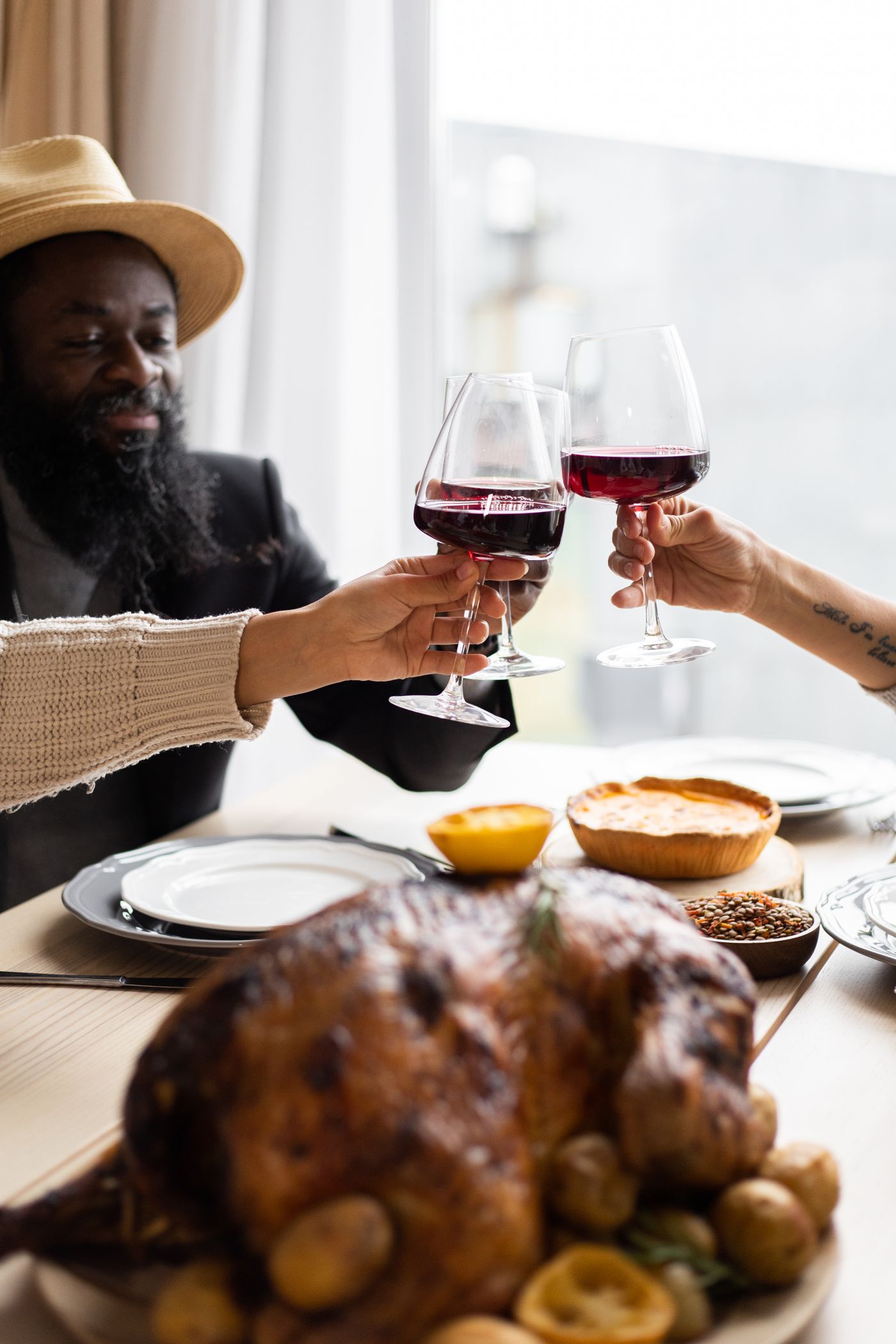
Why turkey is easy and the table is hard
Turkey itself is a gentle, low-fat meat. The breast is lean and mild, the thigh and leg are darker and a little richer, and the skin is the most flavorful part. On its own, almost any medium-weight wine would work. The challenge is everything around it. Sweet cranberry sauce will make a dry, tannic red taste sour and metallic. Salty gravy and herby stuffing reward acidity and punish heavy oak. Sweet potatoes and squash push you toward a wine with a touch of fruit or even a touch of sweetness of its own.
The trait that solves all of this at once is acidity. A wine with fresh, mouthwatering acidity resets your palate between the sweet, the salty, and the savory, so every bite tastes like the first. The second trait is restraint on tannin. Tannin, the drying grip in big reds, clashes with lean white meat and turns bitter against cranberry. That is why the great Thanksgiving reds are the lighter, juicier ones rather than the biggest Cabernets in the cellar.
This is also why there is no single correct answer, and why the same advice applies whether your bird is roasted, smoked, or fried. Match the wine to the cooking method and the boldest flavors on the plate, lean on acidity, go easy on tannin, and you cannot go far wrong. If you want a shortcut for any dish, our guide to pairing wine with food walks through the same logic for everything from steak to fish.
Turkey wine pairing at a glance
Use this table as a cheat sheet while you shop. The styles on the left all share the acid-forward, low-to-medium tannin profile that turkey rewards.
| Wine | Color and style | Best for | Why it works |
|---|---|---|---|
| Pinot Noir | Light red | Roast turkey, the all-rounder | Red cherry and cranberry fruit, silky tannin, earthy notes that echo the stuffing |
| Gamay (Beaujolais) | Light red | Roast turkey, lighter tables | Juicy, low tannin, bright acid, easy to drink for a long meal |
| Zinfandel | Bold red | Smoked or barbecued turkey | Jammy berry and pepper stand up to smoke and char |
| Grenache or GSM | Medium red | Herb-rubbed roast turkey | Ripe strawberry fruit and gentle spice, soft tannin |
| Riesling (off-dry) | Aromatic white | Cranberry and sweet sides | A touch of sweetness tames tart and spicy dishes; high acid keeps it fresh |
| Chardonnay | Full white | Buttery skin and gravy | Round texture and orchard fruit match rich, golden flavors |
| Gewurztraminer | Aromatic white | Spiced or sage-heavy dishes | Lychee and ginger notes flatter herbs and warm spice |
| Dry rose | Pink | Light and dark meat together | Red-fruit flavor with white-wine freshness; a true utility player |
| Sparkling or Champagne | Bubbles | Fried turkey, the whole table | High acid and bubbles scrub away fat, salt, and sweetness |
The best wines to serve with turkey
Here is the full lineup, grouped by color so you can pick what fits your table and your crowd. There is no need to choose just one. Many hosts open a red and a white and let guests roam.
Pinot Noir
Light Red
The quintessential Thanksgiving red. Light body, silky tannin, and bright acidity, with red cherry and cranberry fruit and an earthy, mushroom edge that mirrors the stuffing. Oregon and California versions are fruit-forward; red Burgundy is more savory. The single safest bottle to buy if you only buy one.
Gamay (Beaujolais)
Light Red
Beaujolais is made from the Gamay grape and drinks like cool, juicy red fruit with almost no grip. Cru Beaujolais such as Morgon or Fleurie adds depth. Light, gluggable, and food-friendly, it is the wine to pour when the table runs long and you want everyone comfortable.
Zinfandel
Bold Red
When the bird is smoked, barbecued, or deep fried with a bold spice rub, Zinfandel meets it head on. Jammy blackberry and plum, black pepper, and a hint of sweetness from the ripe fruit hold up to smoke and char where a delicate red would vanish.
Grenache and GSM blends
Medium Red
Grenache and Grenache-Syrah-Mourvedre blends offer ripe strawberry and raspberry fruit, gentle warming spice, and soft tannin. A great middle path for an herb-rubbed roast turkey that wants more body than Pinot but less weight than Cabernet.
Riesling
Aromatic White
An off-dry Riesling is secretly the smartest pick for the American Thanksgiving table. A whisper of sweetness calms cranberry sauce and any spice, while racing acidity keeps it from feeling heavy. Look for German Kabinett or a balanced bottle from the Finger Lakes or Washington.
Chardonnay
Full White
A balanced, lightly oaked Chardonnay from Sonoma or white Burgundy such as Saint-Veran has the buttery richness to match golden skin and gravy while keeping enough acidity to stay fresh through a long meal. Skip the heavily oaked, high-alcohol style, which fights the food.
Gewurztraminer
Aromatic White
Big, perfumed notes of lychee, rose, and ginger make Gewurztraminer a wildcard that flatters sage, thyme, and any warm spice on the table. Pour it off-dry for sweet sides. A small glass goes a long way, so it is a great wine to offer alongside another.
Viognier
Full White
For a richer aromatic white, Viognier brings lush peach, apricot, and honeysuckle with a full texture that stands up to heartier dishes. It gives white-wine drinkers something with real presence next to the gravy.
Dry Rose
Pink
A dry rose is the great utility player, offering the crispness of a white with the red fruit of a light red. That makes it equally happy with white breast meat and darker thigh meat, and it looks festive in the glass. Provence and Spanish styles both work.
Sparkling and Champagne
Bubbles
The most forgiving pour of the day. High acidity and fine bubbles scrub fat, salt, and sweetness off your palate, which is why sparkling is the top match for fried turkey and a welcome way to start the meal. Champagne, Cava, Cremant, or a good American sparkler all deliver.
Budget, mid-range, and splurge picks
You do not need an expensive bottle to pair turkey well. Acidity and balance matter more than price. Here is how we would spend at three tiers.
Serving temperature and how much to buy
Temperature quietly makes or breaks the pour. Most people serve reds too warm and whites too cold. For the light reds turkey loves, aim for 55 to 60 degrees Fahrenheit, which is cooler than room temperature. Twenty minutes in the fridge before serving does the trick. Whites and rose are best at 45 to 50 degrees, and sparkling wine should be properly cold, around 40 to 45 degrees. A lightly chilled Pinot Noir or Gamay tastes fresher and fruitier than the same bottle served warm.
For quantity, plan on roughly half a bottle per adult guest across the meal, which works out to about one bottle for every two people. A standard bottle pours five to six glasses. Because holiday meals run long and guests like to taste and compare, round up rather than down. Buy a spare of whatever is most popular. For a full crowd with cocktails and multiple courses, our guide to how much wine to buy for a party gives you exact bottle counts by headcount, and the wine party calculator does the math for you in seconds.
Pairing wine with the whole Thanksgiving plate
The sides are where pairings are won or lost. Cranberry sauce is the biggest trap. Its sweet-tart bite makes dry red wine taste hollow and sour, which is exactly why an off-dry Riesling or a fruity, low-tannin red like Gamay works so well. Stuffing, with its sage, thyme, and savory bread, loves earthy Pinot Noir or aromatic Gewurztraminer. Rich, buttery gravy and golden skin call for the round texture of Chardonnay or the acid of sparkling wine to keep things from feeling heavy.
Cooking method matters too. A classic roast turkey is the all-rounder and pairs with almost everything on this list. Smoked or barbecued turkey gains weight and char, so reach for Zinfandel or a bolder red. Deep-fried turkey is the richest preparation of all, and nothing cuts the oil like the bubbles and high acid of sparkling wine or a crisp Sauvignon Blanc. If poultry pairings are your thing, the same instincts carry over to our guide to wine with chicken, and for the bigger, bolder cuts that may share your holiday table, see what wine goes with steak. A cheese course before dessert is its own small puzzle, and our wine and cheese pairing guide covers it.
Mistakes to avoid
The most common error is reaching for a big, tannic red like a young Cabernet Sauvignon or a heavy Bordeaux. Those tannins clash with lean white meat and turn bitter against cranberry. Save them for the prime rib. The second mistake is a bone-dry wine with sweet sides; if your table leans toward marshmallow yams and cranberry, a touch of sweetness in the wine is a feature, not a flaw. Third, do not over-oak. A buttery, high-alcohol Chardonnay overwhelms the gentle bird. Finally, do not serve your reds at warm room temperature. A few minutes in the fridge makes a real difference. When in doubt, default to acidity and bubbles, and you will rescue almost any plate.
A short history of the Thanksgiving pour
Turkey and wine became a fixed American pairing surprisingly recently. Thanksgiving was declared a national holiday by Abraham Lincoln in 1863, but for generations the table was more likely to feature cider or beer than wine. As California and Pacific Northwest winemaking grew through the late twentieth century, sommeliers began championing the holiday as the ultimate showcase for acid-driven, lower-tannin styles, and Pinot Noir in particular became shorthand for the perfect Thanksgiving red. Today the holiday is one of the biggest wine-buying weeks of the year in the United States, and the conventional wisdom has settled on exactly the traits we have described: freshness, restraint, and versatility for a table that asks the wine to do a great deal at once.
For the bigger picture on grapes and styles, start with our pillar guide to the types of wine, then branch into how to pair wine with food, wine with chicken, and wine and cheese pairing for the rest of the holiday spread. Not sure where your palate lands? The Wine IQ Quiz is a quick way to find your style before you shop.
Tell us your menu and your crowd, and our pairing tool will match the right styles to your turkey and sides in seconds.
Turkey wine pairing questions, answered
What is the best wine to go with turkey?
Pinot Noir is the classic best answer, thanks to its light body, silky tannins, and bright cherry and cranberry fruit that flatters both the bird and the sides. If you want one bottle that pleases nearly everyone, a fruit-forward Pinot Noir is the safest choice. Sparkling wine is the most forgiving alternative.
Red or white wine with turkey?
Both work beautifully, because turkey is mild enough to suit either. Choose a medium-bodied red with low tannin and fresh acidity, like Pinot Noir or Gamay, or a fuller, aromatic white like Chardonnay or off-dry Riesling. Many hosts simply open one of each and let guests choose.
What wine goes with cranberry sauce and sweet sides?
Cranberry sauce and sweet dishes like candied yams call for a wine with a touch of sweetness and high acidity. Off-dry Riesling is the standout, since its slight sweetness tames the tart-sweet bite. A fruity, low-tannin red like Beaujolais also works because it has no harsh tannin to clash.
What wine pairs with smoked turkey?
Smoked turkey has more weight and char, so it can handle a bolder red. Zinfandel is the top pick, with jammy berry, pepper, and a hint of sweetness that meets the smoke. Malbec is another strong option, and a crisp Sauvignon Blanc makes a refreshing counterpoint.
What wine goes with fried turkey?
Deep-fried turkey is the richest preparation, so you want a wine with high acidity to cut the oil. Sparkling wine such as Champagne, Cava, or Cremant is the ultimate match, and a crisp Sauvignon Blanc or off-dry Riesling also refreshes the palate between bites.
Should I avoid Cabernet Sauvignon with turkey?
Generally yes, at least the big, young, tannic versions. Heavy tannins clash with lean white meat and turn bitter against cranberry sauce. If you love Cabernet, save it for richer red meat. For turkey, lighter reds like Pinot Noir, Gamay, or Grenache are far friendlier.
How much wine should I buy for Thanksgiving?
Plan on about half a bottle per adult, or roughly one bottle for every two guests, since a standard bottle pours five to six glasses. Holiday meals run long and people like to taste and compare, so round up and buy a spare of whatever proves most popular.
What temperature should I serve turkey wine?
Serve the light reds turkey loves slightly cool, around 55 to 60 degrees Fahrenheit, which is cooler than room temperature, so give them twenty minutes in the fridge. Whites and rose are best at 45 to 50 degrees, and sparkling wine should be properly cold at about 40 to 45 degrees.